
Jazz apples are globe-trotters in the fruit world
🌍. They’re grown under license in New Zealand, the United States (especially Washington State), the UK, Australia, France, Chile, Italy, Switzerland, and Austria. This global spread allows them to be available year-round, with harvests alternating between the northern and southern hemispheres.
🌱 Where & When
Origin: Developed in Havelock North, Hawkes Bay, New Zealand.
Year: The original cross was made in 1985 by apple breeder Allen White at the Plant & Food Research Institute.
Commercial Launch: Jazz apples hit the market in April 2004, after nearly two decades of testing and refinement.
🧬 How It Was Cultivated
Parentage: Jazz is a hybrid of Braeburn (known for tartness and firmness) and Royal Gala (famous for sweetness and color).
Cultivar Name: Scientifically known as Scifresh, but marketed as Jazz™ for broader appeal.
Breeding Process:
Created through controlled cross-breeding to combine the best traits of both parents.
Selected for its crunchy texture, balanced sweet-tart flavor, and vibrant coloration.
Underwent years of field trials to ensure consistency in taste, appearance, and shelf life.
🔒 Club Variety System
Jazz apples are a club variety, meaning:
Only licensed growers under ENZA (now part of T&G Global) can cultivate them.
ENZA, originally known as the New Zealand Apple and Pear Marketing Board, is now part of T&G Global, a major player in the global fresh produce industry. It was established to manage and promote New Zealand’s apple and pear exports, and over time evolved into a brand that oversees premium apple varieties like Jazz™, Envy™, Smitten®, and Rockit™.
Here’s what makes ENZA unique:
🍏 Role in Apple Cultivation
- ENZA develops and manages club varieties—apples that are trademarked and grown only by licensed producers.
- It ensures strict quality control, from cultivation to marketing, to maintain consistency and premium standards.
- ENZA collaborates with Plant & Food Research and orchardists to breed new cultivars like Jazz™ (Scifresh)
🌍 Global Reach
- ENZA apples are grown in New Zealand, the U.S., Europe, South America, and Australia, allowing for year-round availability.
- It operates international offices, such as Enzafruit Europe, to handle regional sales and distribution.
💼 Business Model
- ENZA’s club system gives it control over:
- Licensing: Only approved growers can cultivate its apples.
- Branding: Apples are marketed under names like Jazz™ rather than their cultivar name (e.g., Scifresh).
- Pricing & Supply: Helps prevent market oversaturation and maintains premium pricing.
🌍 Global Expansion
After its New Zealand debut, Jazz apples were exported to:
United States (especially Washington State)
United Kingdom, Australia, France, Chile, Italy, Switzerland, Austria
Grown in both hemispheres for year-round availability, with harvests alternating seasonally.
Jazz apples are more than just a crisp snack—they’re a nutritional powerhouse with some impressive medicinal perks 🍎
Nutritional Profile (per medium apple ~182g)
| Nutrient | Amount | Benefit |
|---|---|---|
| Calories | ~90 kcal | Low-calorie, ideal for snacking |
| Carbohydrates | ~25g | Natural energy source |
| Sugars | ~19g | Mostly fructose, with low glycemic impact |
| Dietary Fiber | ~4g | Supports digestion, satiety, and blood sugar control |
| Vitamin C | ~5–14% DV | Boosts immunity, skin health |
| Potassium | ~190–195mg | Regulates blood pressure, heart health |
| Iron | ~0.2mg | Supports oxygen transport |
| Calcium | ~10mg | Bone health |
🌿 Medicinal & Functional Benefits
Jazz apples pack a sweet crunch with serious health perks 🍎💪. Here’s a breakdown of their specific health benefits:
🧠 Cognitive & Anti-Inflammatory Support
- Quercetin: A powerful antioxidant that may protect brain cells and reduce inflammation.
- Polyphenols: Help combat oxidative stress, potentially lowering the risk of neurodegenerative diseases.
❤️ Cardiovascular Health
- Potassium: Supports healthy blood pressure and heart rhythm.
- Soluble Fiber (Pectin): Helps reduce LDL cholesterol and improve overall heart function.
- Low Sodium: Naturally heart-friendly.
🛡️ Immune System Boost
- Vitamin C: Enhances immune defense, collagen production, and iron absorption.
- Antioxidants: Strengthen the body’s ability to fight infections and chronic illness.
🧃 Hydration & Skin Health
- High Water Content: Keeps you hydrated and supports skin elasticity.
- Vitamin C + Hydration: A duo that promotes glowing skin and faster wound healing.
🧬 Digestive & Metabolic Benefits
- Dietary Fiber: Promotes gut health, regularity, and satiety.
- Low Glycemic Index: Helps regulate blood sugar levels, making it suitable for weight management.
- Natural Sugars: Provide quick energy without the crash.
🦴 Bone & Muscle Support
- Calcium & Magnesium (trace): Contribute to bone strength and muscle function.
- Potassium: Prevents muscle cramps and supports recovery.
⚠️ Bonus Considerations
- Anti-Allergy Note: May trigger mild reactions in people with birch pollen sensitivity.
- Eco Impact: Jazz apple trees act as carbon sinks and attract pollinators, adding environmental value.
Jazz apples are a relatively modern cultivar, so they don’t have ancient or folkloric uses like heirloom varieties—but there are still some lesser-known early applications worth spotlighting
🥗 Culinary Experiments in Early Trials
Before their commercial launch in 2004, Jazz apples (then known as Scifresh) were tested extensively in:
- Baking trials: Their firm texture was found ideal for pies and crisps, holding shape better than softer varieties.
- School snack programs: ENZA promoted them as a durable, non-browning option for lunchboxes.
- Cheese pairings: Early tastings highlighted their compatibility with sharp cheeses like aged cheddar and gouda.
🧪 Research & Breeding Insights
Post-harvest studies: Researchers explored Jazz’s long shelf life and resistance to bruising, making it a candidate for export markets.
Flavor mapping: Its unique sweet-tart balance was used to refine breeding goals for future cultivars like Envy™ and Smitten®.
🌍 Market Positioning & Branding
“Lawyer apple” nickname: Among growers, Jazz was jokingly called this due to its strict licensing and legal protections as a club variety.
Social media campaigns: Even in its early days, Jazz was one of the first apples to be marketed with digital storytelling and influencer outreach.
🍽️ Niche Culinary Uses
Taco topping: Its crunch and tang made it a surprising hit in savory dishes like fish tacos and pork slaw.
Spring rolls & grain bowls: Early adopters in fusion cuisine used Jazz slices for texture and acidity.
Jazz apples may not carry the ancestral tales of ancient cultivars, but they’ve earned their place in the modern fruit pantheon 🍎
Bred in the 1980s and launched globally in the early 2000s, they’re a testament to how science, sustainability, and taste can harmonize in one crisp bite.
They offer:
- A rich nutritional profile that supports heart, gut, skin, and immune health
- Culinary versatility, with early uses ranging from savory tacos to high-end cheese pairings
- Global reach through ENZA’s club system, ensuring consistent quality across continents
- Eco-conscious cultivation, thanks to carbon-sinking trees and pollinator-friendly orchards
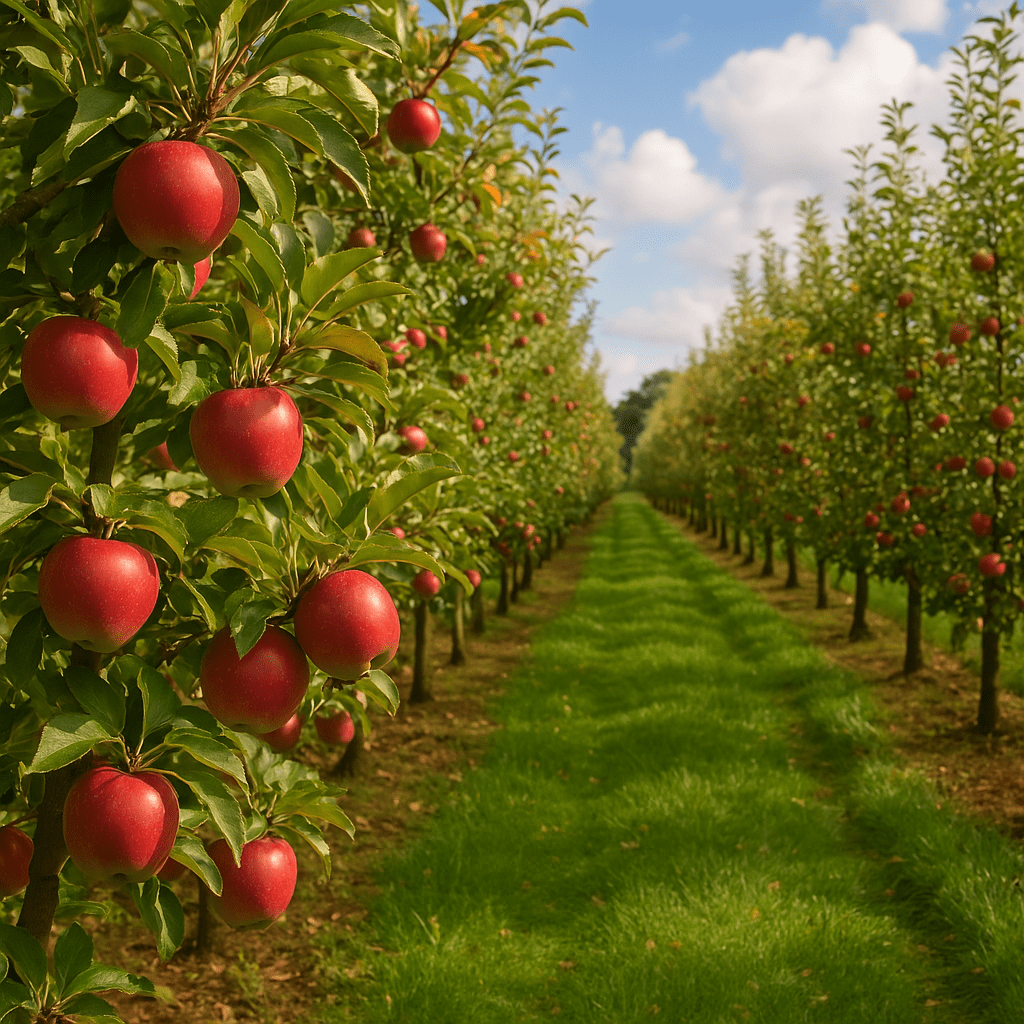
So while Jazz apples don’t come with folklore or myth, they bring function, flavor, and finesse—proving that what’s new can still be nourishing and worth savoring.
“Not ancient, but absolutely worth savoring.”
 EJADA
EJADA 
Leave a comment