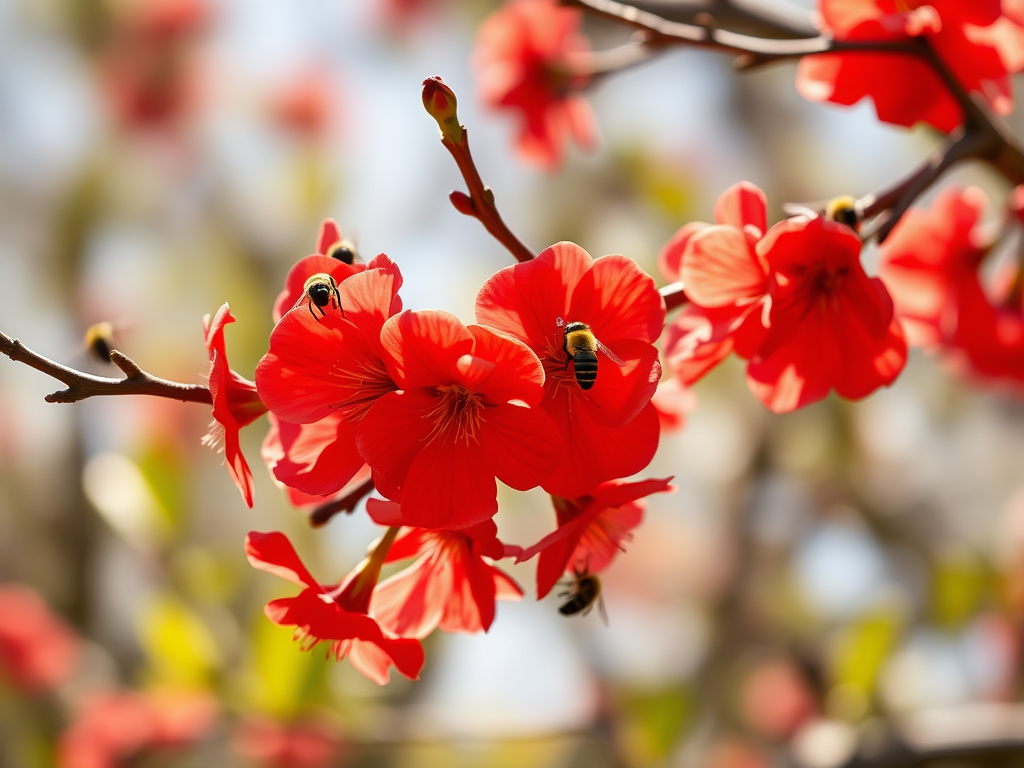
Tucked between the ornamental giants and flowering showboats of the plant world, the Japanese Quince quietly stages its own springtime spectacle—with unapologetic confidence. With fiery blossoms blazing like mini flamethrowers against early spring’s chill, it practically dares you not to notice.
Here’s why it deserves a standing ovation (or at least a polite bow, Japanese style):
🍊 Bold Blooms, No Fuss: Its flowers arrive before the leaves even wake up—like the diva who shows up fashionably early to every garden party. Scarlet, coral, or orange petals explode on bare branches in a move that’s pure botanical drama.
🐝 Bee Magnet Extraordinaire: If you’re throwing a backyard bash for pollinators, this shrub sends out golden invites. Bees buzz in like VIP guests and stay for the nectar.
🌳 Compact but Mighty: It doesn’t ask for much—just a sunny spot and maybe a nod of appreciation once in a while. No pruning tantrums, no needy fertilizer rituals. It thrives on its own terms.
🍏 Tiny Tangy Fruit: By summer’s end, the quince drops miniature fruit that’s tart enough to pucker your lips but perfect for jams if you’re brave enough to cook it. Or you can just let birds and squirrels take the wheel.
And perhaps its best feature? The Japanese Quince is like that friend who doesn’t overstay their welcome but leaves you smiling every time they visit.
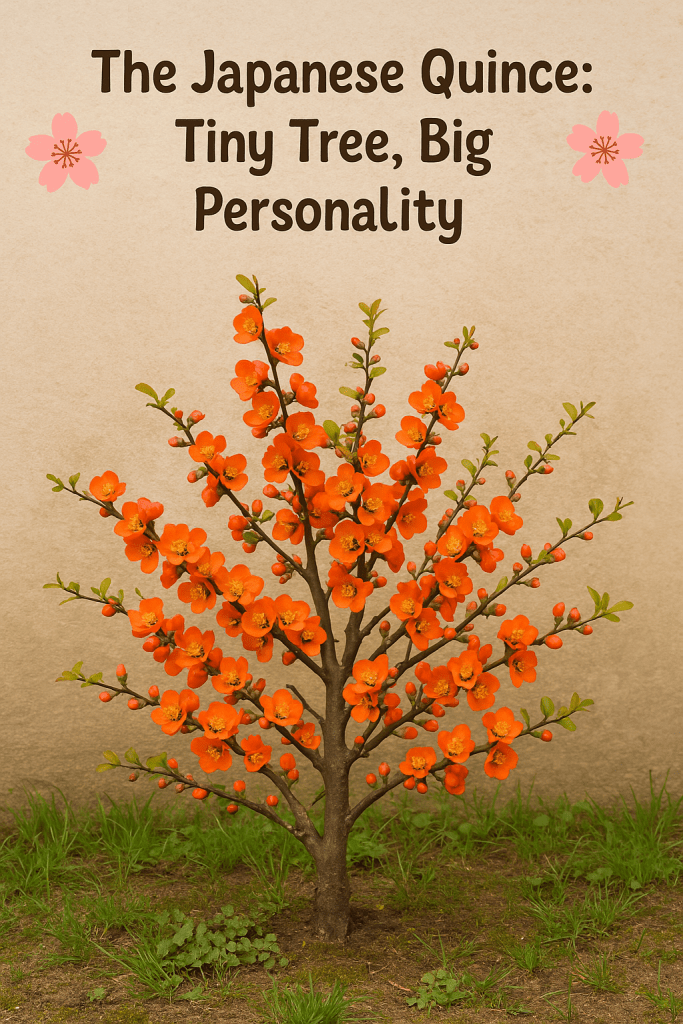
The Japanese Quince (Chaenomeles japonica) has been cultivated in Japan for centuries, but its broader use and recognition began in the early 19th century, when it was introduced to Europe and North America as an ornamental plant.
⏳ Early Roots in Japan (Before 1800s)
- Known as Kusa-boke (草木瓜) in Japanese tradition
- Treasured in ornamental gardens for its compact size and fiery red blossoms
- Symbol of resilience and seasonal transition—blossoms arrive before leaves
🚢 Global Debut (Early 1800s)
- Introduced to Europe via botanical expeditions
- Instantly embraced in Victorian gardens as a bold, low-maintenance beauty
- Became a popular hedge plant thanks to its thorny branches and vibrant spring color
🍯 Jam Sessions & Herbal Hype (Mid–Late 1800s)
- Fruit used as a substitute for traditional quince in preserves
- Herbalists admired the aromatic fruit for its tartness and potential digestive benefits
- Birds and bees became unofficial ambassadors—flocking to its nectar-rich blooms and fruit
🪴 Artful Adaptation (1900s–Today)
- Welcomed into bonsai culture for its manageable form and sculptural branches
- Often found in Japanese tea gardens, echoing themes of renewal and mindful simplicity
- Still a landscape favorite: drought-tolerant, pollinator-friendly, and quietly rebellious
🔍 Fun Fact: The fruit may look unassuming, but give it time in a simmering pot and it transforms into tangy, fragrant jelly—a metaphor for inner potential? Perhaps.
🌿 Little-Known & Folk Rituals
🏡 Debt-Avoidance Planting
- In some Japanese regions, planting karin (Japanese Quince) is believed to ward off debt.
- The word karin sounds like karinu (“not borrowing”), making it a symbolic financial safeguard.
🛐 Temple Tree of Peace
- When planted in temple grounds, it’s called Anranju (“peace orchid tree”).
- Treated as a sacred tree representing tranquility and spiritual grounding.
🍯 Seed-Infused Honey Ritual
- When making quince preserves, seeds are often included in a tea bag during fermentation.
- Believed to enhance nutritional and medicinal potency, especially for coughs and sore throats.
🕯️ Autumn Fragrance Offering
- Ripe fruit is placed indoors to perfume rooms naturally.
- This aromatic ritual marks the arrival of autumn and is said to promote relaxation and clarity.
🍏 “Tiny Fruit, Mighty Impact: The Wellness Profile of Japanese Quince”
🧬 Nutritional Highlights
Japanese Quince (Chaenomeles japonica) may be small, but it packs a punch:
| Vitamin C | Boosts immunity, collagen production, and skin health |
| Fiber | Supports digestion and gut microbiome balance |
| Copper & Iron | Aids in oxygen transport and energy metabolism |
| Potassium & Magnesium | Regulates blood pressure and muscle function |
| B Vitamins (B1, B6, Riboflavin) | Supports brain function and energy levels |
| Organic Acids | Contribute to its tart flavor and digestive support |
It’s also low in simple sugars and high in antioxidants, making it a smart choice for metabolic health.
🌿 Health Benefits
Japanese Quince has been used in folk medicine and modern wellness circles alike:
🛡️ Immune Support: Thanks to its vitamin C and antibacterial properties
🧘♀️ Anti-inflammatory Effects: May help with asthma, arthritis, and skin irritation
🍽️ Digestive Aid: Used traditionally for nausea, GERD, and stomach ulcers3
💪 Respiratory Relief: Quince tea and syrup are popular remedies for coughs and sore throats
❤️ Heart Health: Fiber and potassium help regulate cholesterol and blood pressure
🧠 Allergy Management: May reduce mild allergic reactions like runny nose or dermatitis
⚠️ Precautions & Considerations
Even nature’s gems come with a few caveats:
❌ Raw Fruit Is Astringent: Best consumed cooked or preserved—raw flesh is tough and sour
⚠️ Seed Safety: Seeds contain amygdalin, which can release cyanide in large quantities—avoid consuming them directly
💊 Medication Interference: Mucilage in quince may impair absorption of certain medications—space out intake by at least an hour
🐾 Pet Safety: Generally safe for dogs in small amounts, but seeds should be avoided
🌸 Final Thought
The Japanese Quince is more than a springtime spectacle—it’s a nutritional powerhouse, a cultural symbol, and a healing ally. Whether steeped in tea, simmered into jam, or infused into rituals, it invites us to savor the season with intention and vitality.
 EJADA
EJADA 
Leave a comment