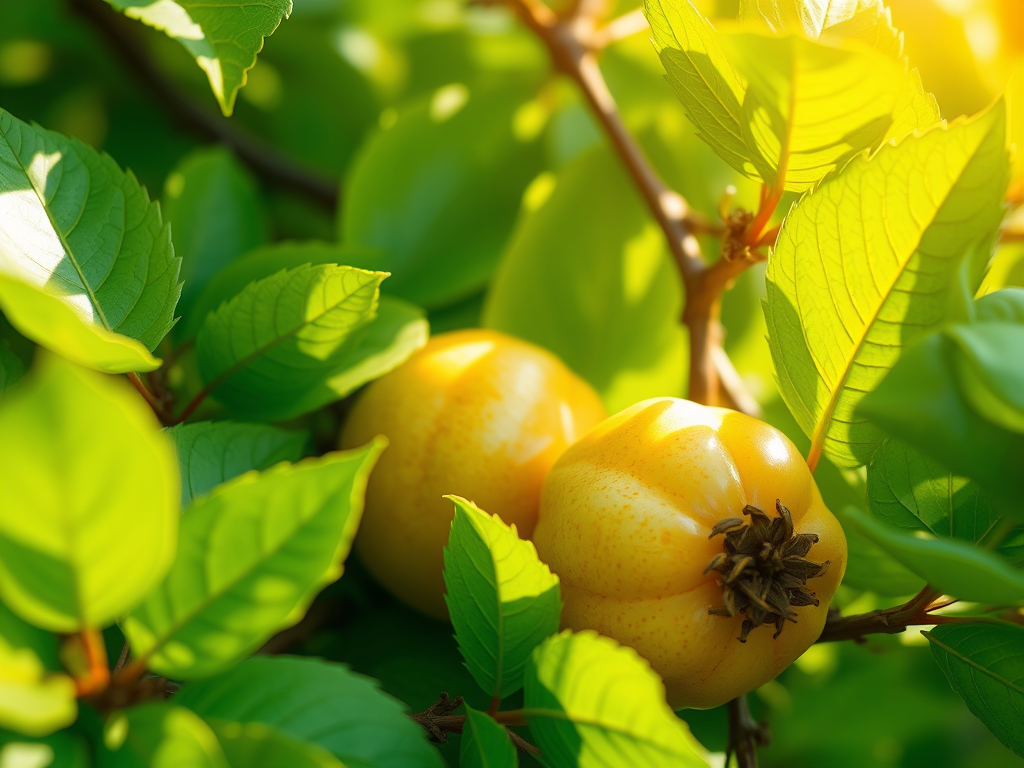
Did you know that the Japanese Medlar, also known as Loquat (Eriobotrya japonica), has been cultivated in China and Japan for over 1,000 years? It was introduced to Japan during the Tang dynasty, likely by Japanese scholars studying in China.
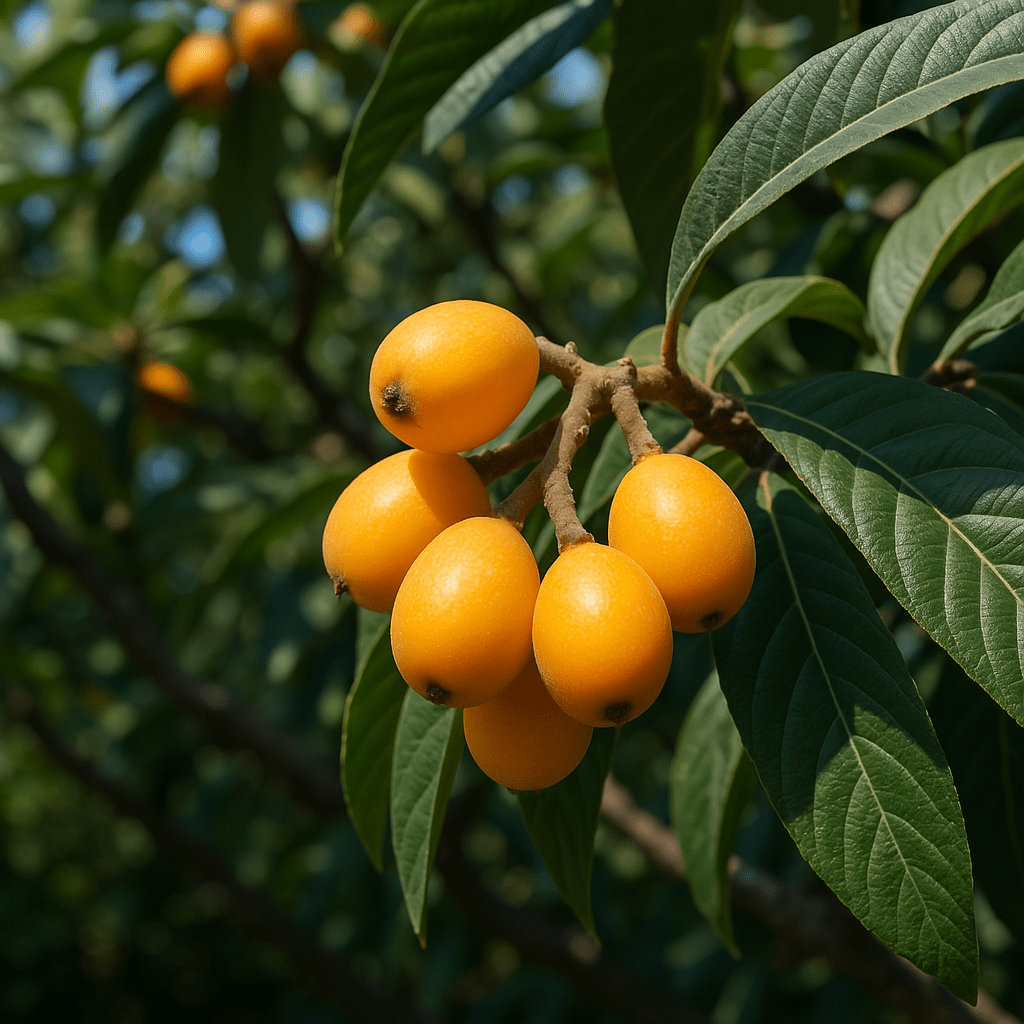
🌳 “Nature’s golden gift—nestled in lush foliage, the Japanese Medlar basks in sun-soaked serenity.”
The first European record of the species may date back to the 17th century, when Polish Jesuit Michał Boym described it in his Flora Sinensis.
🌿 Traditionally, the Japanese Medlar was prized not just for its sweet, tangy fruit, but also for its medicinal leaves, which were brewed into teas to treat respiratory issues, inflammation, and digestive problems.
In East Asian medicine, it was considered a “cooling” remedy, used to reduce fevers and soothe the body.
🌿 Medicinal Marvel
Historically, Japanese Medlar leaves and seeds weren’t just plant byproducts—they were medicine. They’ve been used in:
- Traditional Chinese Medicine: As a remedy for bronchitis, coughing, and gastric issues
- Japanese Kampo Medicine: Loquat leaf tea (biwa cha) is still consumed to help regulate blood sugar and detoxify the liver
- Anti-inflammatory poultices: Crushed leaves applied to skin to treat eczema and minor wounds
🌿🧪 Medicinal Marvel — Nature’s Pharmacy in a Leaf
The Japanese Medlar has long been admired not just for its luscious fruit but for its powerful healing properties, especially from its leaves, seeds, and even bark.
🍵 Loquat Leaf Tea (Biwa Cha)
- Used in Japanese Kampo and Traditional Chinese Medicine
- Brewed to soothe respiratory ailments, including asthma, bronchitis, and dry coughs
- Believed to support liver detoxification, regulate blood sugar, and relieve inflammation
🩺 Anti-inflammatory & Skin Remedies
- Crushed leaves used as poultices for skin irritations: eczema, rashes, and minor wounds
- Natural compounds like ursolic acid and triterpenes aid in cell repair and regeneration
- Leaf extract creams are emerging in skincare for acne control and anti-aging purposes
🧬 Powerful Bioactives
- Rich in polyphenols, flavonoids, and carotenoids — natural compounds with antioxidant and anticancer potential
- Recent studies explore its role in:
- 🧠 Neuroprotection
- ❤️ Cardiovascular support
- 💪 Anti-diabetic activity
🚫 What to Avoid
- The seeds, while used cautiously in some traditional remedies, contain amygdalin, a cyanogenic compound—consume only under expert guidance!
- Stick to leaf infusions and topical uses for safest benefits
🚫 Precautions & Safety Tips
🧨 Seed Toxicity
- The seeds contain cyanogenic glycosides, which can release cyanide when broken down
- Avoid consuming seeds, especially in large quantities or cracked form
- Symptoms of toxicity may include vomiting, weakness, labored breathing, and convulsions2
🧪 Medicinal Use Caution
- While loquat leaf tea is widely used, excessive consumption may lead to digestive upset or lowered blood sugar
- Always consult a healthcare provider before using it for diabetes, liver detox, or respiratory conditions
🌿 Allergic Reactions
- Rare, but possible: skin irritation from topical use of crushed leaves
- Patch test recommended before applying poultices or creams
🌡️ Climate Sensitivity
- The tree is cold-sensitive: flowers and fruit may be damaged below 28°F (-2°C)
- Protect young trees from frost to ensure healthy growth and fruiting
🐾 Pet Safety
- Good news! The plant is non-toxic to dogs and cats, but it’s still best to limit their access to fruit and leaves to avoid digestive upset
Its bioactive compounds include ursolic acid, flavonoids, and triterpenes, which are studied for antioxidant and anticancer properties.
🍑 Culinary Charmer
The fruit’s flavor lands somewhere between peach, mango, and citrus, making it perfect for:
- Preserves and jams – pairs beautifully with ginger or vanilla
- Fermented drinks – loquat wine and vinegar are regional specialties in parts of Asia
- Fresh snacking – rich in vitamin A, potassium, and fiber
🍯 Culinary Charmer — From Orchard to Jar
The Japanese Medlar’s flavor—like a blend of apricot, mango, and citrus—makes it perfect for preserves. Here’s a simple, aromatic Loquat Jam recipe that brings out its best:
🧑🍳 Loquat Jam with Lemon & Ginger
📝 Ingredients:
- 1 kg ripe Japanese Medlars (peeled, pitted, and chopped)
- 500 g sugar (adjust to taste)
- Juice of 1 lemon 🍋
- 1 tsp grated fresh ginger (optional for a zesty kick)
- 1 cinnamon stick (optional for warmth)
🔥 Instructions:
- Prep the fruit: Wash, peel, and remove seeds from the medlars. Chop into small pieces.
- Combine: In a large pot, mix medlars, sugar, lemon juice, and ginger. Add cinnamon stick if using.
- Cook: Simmer over low heat for 30–40 minutes, stirring often. The fruit should soften and the mixture thicken.
- Blend (optional): Use an immersion blender for a smoother texture.
- Test: Drop a spoonful on a cold plate—if it holds its shape, it’s ready!
- Jar it: Pour hot jam into sterilized jars, seal, and let cool. Store in a cool, dry place.
🍞 Serving Ideas:
- Spread on toast with ricotta or cream cheese
- Swirl into yogurt or oatmeal
- Glaze for roasted meats or veggies
- Pair with aged cheeses for a sweet-savory contrast
The seeds are technically toxic due to cyanogenic compounds—but fear not! As long as you stick to the flesh, you’re golden.
🎋 From Royal Gardens to Global Tables
The Japanese Medlar was cultivated in imperial gardens as both ornamental and functional—prized for its glossy leaves, fragrant flowers, and early-spring fruiting. It spread through trade routes and botanical exchanges to the Mediterranean and the Americas.
By the 19th century, it was naturalized in California, flourishing in warm climates and becoming a backyard favorite among those in-the-know.
The Japanese Medlar (Eriobotrya japonica), or loquat, is a nutritional gem wrapped in golden-orange skin 🍊. Here’s a breakdown of its vitamin and nutrient profile per 100g of fresh fruit:
🧬 Nutritional Snapshot
| Nutrient | Amount per 100g |
|---|---|
| Calories | 40–47 kcal |
| Carbohydrates | 8.5–12.1 g |
| Dietary Fiber | 1.7 g |
| Protein | 0.43–0.5 g |
| Fat | 0.2 g |
| Glycemic Index | ~55 (moderate) |
🍊 Vitamin Content
| Vitamin | Amount per 100g |
|---|---|
| Vitamin C | 14 mg |
| Vitamin B1 (Thiamin) | 0.02 mg |
| Vitamin B2 (Riboflavin) | 0.03 mg |
| Vitamin B3 (Niacin) | 0.18 mg |
| Vitamin B6 | 0.10 mg |
| Folate | 14 mcg |
| Provitamin A (Beta-carotene & Cryptoxanthin) | Rich |
🧪 Mineral Highlights
| Mineral | Amount per 100g |
|---|---|
| Potassium | 266 mg |
| Phosphorus | 27 mg |
| Magnesium | 13–15 mg |
| Calcium | 16 mg |
| Iron | 0.28 mg |
| Zinc | 0.05 mg |
| Copper | 0.04 mg |
| Selenium | 0.6 mcg |
🌱 Health Benefits at a Glance
- Low in calories and fat – ideal for weight-conscious diets
- High in potassium – supports heart health and fluid balance
- Rich in carotenoids – promotes skin health and immune function
- Good source of fiber – aids digestion and regulates blood sugar
- Antioxidant properties – helps combat oxidative stress
🍵 Healing Teas from Japanese Medlar Leaves
Infusions that breathe life into traditional medicine and soothe the modern soul.
🌬️ Respiratory Relief Tea
Ingredients:
- 1 tbsp dried loquat leaves
- 2 cups hot water
- Optional: slice of ginger or a dash of honey 🍯
How to Prepare: Simmer the leaves for 15 minutes, strain, and sip slowly. Add ginger or honey for warmth and comfort.
Benefits:
- Calms coughing and throat irritation
- Eases bronchial inflammation
- Supports clear breathing
🔥 Anti-Inflammatory Blend
Ingredients:
- 1 tbsp loquat leaves
- 1 tsp turmeric
- Pinch of black pepper
- 1.5 cups hot water
How to Prepare: Simmer all ingredients together for 10–12 minutes. Strain and drink after meals or before bed.
Benefits:
- Reduces joint pain and inflammation
- Provides antioxidant support
- Aids cellular regeneration
🍃 Digestive Calm Tea
Ingredients:
- 1 tbsp loquat leaves
- 1 tsp fennel seeds
- Slice of lemon 🍋
How to Prepare: Brew ingredients together for 10–15 minutes. Strain and enjoy warm, especially after heavy meals.
Benefits:
- Relieves bloating and stomach discomfort
- Enhances digestion
- May help stabilize post-meal blood sugar
🌱 “In every leaf and fruit, nature whispers the remedies our ancestors once knew—listening is the first step toward remembering.”
Japanese Medlar (Loquat) is definitely available in the U.S.—both as a fruit-bearing tree and in seed form 🌳🍊
Availability Highlights:
- You can purchase seeds or live trees from nurseries like Flora’s Market, Southern Plant Seeds, and Amazon sellers
- It thrives in USDA zones 8–10, which includes parts of California, Texas, Florida, and the Southeast
- Some specialty grocers and farmers’ markets may carry fresh loquat fruit in spring or early summer
If you’re in a cooler zone, you can still grow it in containers and bring it indoors during frost.
🌟 Final Thoughts
The Japanese Medlar isn’t just a fruit—it’s a living legacy. With every sip of loquat leaf tea or spoonful of golden jam, we reconnect with the ancestral wisdom that still thrives in nature’s quiet corners.
Whether you’re growing it in your garden, crafting a herbal remedy, or savoring a homemade preserve, this humble fruit reminds us that healing and nourishment can be both simple and profound.
✨ “Nature doesn’t hurry, yet everything is accomplished.” — Lao Tzu
 EJADA
EJADA 
Leave a comment