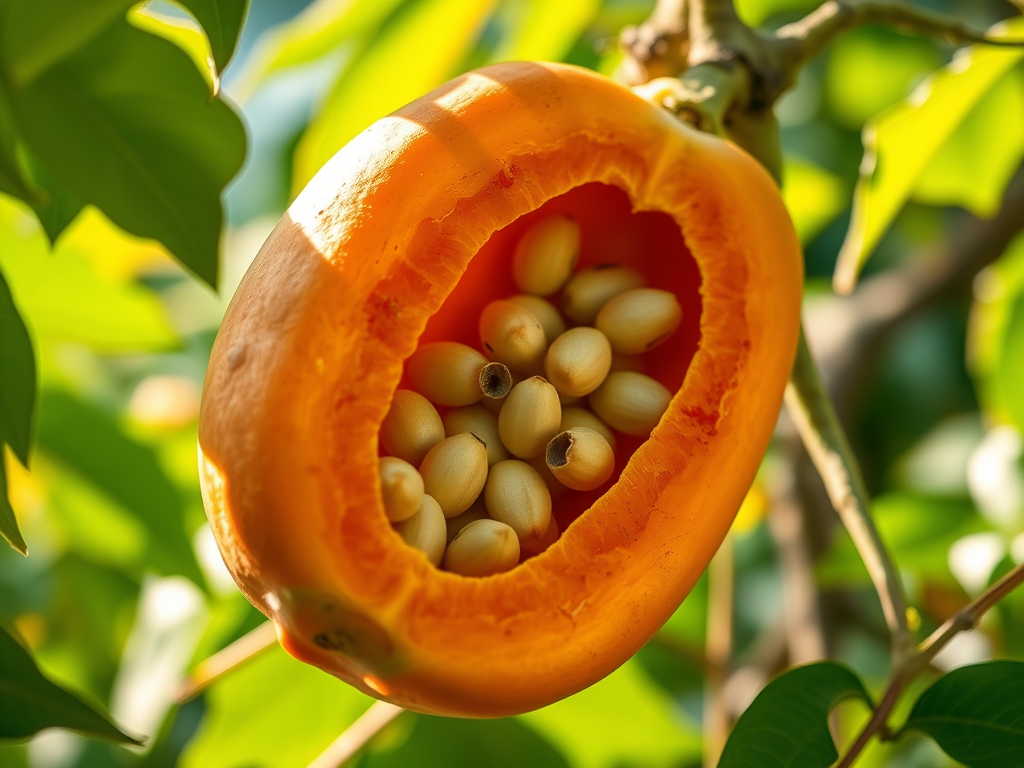
Jacaratia spinosa was first scientifically described by Jean Baptiste Christophore Fusée Aublet in 1775 under the name Carica spinosa Aubl.. Later, in 1864, Alphonse de Candolle reclassified it into the genus Jacaratia, giving it the name Jacaratia spinosa (Aubl.) A. DC.
Aublet was a French botanist known for his work in French Guiana, and his publication “Histoire des Plantes de la Guiane Françoise” laid the foundation for many tropical plant classifications. So, while Aublet was the original discoverer and namer, de Candolle refined its taxonomic placement nearly a century later.
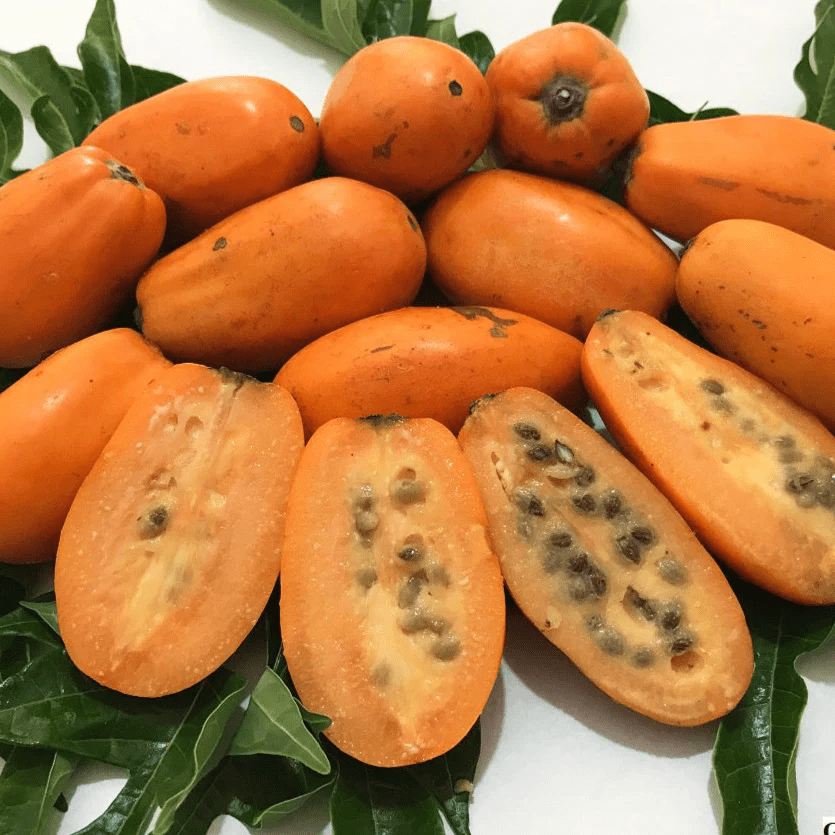
Here’s what Jacaratia spinosa fruit looks like! 🟠 It’s often referred to as wild papaya and has a fleshy, sweet, and slightly spicy pulp. The fruit is typically oval-shaped, about 8 cm long and 5 cm wide, and when ripe, it reveals a soft interior with seeds nestled inside.
🌿 Nutritional Highlights
- Rich in Vitamin C: Boosts immunity and supports collagen production for healthy skin.
- High in Vitamin A: Essential for eye health and cellular function.
- Mineral Dense: Contains potassium, calcium, magnesium, iron, and copper—with iron and copper levels twice as high as conventional papaya.
- Low Sodium: Has about three times less sodium than regular papaya, making it heart-friendly.
- High Dietary Fiber: Aids digestion, prevents constipation, and supports gut health3.
🧬 Medicinal Properties
- Antioxidant Potential: Rich in polyphenols that help neutralize free radicals, reducing oxidative stress5.
- Anti-inflammatory Effects: Shown to reduce inflammation in vivo, which may help with chronic conditions.
- Antimicrobial Activity: Demonstrated ability to inhibit microbial growth, including Candida albicans biofilms.
🌱 Traditional Uses
- Indigenous communities used the latex and fruit to treat parasitic worms, a practice passed down through generations.
- The fruit is often processed into syrups, jams, and candied treats, preserving its nutrients while enhancing shelf life.
Jacaratia spinosa has a rich tapestry of traditional uses that span culinary, medicinal, and even ecological domains. Here’s a deeper look into how Indigenous and local communities have historically used this remarkable plant:
🍲 Culinary Traditions
- Fruit in Syrup & Candies: In Brazil, especially São Paulo, the fruit is transformed into jaracatiá em calda (fruit in syrup), dried snacks, and candied treats.
- Edible Wood: In Misiones, Argentina, the inner wood of the tree is consumed after special preparation. It’s one of the few trees in the world with edible wood due to its low cellulose content.
- Festival Symbolism: The fruit ripens in February and is associated with Saint Peter’s celebrations in some regions.
🌿 Medicinal & Ritual Uses
- Anthelmintic Remedies: Indigenous groups used the latex and fruit to treat intestinal parasites, especially worms3.
- Respiratory & Digestive Relief: Traditional teas and infusions made from the bark and leaves were used to ease coughs, fevers, and digestive issues.
- Topical Applications: Ointments and salves made from the bark or latex were applied to wounds and skin infections due to their antimicrobial and anti-inflammatory properties. Useful fruits
🧪 Herbal Preparations
- Common forms include:
- Infusions and teas for internal use
- Tinctures and decoctions for concentrated extracts
- Salves and poultices for topical healing
🪵 Cultural Innovations
- Guarani Legacy: The Guarani people of Argentina rediscovered its edible wood and used it in rituals and daily sustenance. Their practices inspired modern culinary adaptations like the “wooden milanesa” (breaded edible wood cutlet).
Jacaratia spinosa is more than just a nutritional and cultural gem—it’s an ecological ally with a surprising range of environmental benefits.
🌱 Here’s how it contributes to ecosystem health:
🐝 Biodiversity Booster
- Pollinator Magnet: Its flowers attract bees, butterflies, and other pollinators, supporting plant reproduction and biodiversity.
- Wildlife Habitat: The tree provides shade and shelter for birds, insects, and small mammals, enriching local ecosystems.
🌬️ Air & Soil Health
- Air Purification: Jacaratia leaves help filter pollutants and release oxygen, improving air quality.
- Pioneer Species: It’s fast-growing and often used in reforestation projects, especially in degraded tropical areas.
- Soil Stabilization: Its root system helps prevent erosion and improves soil structure in valley bottoms and alluvial plains.
🌳 Sustainable Landscaping
- Low Maintenance: Thrives in sunny, tropical conditions with minimal care, making it ideal for eco-friendly gardens.
- Aesthetic Appeal: Its unique foliage and spiny trunk add visual interest while supporting ecological balance.
🌍 Cultural-Ecological Synergy
- Indigenous communities, especially the Guarani of Argentina, have long integrated Jacaratia into their sustainable living practices, using its edible wood and fruit without harming the tree.
🌿 Jacaratia spinosa: From Wild Papaya to Ritual Icon
🧬 Origin & Naming
Discovered by Jean Baptiste Christophore Fusée Aublet in 1775 (Carica spinosa), later reclassified by Alphonse de Candolle in 1864 as Jacaratia spinosa (Aubl.) A. DC.
🍬 Culinary & Cultural Uses
- Brazilian Candies & Syrups: Known as jaracatiá em calda, turned into jams, sweets, and syrups.
- Edible Wood in Argentina: Consumed in Misiones—made into breaded cutlets like wooden milanesa.
- Festival Fruit: Ripens in February, tied to Saint Peter’s festivities.
🌿 Medicinal Applications
- Antiparasitic Legacy: Latex and fruit used traditionally to expel intestinal worms.
- Teas & Infusions: Bark and leaves used for fevers, coughs, and digestive relief.
- Topical Salves: Bark and latex for skin infections and wound healing.
🌱 Ecological Role
- Pollinator Magnet: Supports bees, butterflies, and biodiversity.
- Reforestation Pioneer: Thrives in degraded lands, stabilizes soil.
- Air Purifier: Leaves contribute to air quality in tropical ecosystems.
✨ Practical Applications
| Category | Application Description |
|---|---|
| Culinary | Fruit preserves, edible wood, detoxified latex |
| Medicinal | Herbal infusions, topical salves, antiparasitic use |
| Ecological | Soil stabilization, pollinator support, landscaping |
| Cultural | Guarani traditions, seasonal rituals, culinary fusion |
🍬 Jacaratia Spinosa Candied Delight
🧾 Ingredients
| Item | Quantity | Purpose |
|---|---|---|
| Jacaratia spinosa fruit (peeled & deseeded) | 500g | Base ingredient |
| Raw cane sugar | 300g | Sweetener & preservative |
| Fresh lime juice | 2 tbsp | Natural acid, enhances flavor |
| Clove & cinnamon | 2-3 each | Traditional warm spices |
| Water | 1.5 cups | For boiling and syrup creation |
🧑🍳 Instructions
- Prep the Fruit: Remove spines, peel, and deseed Jacaratia spinosa. Slice into bite-sized chunks.
- Boil to Soften: Simmer in water for 15–20 minutes. Drain and rinse.
- Candying Process: Return fruit to pan with sugar, spices, lime juice, and fresh water.
- Reduce: Simmer over low heat until thick syrup forms and fruit becomes translucent (~30 minutes).
- Cool & Serve: Let cool. Store in jars or serve with soft cheese, toast, or as a topping for desserts.
🌿 Cultural Tip
Jaracatiá em calda is traditionally served during festive months like February, especially in Brazilian and Guarani rituals. Some versions include edible wood slices for layered texture—perfect for a “wooden milanesa” side dish.
 EJADA
EJADA 
Leave a comment