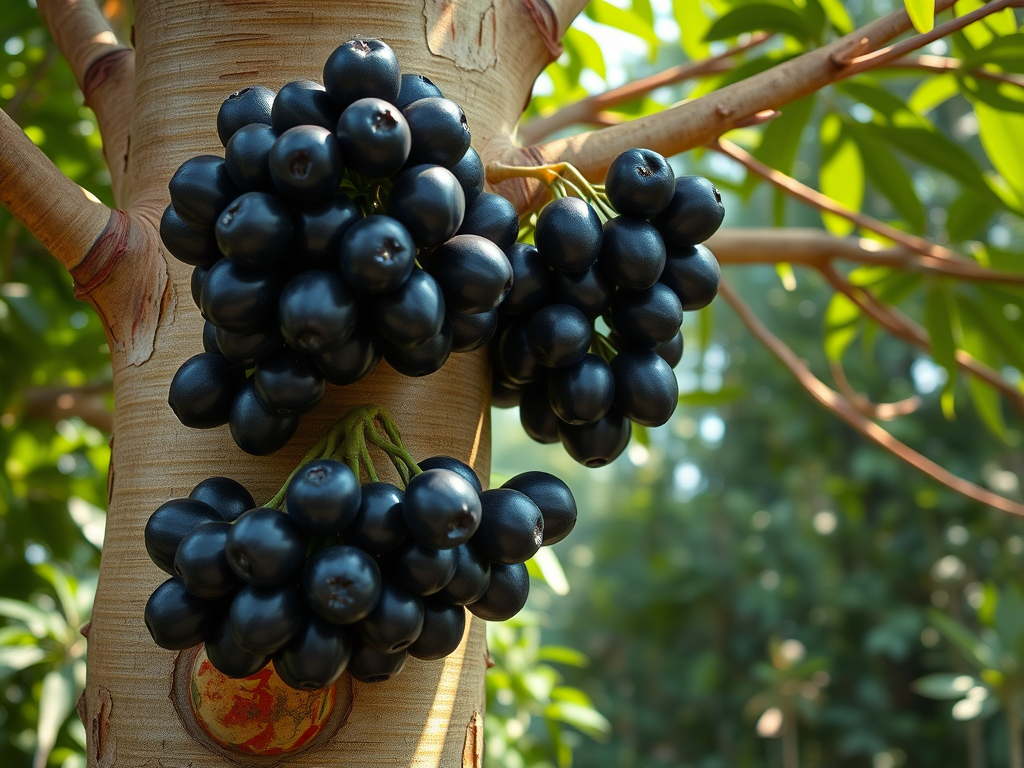
Jaboticaba, is a fascinating fruit native to Brazil, often called the Brazilian Grape tree.
🌿 Botanical Marvel: The Architecture of Jaboticaba
Jaboticaba (Plinia cauliflora) isn’t just a fruit tree—it’s a study in botanical eccentricity. Here’s a more vivid breakdown:
🪵 Cauliflory: A Floral Anomaly
- Unlike typical trees where fruit hangs from branches, Jaboticaba’s fruit erupts directly from its trunk and thicker limbs.
- This trait is called cauliflory, and it’s rare—shared by species like cacao and Myrciaria.
- Cauliflory allows better access for ground-dwelling pollinators and foragers, giving Jaboticaba an evolutionary edge in Brazil’s Atlantic Forest.
🌳 Tree Structure
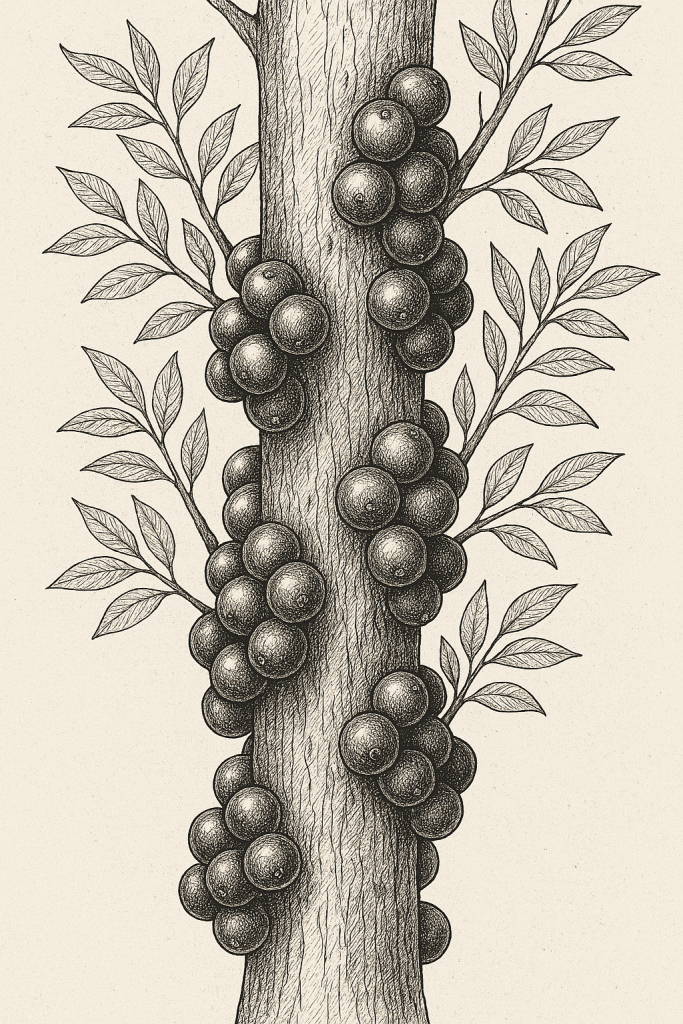
Grows slowly as a compact, bushy evergreen with smooth, peeling bark that reveals a reddish underlayer—making fruit clusters appear like gems on polished wood.
Mature trees can reach up to 12–40 feet, though they’re often pruned as ornamentals or bonsai to showcase their trunk-fruiting spectacle.
The leaves are ovate, bright green when young and darker as they age, with a slight leathery texture and citrus-like scent.
🌸 Flowering & Fruiting Cycle
- Blooms in bursts: clusters of tiny, white, fringed flowers emerge directly from the bark.
- These flowers are self-fertile but benefit from bee activity.
- Fruits appear multiple times a year in tropical climates, especially with regular irrigation—some trees can fruit monthly!
🌱 Cultivation Challenges
- Jaboticaba is notoriously slow from seed—taking 8–20 years to bear fruit.
- Grafted or air-layered trees are more efficient, typically fruiting in 3–5 years.
- Prefers slightly acidic, well-drained soil and thrives with organic mulch. Sensitive to drought but surprisingly cold-hardy once established.
🧪 Scientific Significance of Jaboticaba (Plinia cauliflora)
Jaboticaba is more than a botanical curiosity—it’s a biochemical powerhouse that’s drawing increasing attention from pharmacologists, nutraceutical researchers, and cosmetic innovators.
🌿 Phytochemical Richness
- Anthocyanins: The deep-purple skin contains cyanidin-3-glucoside and delphinidin compounds, which exhibit antioxidant, anti-inflammatory, and neuroprotective effects.
- Ellagic acid: Known for its ability to suppress cancer cell proliferation, particularly in colon and breast cancers.
- Flavonoids & Tannins: Show potential for cardiovascular protection and antimicrobial action.
🔬 Medicinal Potential
- Anti-inflammatory: Extracts reduce markers of oxidative stress and inflammation, especially useful in arthritis and chronic inflammatory diseases.
- Anti-diabetic: Some studies reveal Jaboticaba peel polyphenols improve insulin sensitivity and reduce blood glucose levels.
- Anti-cancer: Bioactive compounds like gallic acid and ellagic acid can induce apoptosis in cancer cells and inhibit tumor growth.
- Neuroprotective Effects: Emerging research indicates Jaboticaba extract may shield neurons from oxidative damage—possibly relevant in Alzheimer’s research.
🧬 Infographic Layout: Jaboticaba for Hormonal Harmony & Antioxidant Defense
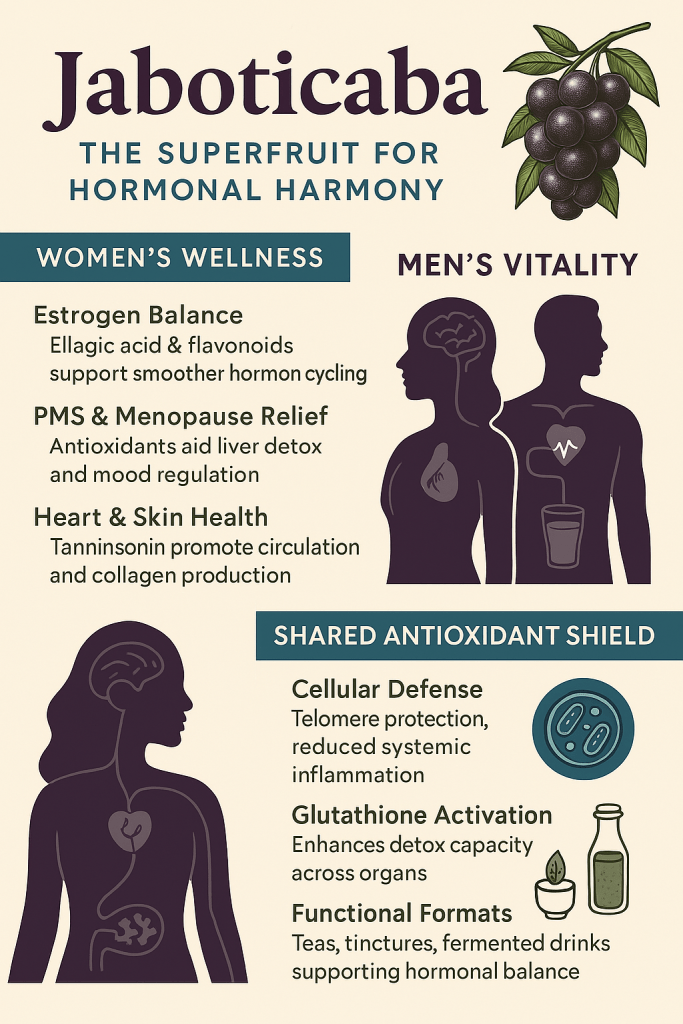
🧬 Data Highlights
- Flavonoids → Estrogen modulation & testosterone support
- Anthocyanins → Cellular aging defense & liver hormone detox
- Polyphenols → Circulation & mood balance during hormonal transitions
- Tannins → Gut–hormone axis support via microbiome regulation
🧴 Cosmetic Applications
- The fruit’s antioxidants and anti-aging properties make it a rising star in natural skincare formulations.
- Jaboticaba extract is being studied for its ability to combat UV-induced skin damage and promote collagen synthesis.
🌍 Research Landscape
Studies span in vivo, in vitro, and increasingly clinical trials, positioning Jaboticaba as a promising functional ingredient.
Brazil leads current research efforts, supported by universities like Universidade Federal de Minas Gerais and São Paulo State University.🧑⚕️ Traditional Healing & Gut Wisdom of Jaboticaba
Jaboticaba isn’t just rich in antioxidants—it’s also a staple in Brazilian folk medicine and gut-friendly practices rooted in Indigenous and rural traditions.
🗿 Ethnomedicinal Uses
- Sore Throats & Asthma Relief: Decoctions made from the fruit peel and bark have been used in rural Brazil to treat upper respiratory infections and wheezing.
- Digestive Remedy: Traditional infusions are believed to reduce diarrhea and abdominal discomfort, especially in children.
- Blood Purification: In some rituals, Jaboticaba juice is used for gentle detoxification, believed to “cool the blood” and restore vitality.
- Anti-Fungal Washes: Crushed bark or peel extracts applied to skin and scalp to combat fungal conditions—similar to practices seen with guava leaves.
🦠 Gut Health Potential
- Prebiotic Fiber: The fruit’s skin and pulp contain soluble and insoluble fibers that feed beneficial gut microbes, promoting digestion and bowel regularity.
- Tannins & Polyphenols: These compounds regulate gut flora, reduce gas and bloating, and suppress pathogens without harming good bacteria.
- Fermentation-Friendly: Jaboticaba’s natural sugars and fast-fermenting qualities make it ideal for probiotic-rich wines and vinegars, which have been used for gut support in local diets.
- Anti-Diarrheal Properties: Polyphenol-rich extracts help bind intestinal toxins, regulate water absorption, and restore electrolyte balance.
🧪 Integrative Science Meets Tradition
Its fibers support SCFA (short-chain fatty acid) production, which helps reduce inflammation and nourish colon cells.
Studies have confirmed that Jaboticaba’s polyphenols can inhibit gut pathogens like E. coli and Helicobacter pylori—aligning with its folk use.
Studies span in vivo, in vitro, and increasingly clinical trials, positioning Jaboticaba as a promising functional ingredient.
Jaboticaba is available in the U.S.—though it’s a bit of a treasure hunt
⚠️ Jaboticaba Precautions & Considerations
🍽️ Consumption Guidelines
- Skin Sensitivity: The fruit’s skin is rich in tannins, which can cause digestive discomfort if consumed in large quantities. It’s best to eat Jaboticaba in moderation or remove the skin when making juice or jam.
- Fermentation Risk: Jaboticaba ferments quickly after harvest. Spoiled fruit may cause stomach upset, so always check freshness before consumption.
- Allergic Reactions: Though rare, some individuals may experience mild allergic responses. Introduce Jaboticaba gradually if trying it for the first time.
🧪 Medicinal Use Caution
- Unregulated Extracts: Supplements or extracts made from Jaboticaba peel or seeds may vary in potency. Always consult a healthcare provider before using them therapeutically.
- Drug Interactions: Jaboticaba’s polyphenols may interact with medications for blood pressure, diabetes, or hormone regulation. Use caution if combining with pharmaceuticals.
🐾 Pets & Children
- Not Recommended for Pets: The tannin-rich skin and seeds may be harmful to dogs or cats. Keep the fruit out of reach.
- Choking Hazard: Whole fruits contain seeds and can pose a choking risk for small children. Serve peeled or mashed for safety.
🌱 Growing Precautions
Soil & Water Balance: Jaboticaba is sensitive to root rot from overwatering and nutrient lockout from high pH soils. Maintain pH between 5.5–6.5 and ensure good drainage.
Pest Management: Aphids, scale insects, and fruit flies are common threats. Use organic pest control methods to avoid chemical residues.
🌟 Dare to Try: Jaboticaba, The Fruit That Defies Convention
In a world of predictable apples and store-bought berries, Jaboticaba stands as a botanical rebel—flowering from bark, bursting with antioxidants, and steeped in healing lore. It dares you to look twice, think deeper, and taste outside the lines.
So why not trade the ordinary for the extraordinary? Whether you’re brewing a hormone-balancing tea, planting a trunk-fruiting sapling, or spooning the vibrant pulp into a healing dessert…
Jaboticaba doesn’t just nourish—it transforms. You don’t have to be in Brazil to take that first bold step. Just be curious. Be intentional. Be willing to turn the bark into a beginning.
🔗 Ready to Explore?
Discover related fruits like Indian Gooseberry, Governor’s Plum, and Kepel in our [Healing Herbs Series].
📌 Let this be your invitation to live naturally, daringly, and deeply—one fruit at a time.
 EJADA
EJADA 
Leave a comment