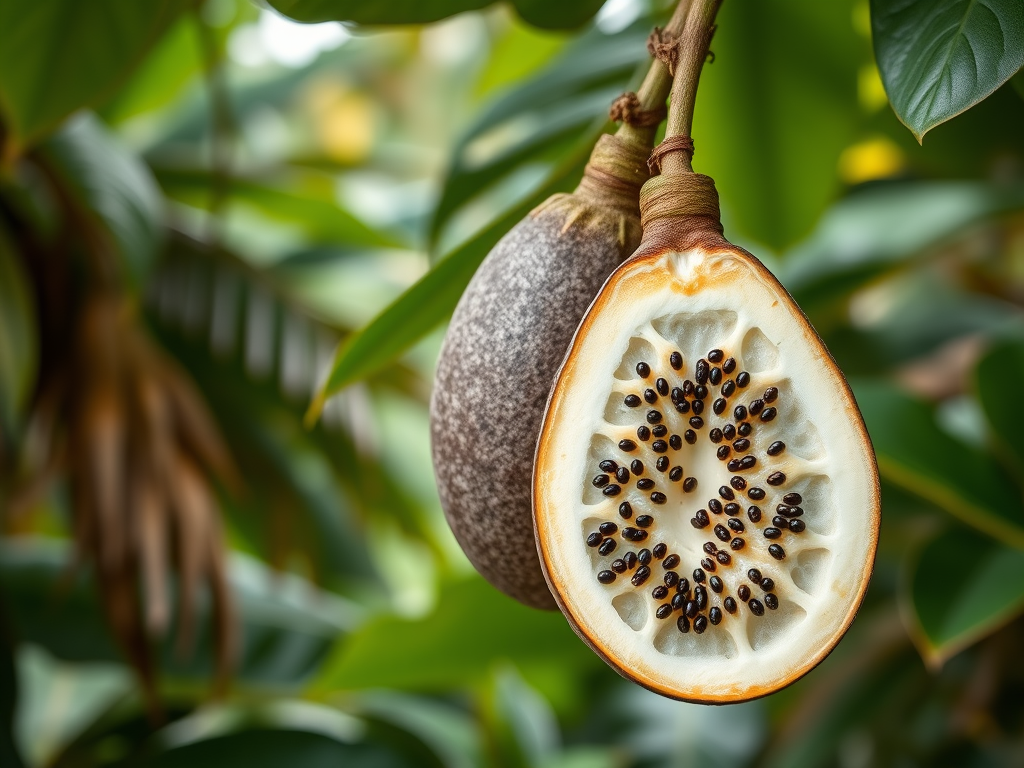
🌿 The Jaqua fruit—more commonly known as Jagua or Genipa americana—is a fascinating tropical berry with deep cultural, medicinal, and culinary roots.
🍇 What Type of Fruit Is It?
- Botanical Classification: It’s a berry from the Rubiaceae family, native to tropical forests of Central and South America, the Caribbean, and southern Mexico.
- Appearance: Oval-shaped, 10–12 cm long, with a thick skin that turns grayish-brown when ripe.
- Flavor Profile: When ripe, it tastes like dried apple or quince—sweet, slightly astringent, and fibrous.
🌱 Historical Cultivation
- Ancient Use: Indigenous tribes like the Shipibo and Ashaninka have used jagua for 2,500–3,000 years, primarily for body art, medicinal remedies, and spiritual protection.
- Traditional Regions: Cultivated in Peru, Brazil, Colombia, and other Amazonian regions. It thrives in humid, lowland rainforests and flood-prone areas.
🍽️ Edible Parts of the Fruit
| Part | Edibility & Use |
|---|---|
| Pulp | Edible raw or cooked; used in jams, juices, syrups, sherbets, and ice cream4 |
| Seeds | Typically discarded; not commonly consumed |
| Skin | Not eaten; contains genipin used for dyeing and body art5 |
| Juice (from pulp) | Used in cold remedies, fermented drinks, and natural dyes |
The pulp is the star here—nutritious, versatile, and culturally revered. It’s rich in iron, riboflavin, fiber, and organic acids, making it both a food and a functional remedy.
The Jaqua fruit (Genipa americana) shares several bioactive compounds with medicinal herbs, especially those known for anti-inflammatory, antimicrobial, and detoxifying effects. Here’s a breakdown of its herbal-like composition:
🧬 Key Compounds in Jaqua Fruit
| Compound | Herbal Parallel | Function & Benefit |
|---|---|---|
| Genipin | Found in Gardenia jasminoides | Anti-inflammatory, liver-protective, used in natural dyes |
| Tannins | Present in witch hazel, oak bark | Astringent, antimicrobial, skin healing |
| Iron | Shared with nettle, dandelion root | Supports blood health and energy levels |
| Riboflavin (B2) | Found in alfalfa, moringa | Boosts metabolism and cellular repair |
| Flavonoids | Common in elderberry, green tea | Antioxidant, immune support |
| Organic acids | Seen in hibiscus, lemon balm | Detoxifying, supports digestion |
🌱 Herbal Synergy
- Genipin, the pigment responsible for Jaqua’s blue-black dye, is also a potent anti-inflammatory—similar to curcumin in turmeric.
- Tannins give Jaqua its astringent quality, much like herbs used for wound healing and skin toning.
- Its iron and B vitamins make it nutritionally comparable to blood-building herbs like nettle and moringa.
Jaqua’s unique blend of fruit-based and herb-like compounds makes it a botanical hybrid—nutritive, therapeutic, and culturally rich.
jagua or huito, holds deep cultural significance across Indigenous communities in Central and South America. Its uses span spiritual rituals, body art, medicine, and food traditions, making it a botanical cornerstone of Amazonian heritage.
🎨 Body Art & Ceremonial Dye
- Shipibo and Emberá tribes have used jagua for over 2,500 years to create intricate temporary tattoos for rites of passage, weddings, and spiritual ceremonies.
- The unripe fruit’s juice, rich in genipin, oxidizes to a deep blue-black pigment that stains skin for up to 20 days—used as a natural alternative to synthetic dyes2.
- Designs often symbolize protection, identity, and ancestral connection.
🧘♀️ Spiritual & Symbolic Roles
- In pre-Columbian mythology, jagua was considered sacred. One legend says the first woman on Earth emerged from its fruit, making it a symbol of creation and divine law.
- Guatemalan tribes carry jagua to ward off misfortune and disease, treating it as a spiritual talisman.
🧪 Medicinal Traditions
- Used as a diuretic, antibiotic, and antiparasitic, jagua is consumed in various forms to treat ailments like jaundice in El Salvador and colds in Puerto Rico.
- Indigenous people bathe in its juice to repel insects and soothe skin conditions.
🍹 Culinary & Festive Uses
🍽️ Culinary Explorations
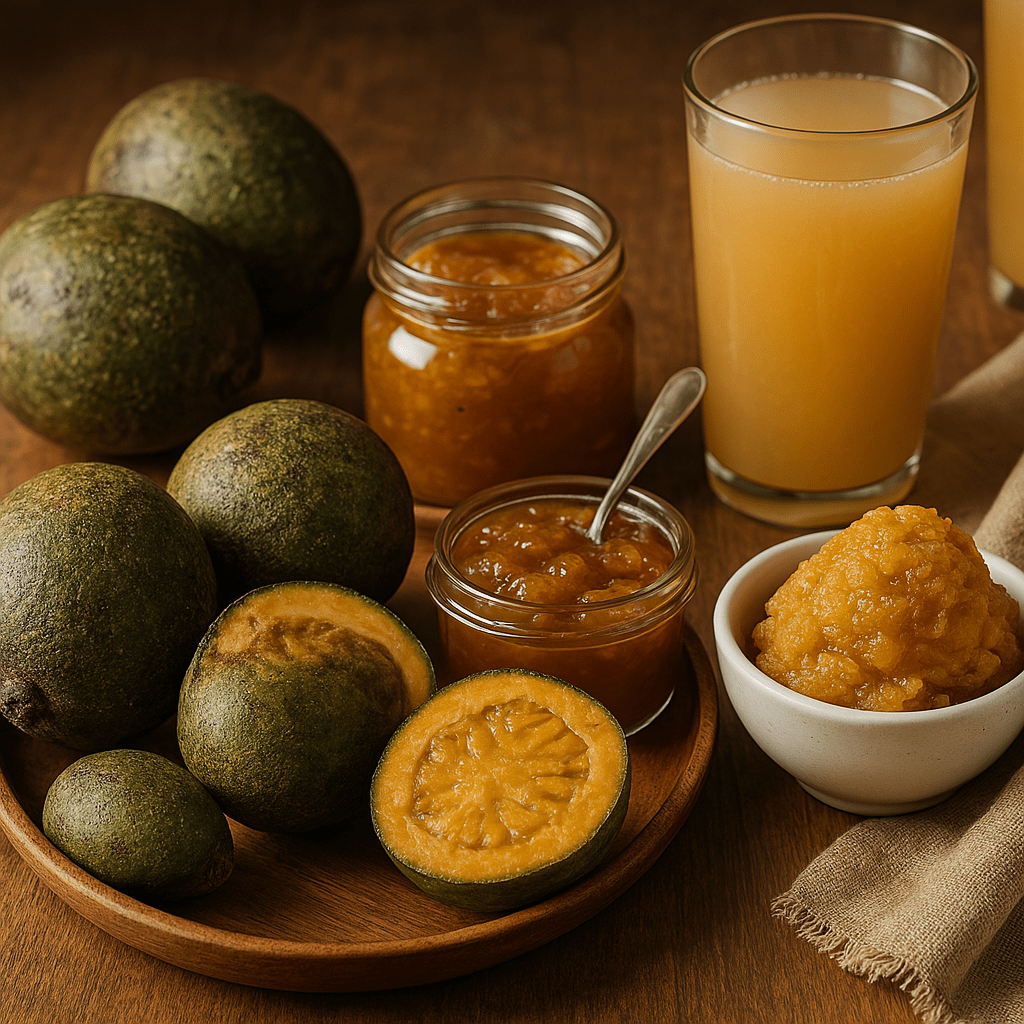
Sweetened Preserves: In Brazil and Colombia, jagua pulp is simmered into thick jams and syrups used to sweeten pastries, pancakes, and cheeses.
Icy Treats & Sherbets: Peruvian and Puerto Rican markets feature jagua-flavored sherbets and ice creams—deep amber in color, tangy and refreshing.
Fermented Beverages: The pulp is steeped with sugar and water into a fermented tonic, often enjoyed at family gatherings for its bittersweet complexity.
Spiritual Feasts: In Amazonian rituals, jagua is sometimes served alongside sacred herbs during seasonal transitions or storytelling ceremonies.
🎉 Festive Traditions
- Carnival Celebrations: The juice is used not only for body decoration but also as a thematic food dye in breads and ceremonial pastries.
- Folkloric Performances: Dancers and storytellers wear jagua-tinted tattoos while sharing ancestral legends—blurring art and heritage.
- Healing Gatherings: In tribal communities, jagua is prepared as part of communal meals that honor healing, birth, or rain season blessings.
Jagua isn’t just a fruit—it’s a cultural artifact, a natural healer, and a canvas for ancestral expression.
sources that support the cultural, medicinal, and culinary uses of Jaqua (Genipa americana) fruit:
- Gastro Obscura – Jagua: Details its use in body art, cold remedies, and spiritual protection across Central and South America.
- Try Green Recipes – Huito Fruit: Offers insights into its cultivation, preparation, and nutritional value.
- HennaCity – Jagua Fruit: Explores its historical use in Amazonian tribes for dyeing, medicine, and insect repellent.
- Exótica Superfoods – Jagua: Highlights its benefits as a digestive aid, diuretic, and aphrodisiac.
- Wikipedia – Genipa americana: Provides botanical classification, regional names, and chemical compounds like genipin and tannins.
⚠️ Cautionary Notes
While Jaqua (Genipa americana) is revered for its versatility, a few thoughtful precautions elevate safe and respectful use:
- Skin Sensitivity: The genipin pigment from the unripe fruit can cause mild irritation in sensitive individuals. Patch tests are advised before body art applications.
- Consumption Awareness: Unripe pulp and improperly fermented drinks may be too astringent or harsh—only ripe fruit should be consumed in culinary contexts.
- Staining Power: Genipin creates a deep, semi-permanent stain on skin and fabrics. Keep it away from light textiles unless you’re embracing nature’s ink!
- Sustainable Harvesting: Overharvesting in native regions can threaten jagua’s ecological balance. Support fair trade and Indigenous-led cultivation practices.
🌟 Standout Points to Remember
| Feature | Why It Stands Out |
|---|---|
| Natural Ink & Body Art | Creates deep blue-black tattoos used in sacred rituals |
| Medicinal Properties | Anti-inflammatory, liver-supportive, antiparasitic |
| Cultural Heritage | Symbolic in Amazonian myths, protective folklore, and spiritual practice |
| Culinary Versatility | Found in sherbets, fermented tonics, preserves, and festive dishes |
| Bioactive Richness | Genipin, tannins, flavonoids, iron, and riboflavin |
Jagua isn’t just a fruit—it’s a storytelling tool, a healer, and a celebration of Indigenous innovation. 🌺
Conclusion
Jaqua is more than a tropical berry—it is a botanical tapestry of flavor, healing, and heritage. From ancestral tattoos inked in natural pigment to fermented brews served at healing gatherings, this fruit embodies the soul of Amazonian wisdom. Its medicinal chemistry rivals revered herbs, while its culinary charm sweetens traditions across Latin America. Yet as we embrace its gifts, we must tread thoughtfully—respecting its potency, its origins, and the communities that have safeguarded its story for millennia. Whether steeped, stained, or savored, Jaqua invites us to honor nature not just as nourishment, but as narrative.
 EJADA
EJADA 
Leave a comment