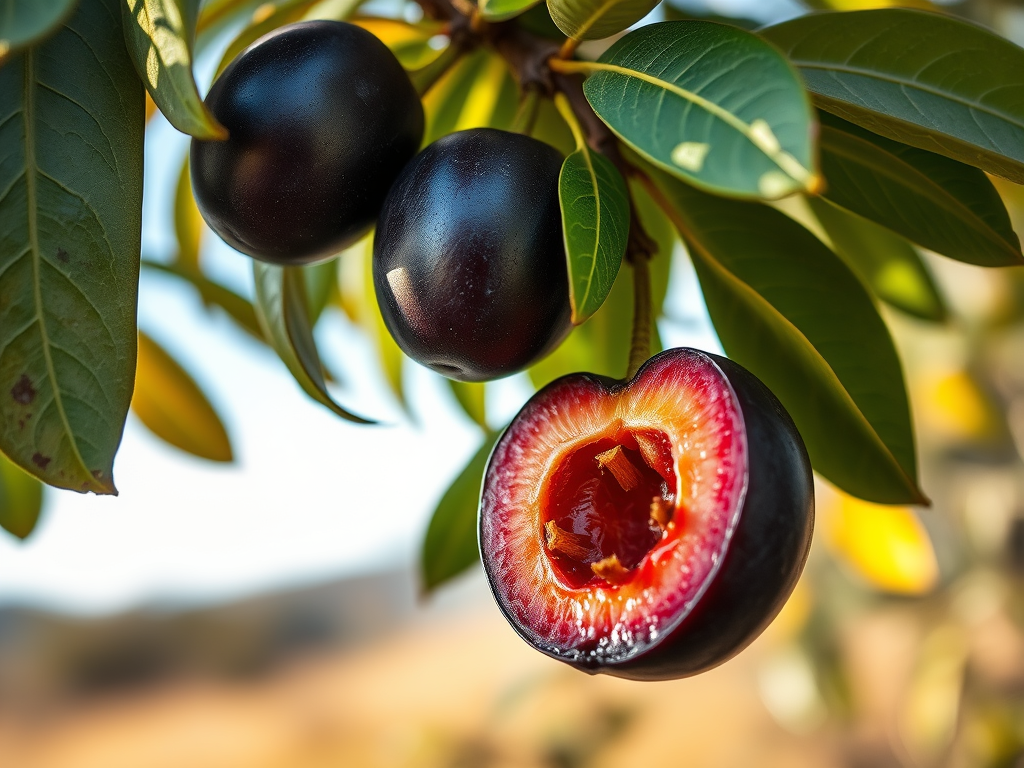
Illawarra Plum! It’s a fascinating fruit native to Australia, especially found in the Illawarra region of New South Wales. Here’s a flavorful breakdown:
🌊 Etymology & Aboriginal Roots
- The word Illawarra is derived from the Tharawal language, with early spellings like Allowrie, Elouera, or Eloura.
- Common interpretations include:
- “Pleasant place near the sea”
- “High place near the sea”
- Some sources suggest “Illa” means white clay, and “warra” or “wurra” means mountain, giving us “white clay mountain”
- Early European explorers like George Bass and Matthew Flinders recorded the name Allowrie during their 1796 expedition.
- By 1817, Governor Macquarie referred to the region as “Five Islands,” but acknowledged the Aboriginal name Illawarra in official correspondence.
- The region has been inhabited for over 20,000 years by the Tharawal and Wadi Wadi peoples, who are the traditional custodians of the land surrounding Lake Illawarra.
- The name carries spiritual weight, with landmarks like Mount Keira and Mount Kembla featuring in Aboriginal creation stories.
🍇 Connection to the Illawarra Plum
- The fruit’s name honors its native habitat, tying botanical identity to cultural geography.
- It’s a beautiful example of how Indigenous knowledge and biodiversity are interwoven
🍇 Illawarra Plum (Podocarpus elatus)
- Also known as Brown Pine, though it’s not a true plum.
- The edible part is actually a fleshy purple-black drupe attached to a seed cone.
- Has a sweet, slightly tart flavor—often compared to stewed fruit or plum jam.
🌿Illawarra’s cultural significance is deeply rooted in Aboriginal heritage, ecological reverence, and intergenerational storytelling. Let’s peel back the layers:
🌿 Dharawal Country & Spiritual Connection
- The Illawarra region is part of Dharawal Country, traditionally inhabited by the Tharawal and Wadi Wadi peoples for over 20,000 years.
- Landmarks like Mount Keira (Djeera) hold sacred meaning. According to Dreaming stories, Djeera turned to stone while watching over her sisters, who became the Five Islands.
- The Morton Bay Fig Tree in Figtree was a birthing site—newborns were placed in its roots and washed with creek water while mothers sang welcome songs.
🌀 Living Culture & Community Identity
- Aboriginal people moved freely across the region, sharing resources and maintaining fluid cultural boundaries that transcend modern municipal lines.
- The Djeera Project, led by the Illawarra Local Aboriginal Land Council, is reclaiming Mt Keira as a place of learning and cultural continuity, using oral histories and educational outreach.
🎨 Heritage in Urban Landscapes
- Sites like the Old Wollongong Courthouse and Blue Mile Pathway are being reinterpreted through Indigenous and colonial lenses, offering a layered view of history.
- Conservation efforts are blending heritage management with cultural storytelling, ensuring that both tangible and intangible assets are preserved.
🌱 Why It Matters
It’s a model of how Indigenous knowledge systems can inform ecological resilience, urban planning, and community healing.
Illawarra’s cultural significance isn’t just historical—it’s alive, shaping identity, guiding land stewardship, and inspiring new generations to engage with their roots.
- Grows on a tall evergreen tree, sometimes reaching up to 30 meters.
- Fruit ripens in late summer to autumn.
While all plums share a core set of health benefits, their nutritional profiles and medicinal properties can vary depending on the species, color, and preparation (fresh vs. dried). Here’s a breakdown:
🍑 Shared Health Benefits Across Most Plums
- Rich in antioxidants like anthocyanins and quercetin, which help fight inflammation and oxidative stress2
- Good source of vitamin C, supporting immunity and skin health4
- Contain dietary fiber, aiding digestion and relieving constipation3
- Support heart health by lowering blood pressure and cholesterol4
- May help regulate blood sugar due to their low glycemic index and fiber content3
🌈 Differences Based on Variety
| Plum Type | Unique Traits & Benefits |
|---|---|
| Illawarra Plum | Native to Australia; high in antioxidants; used in bush medicine |
| Kakadu Plum | Exceptionally high in vitamin C; used for skin and immune health |
| Java Plum (Jamun) | Known for managing diabetes and digestive issues |
| European Plums | Often dried into prunes; excellent for bone health and constipation relief3 |
| Japanese Plums | Juicier and sweeter; good for hydration and skin support |
🧪 Fresh vs. Dried (Prunes)
- Prunes have higher fiber and sugar content, making them more effective for constipation but also more calorie-dense3
- Fresh plums are lower in calories and better for hydration and weight management4
So while the baseline benefits are similar, the specific strengths of each plum can vary widely. Want to explore how Illawarra Plum stacks up against Kakadu or Davidson’s Plum in a cultural or medicinal context
plums are nutritious and versatile, but like any fruit, they come with a few caveats worth noting. Here’s a comprehensive guide to precautions when consuming plums, especially if you’re integrating them into EJADA content:
- Don’t eat the pit: Plum pits contain amygdalin, which can release cyanide when metabolized. Always remove them before consumption.
- Watch portion size: Limit to 2–3 fresh plums or 4–5 prunes per day to avoid bloating, gas, or diarrhea2.
- Allergy alert: People allergic to Rosaceae family fruits (like peaches, cherries, apricots) may react to plums.
- Wash thoroughly: Rinse under running water to remove pesticides and dirt4.
🩺 Health-Specific Considerations
- Kidney concerns: Plums are high in potassium—those with kidney disease should moderate intake.
- Diabetes management: While plums have a low glycemic index, dried versions (prunes) are sugar-dense. Monitor blood sugar levels accordingly.
- IBS or sensitive digestion: Sorbitol in plums may trigger symptoms like bloating or cramps.
- Medication interactions: Plums may interact with blood thinners due to vitamin K and potassium content.
👶 Special Populations
- Infants under 1 year: Not recommended due to choking hazard and high fiber content.
- Pregnant or breastfeeding: Stick to food-level amounts; medicinal doses lack safety data.
🌿 Foraging & Wild Plum Safety
- Avoid wild plums unless positively identified—some look-alikes can be toxic.
- Never consume plums from polluted areas or those treated with unknown chemicals
Smoked Illawarra Plum & Beet Carpaccio
An appetizer that bridges bush food heritage with botanical elegance
✨ Cultural Significance
Rooted in Dharawal Country, the Illawarra Plum connects Indigenous knowledge with native biodiversity. Traditionally used as food and medicine, its intense flavor and antioxidant-rich profile make it a standout in bush food cuisine. Pairing it with beetroot—a symbol of grounding and nourishment—echoes the Earth-centered ethos of many Indigenous food systems.
🍴 Ingredients (Serves 4)
- 2 medium beets, thinly sliced (raw or lightly steamed)
- 6 Illawarra Plums, smoked or oven-roasted
- 1 tbsp lemon myrtle-infused olive oil
- 1 tsp bush mint, finely chopped
- 1 tbsp wattleseed crumble (toasted and crushed)
- Sea salt and cracked pepper to taste
🔥 Instructions
- Prep the beets: Peel and thinly slice the beets using a mandolin. Arrange in overlapping circles on chilled plates.
- Smoke the plums: Halve and gently smoke the plums over native wood chips or roast at 180°C for 10 minutes until caramelized.
- Layer and dress: Spoon plum halves over beet slices. Drizzle with lemon myrtle olive oil.
- Finish with garnish: Sprinkle bush mint and wattleseed. Add sea salt and pepper.
💪 Health Benefits
| Ingredient | Benefit |
|---|---|
| Illawarra Plum | Antioxidants, immune support |
| Beetroot | Blood pressure regulation, detox support |
| Lemon Myrtle | Anti-inflammatory, digestion aid |
| Wattleseed | Protein, iron, low GI energy |
| Bush Mint | Antimicrobial, refreshing aroma |
🌿 EJADA Tip
Highlight this dish as an educational gateway—invite readers to explore native ingredients that go beyond flavor and into cultural and ecological consciousness. Sidebar note on Djeera’s Dreaming story to deepen connection to the land.
🌀 Sidebar: Djeera’s Dreaming Story
Mount Keira—known as Djeera to the Dharawal, Wadi Wadi, Eloura, and Yuin peoples—is more than a mountain; she is a sacred Ancestor. According to Dreaming stories, Djeera was a woman who stood watch over her sisters, the Five Islands off the Illawarra coast. When she turned to stone, her spirit remained embedded in the land, forming the mountain we see today.
This story is a living thread in the cultural fabric of the Illawarra, passed down through oral traditions, art, and ceremony. It reflects deep kinship ties, ecological stewardship, and the spiritual connection between people and place. Djeera is honored as a symbol of strength and continuity, and her story continues to guide community identity and land care practices..
🍹 Finger Lime & Plum Cooler
Sparkling mocktail with bush citrus and plum richness
🌿 Botanical Story
Crafted from Citrus australasica (finger lime) and native Illawarra Plum purée, this cooler celebrates Australia’s biodiversity and Indigenous culinary wisdom. Finger lime “caviar” offers tart bursts reminiscent of ocean spray—symbolic of the Five Islands watched over by Mount Djeera. Hibiscus and lemon myrtle add floral brightness and ancient medicinal depth.
🧊 Ingredients
Serves 2
- 2 tbsp plum purée (fresh, roasted, or Illawarra Plum)
- 1 tbsp finger lime pearls (2 limes’ worth)
- 1 tsp hibiscus syrup or rosella concentrate
- 1 cup sparkling water
- Juice of ½ lemon
- Crushed ice
- Garnish: lemon myrtle leaf, plum slice, edible flower
🥄 Directions
- Combine plum purée, lemon juice, and hibiscus syrup.
- Add sparkling water and stir gently.
- Layer finger lime pearls in chilled glasses.
- Add crushed ice, pour plum mixture over.
- Garnish with lemon myrtle leaf or edible blooms.
💪 Bush Food Benefits
| Ingredient | Purpose |
|---|---|
| Finger Lime | Vitamin C, gut flora support |
| Plum | Heart health, antioxidants |
| Hibiscus | Blood pressure, polyphenols |
| Lemon Myrtle | Anti-inflammatory, aromatic calm |
📌 EJADA Tip
Use this mocktail to anchor your seasonal tasting series. Pair with the Smoked Illawarra Plum & Beet Carpaccio for a menu that blends earth, story, and science.
🌺 Final Thought
In this cooler, ancient flavors meet modern vitality. The finger lime’s burst and the plum’s depth aren’t just a taste experience—they’re a tribute to the land, its stories, and the traditions that continue to nourish us. Through seasonal ingredients and mindful preparation, we celebrate wellness that’s rooted in culture, connection, and the wisdom of native botanicals. Sip slowly, and let each element remind you: food isn’t just sustenance—it’s storytelling.
 EJADA
EJADA 
Leave a comment