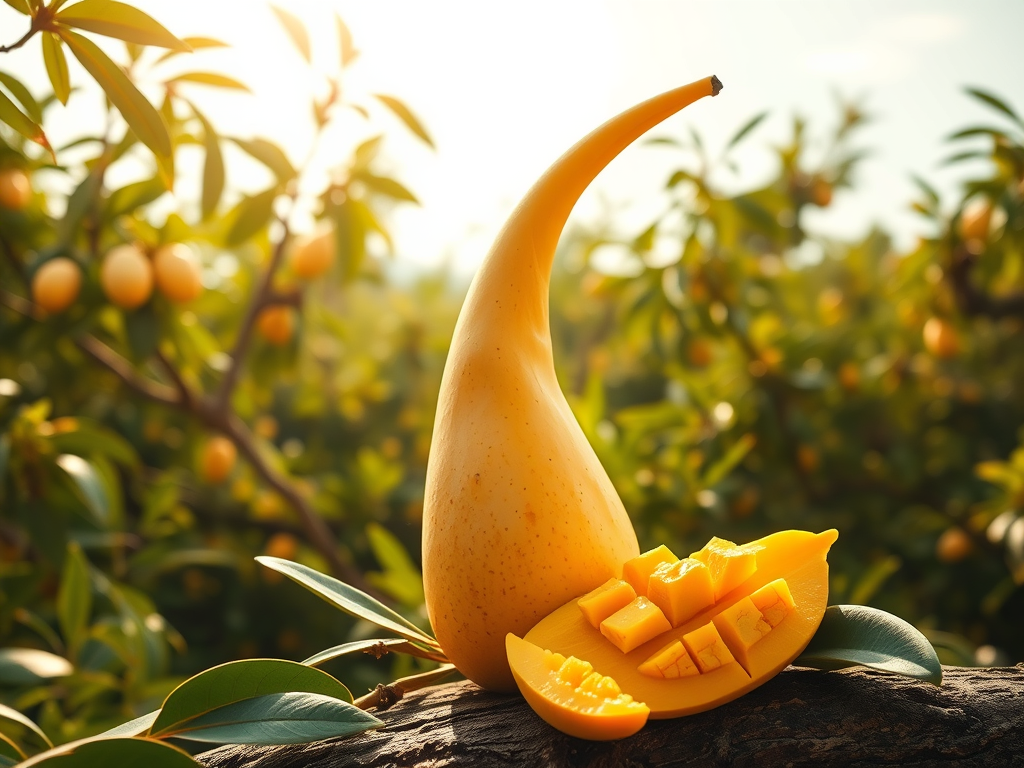
Slender as an elephant’s tusk, sweet as tropical folklore, and steeped in cultural grace—the Ivory Mango is more than fruit; it’s a symbol of longevity, diplomacy, and vitality.
First cultivated in the sun-drenched orchards of Thailand, the Ivory Mango was introduced to Yunnan, China in 1914. Its name honors its elegant shape—resembling the tusk of a young elephant—and the original tree is still thriving, famously yielding up to 500 kg of fruit in a single season.
✨ Cultivation with Purpose
From orchard to global export, the Ivory Mango was cultivated for its rare blend of form and function:
- 🍈 Visual Distinction: Its elongated, ivory-toned silhouette made it a premium pick in Asian markets.
- 🍯 Flavor & Flesh: With a fiberless texture and 82% edible content, it’s a connoisseur’s delight.
- 🌱 Genetic Prestige: Believed to be a progenitor of Maha Chanok and Jin Huang, two elite Thai mango varieties.
- 📦 Economic Efficiency: High yields and culinary elegance made it a star in export and fine dining sectors.
💊 Medicinal Brilliance
Though Ivory Mango-specific studies are scarce, it inherits the therapeutic power of the mango family:
- 🛡️ Mangiferin: A standout antioxidant linked to protection against breast, colon, and skin cancers.
- 🌾 Digestive Relief: Rich in soluble and insoluble fiber—balancing gut health and easing bloating.
- 💪 Immune Fortifier: Packed with vitamins C, A, and E, boosting overall resistance.
- percentages in leaf green:
- 💪 Vitamin C: 203%
- 👁️ Vitamin A: 72%
- ❤️ Vitamin E: 20%
- 🧠 B6 + Folate: Brain and DNA health
- 🌿 Fiber + Potassium: Digestive balance
- ❤️ Heart Helper: Naturally lowers LDL cholesterol and stabilizes blood pressure.
- 👁️ Glow & Clarity: Vitamin A supports collagen formation and eye vitality.
Ivory Mango – Nutritional Brilliance
Quick Stats per ~336g fruit:
- Calories: 201
- Total Fat: 1.3g
- Fiber: 5g (20% DV)
- Sugars: 46g
- Protein: 2.8g
- Potassium: 564mg (16%)
- Vitamin C: 203% DV
- Vitamin A: 72% DV
- Vitamin B6: 20% DV
- Vitamin E: 20% DV
- Folate: 36% DV
- Copper: 41% DV
- Magnesium: 8% DV
📌 Rich in antioxidants like mangiferin, Ivory Mango supports immunity, skin health, and heart function while adding sweet elegance to your plate.
🌿 Ceremonial Echoes & Symbolism
Although it doesn’t hold the same ritual spotlight as other mangoes, the Ivory Mango echoes deep cultural stories across Asia.
🐘 In Thailand
- The mango’s tusk-like shape links to the elephant, symbol of royalty and wisdom.
- Ivory coloring aligns with notions of purity, luck, and spiritual clarity.
- Featured in Songkran festivals, used in high-end culinary offerings to honor prosperity.
🏮 In China
- Its historic introduction reflected agricultural diplomacy between Thailand and China.
- The original tree became a metaphor for longevity and abundance.
- Shared as a gift during Lunar New Year and Mid-Autumn Festival, representing good fortune.
🕉️ Across Asia
- Mango leaves in Hindu rituals symbolize blessings and are used in sacred spaces.
- In Buddhism, mango trees represent enlightenment—Buddha was said to meditate beneath one.
- During South Asian weddings, mangoes evoke sweetness and fertility, making them ceremonial staples.
🎉 Featured in Mango Festivals
The Ivory Mango may not headline any festival, but its unique character earns it a spot in global mango celebrations:
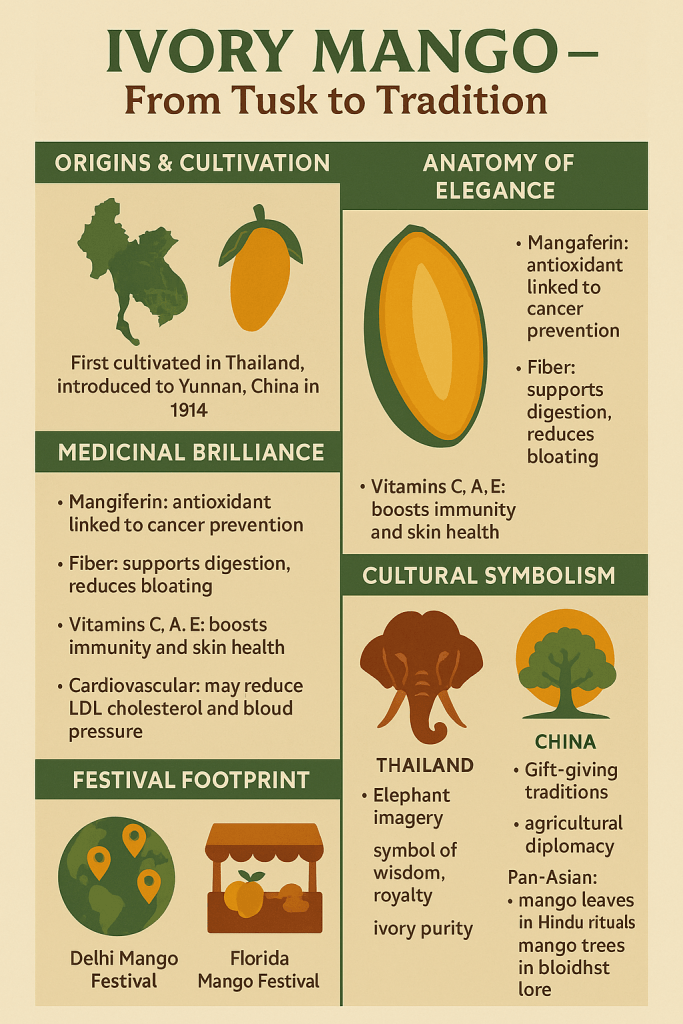
Delhi Mango Festival
Florida Mango Festival
Pine Island’s Mango Mania
Appearances in global tastings & showcases
🍽️ Culinary Uses of the Ivory Mango
🥗 Fresh & Raw Applications
- Sliced or cubed in tropical fruit salads with pineapple, banana, and mint
- Paired with avocado in savory salads or toast, balanced with lime and chili flakes
- Mango salsa for grilled fish, shrimp tacos, or chicken—adds brightness and depth
🍚 Traditional Asian Dishes
- Thai Sticky Rice with Mango (Khao Niao Mamuang): Ivory Mango’s smooth flesh makes it ideal for this coconut-infused dessert
- Vietnamese Mango Salad: Combines shredded mango with herbs, chili, and fish sauce for a sweet-sour-spicy punch
- Mango Curry: Used in Sri Lankan and South Indian dishes, where green or semi-ripe mangoes are simmered with spices and coconut milk
🍛 South Indian Favorites
- Mango Pachadi: A sweet-tangy side dish made with jaggery and tempered spices
- Mango Dal (Mamidikaya Pappu): Ivory Mango adds a gentle tartness to this comforting lentil stew
- Raw Mango Thokku: A spicy Tamil condiment made with grated mango, mustard seeds, and chili
🍰 Desserts & Drinks
- Mango Lassi: Blended with yogurt and cardamom for a creamy, cooling drink
- Mango Sorbet or Ice Cream: Ivory Mango’s fiberless flesh creates a velvety texture
- Mango Cheesecake or Mousse: Adds tropical flair to creamy desserts
🍹 Beverages & Cocktails
- Mango Mojito or Margarita: Pairs well with mint, lime, and tequila
- Smoothies: Blends beautifully with banana, pineapple, or coconut milk for a tropical breakfast
🍈 Availability Notes
- Typically available as grafted trees, not fresh fruit in grocery stores.
- Fruiting begins within 1–2 years of planting.
- Ideal for gardeners, culinary enthusiasts, and tropical fruit collectors.
🧭 The Journey Doesn’t End with Ivory
From its tusk-like grace and medicinal brilliance to its roots in diplomacy and ritual, the Ivory Mango invites us to rethink what fruit can be—nutritious, symbolic, and timeless.
But the world of healthy fruits is vast and vibrant. Each fruit carries its own story, healing power, and connection to tradition—just like this one.
Whether you’re chasing flavor, wellness, or folklore—EJADA continues to gather these hidden treasures one fruit at a time.
👉 Follow along, share your favorites, and stay curious. The next fruit might just change your perspective—or your plate.
 EJADA
EJADA 
Leave a comment