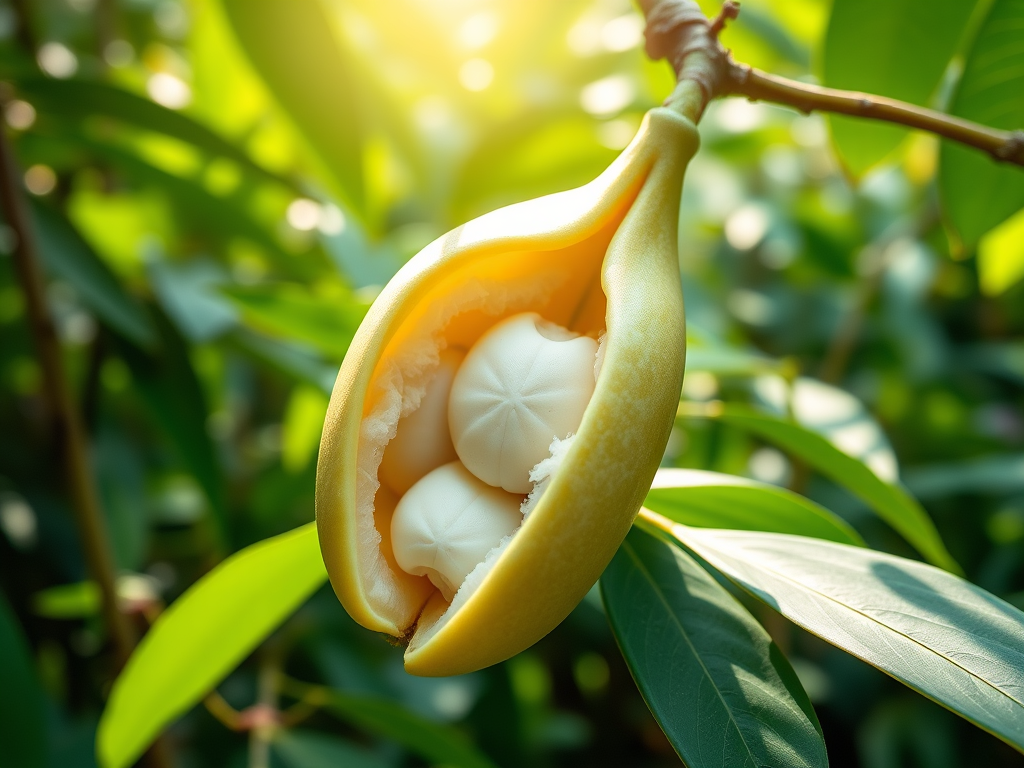
🍃 Inga laurina: Type of Fruit
Inga laurina produces a fruit known as a legume pod, which is typical of plants in the Fabaceae (pea) family. Here’s what makes it unique:
🌱 Botanical Classification
- Family: Fabaceae (Legume family)
- Genus: Inga
- Species: laurina
🌸 Fruit Type: Legume Pod
- Similar in structure to beans or peas
- The pod is elongated, soft, and often slightly curved
- Inside, it contains several seeds covered in a sweet, cottony pulp
🍬 Edible Part
- The white pulp surrounding the seeds is the edible portion
- Flavor is mildly sweet—similar to vanilla ice cream in some Inga species, though Inga laurina has a more subtle taste
🧬 Nutritional and Functional Traits
- Rich in fiber, protein, copper, and chromium
- Contains powerful antioxidants
- Shows potential for functional food uses, especially in bioactive compounds from its seeds and peel
Inga laurina: What and Where It Was First Discovered
Taxonomic “Discovery”
Inga laurina is a neotropical tree in the pea family (Fabaceae). It was first formally described in 1788 by the Swedish botanist Olof Swartz under the basionym Mimosa laurina in his work Nova Genera et Species Plantarum.
Type Locality
Swartz’s description was based on specimens he collected during his West Indies expedition, with the type material coming from Jamaica in the Caribbean.
Native Range
Although first documented in Jamaica, Inga laurina is now known to occur widely across tropical America—from northeastern Mexico and the Greater and Lesser Antilles, through Central America, and south to Paraguay and northern Argentina—typically in moist lowland rainforest up to about 1,500 m elevation.
🚫 Underutilization & Limited Awareness of Inga laurina
Despite its powerful nutritional properties and bioactive potential, Inga laurina remains underutilized and largely unknown outside its native regions. Here’s why:
🌍 Geographic Constraint
- Primarily found in tropical and subtropical areas like Brazil, Paraguay, and parts of the Caribbean
- Limited export activity and domestic commercial cultivation—most communities consume it locally or forage it seasonally
🔍 Lack of Scientific and Public Exposure
- Only recent phytochemical and nutritional analysis published (as late as 2023!)
- Minimal inclusion in global nutrition databases like the USDA or FAO
- Very few mentions in dietetic, consumer-facing media outlets
🛑 Cultural & Economic Marginalization
- Indigenous and rural communities may use it medicinally or nutritionally, but such uses are not widely documented or marketed
- Often categorized as a “wild fruit” or “minor species” in agricultural policy and trade
📉 Market Visibility
- No global branding like acai, goji, or dragon fruit
- Rarely featured in mainstream grocery stores or superfood supplements
- No consistent supply chain or scalable production model—making commercial exploitation difficult
🌿 Inga laurina: From Forest Secret to Functional Powerhouse
Discovered in Jamaica in 1788 by botanist Olof Swartz, Inga laurina—often dismissed as a wild legume—quietly holds potent nutritional and cultural value. It thrives from the Caribbean through South America, yet remains largely unknown outside its native soils.
🍃 Rooted in Tradition
- Local Names: Known as Ingá-mirim or forest vanilla in Brazilian communities
- Cultural Use:
- Pulp savored fresh for its mild sweetness
- Seeds and peel used in rural herbal remedies
- Indigenous groups recognized its cleansing and nourishing properties
🔬 Rediscovered by Science
Recent studies (2023 onward) reveal:
- Fiber: 4.5–11 g/100g (pulp + peel)
- Protein: 19.5 g/100g in seeds
- Minerals: High in copper, chromium, iron
- Antioxidant Power:
- DPPH EC₅₀: ~13.3 µg/mL
- ABTS EC₅₀: ~1.68–2.7 µg/mL
“Its nutrient density rivals commercial superfruits—yet it’s rarely seen on store shelves.”
🚫 Why It’s Overlooked
- Not featured in USDA or global nutrition rankings
- No presence in top-15 “healthiest fruits” lists
- Wild-harvested, lacking global branding or supply chains
- Minimal visibility in consumer health media
🔄 A Path Forward
- 🌱 Suited for regenerative farming and reforestation
- 🧃 Versatile in smoothies, teas, fruit powders
- 🧬 Potential in nutraceuticals and antioxidant-rich supplements
- 📖 Powerful case study for Indigenous science meets modern research
🍬 Culinary Uses of Inga laurina
1. Fresh Consumption
- The sweet, cottony pulp surrounding the seeds is eaten straight from the pod.
- Flavor is mildly sweet with a hint of vanilla—earning it the nickname “forest vanilla.”
- Often enjoyed as a refreshing snack in tropical regions like Brazil, Colombia, and the Caribbean2.
2. Smoothies & Fruit Salads
- The pulp blends well into smoothies, adding natural sweetness and a creamy texture.
- Can be tossed into fruit salads for a tropical twist.
3. Desserts & Sweet Sauces
- Used in ice creams, sherbets, and sweet sauces—especially in fusion or Indigenous-inspired recipes.
- Some communities ferment the pulp into light beverages or use it in dessert fillings.
4. Seed-Based Innovations
- Seeds have a mild almond-like flavor and are sometimes roasted or ground into flour for experimental baking.
- Still underutilized in mainstream cuisine, but show promise for protein-rich flour blends.
🌿 Traditional & Cultural Pairings
- In Indigenous cultures, the fruit is shared during gatherings as a symbol of abundance and community bonding.
- Sometimes paired with cassava, plantains, or herbal teas in rural diets.
✅ Generally Safe For
👨👩👧👦 Most Healthy Adults & Children
- The pulp is traditionally consumed fresh and is considered safe when eaten in moderation.
- No known allergenic compounds have been reported in the edible portion.
🌿 Indigenous & Rural Communities
- Used in herbal remedies and folk medicine for generations.
- Leaves and seeds sometimes used in teas or topical preparations.
🧬 Nutraceutical Researchers
- Extracts from leaves and seeds show antioxidant, antifungal, and antimicrobial properties.
- The ILTI proteinase inhibitor from seeds is being explored for insecticidal and therapeutic applications.
⚠️ Potentially Unsafe or Caution Advised For
👶 Infants & Toddlers
- The seeds are large and hard—pose a choking hazard.
- No pediatric safety studies exist for seed or leaf extracts.
🤰 Pregnant or Breastfeeding Individuals
- No clinical data on safety during pregnancy or lactation.
- Best to avoid medicinal use of leaves or seeds unless guided by a qualified herbalist.
💊 People on Anticoagulants or Immunomodulators
- Some phenolic compounds (e.g. myricetin, quercetin glycosides) may interact with medications.
- Always consult a healthcare provider before using extracts or supplements.
🧪 Experimental Use of Seed Extracts
- The ILTI inhibitor from seeds has shown cytotoxic effects in lab studies on Vero cells.
- Not intended for direct human consumption in concentrated or purified form.
🦟 Bonus Insight: Insect Safety
- ILTI from Inga laurina seeds is lethal to Aedes aegypti larvae (LC₅₀ = 0.095 mg/mL).
- Promising as a natural mosquito larvicide, but not safe for aquatic insects or non-target species.
🔗 References & Further Reading
🧪 Scientific & Nutritional Research
- Nutritional, chemical and functional potential of Inga laurina (Fabaceae) – Key study on protein, fiber, mineral content, and antioxidant potential
- Physical, nutritional, phytochemical and antioxidant evaluation of Inga laurina – Antioxidant assays (DPPH, ABTS) and nutritional breakdown
- ILTI from Inga laurina seeds as bioinsecticide – Cytotoxicity and larvicidal bioactivity insights
🌿 Ethnobotanical & Cultural Sources
- Useful Tropical Plants – Inga laurina – Traditional uses, habitat, and local naming
- Wikipedia – Inga laurina – Botanical origins and distribution
🥗 Fruit Rankings
- 15 Healthiest Fruits to Eat – TODAY.com
- 75 of the Healthiest Fruits Ranked – Intake Health
- Top 20 Healthiest Fruits – BBC Good Food
Availability Snapshot
✅ Live Plants & Seedlings
- GreenDreamsFL ships Inga laurina trees nationwide (except California until Aug 2025 due to ag regulations)
- Real Sweet Farms offers seedlings in 5″ pots, grown in Florida and suitable for zones 9–11
- Veliyath Gardens sells it as “Guama Ice Cream Bean,” highlighting its vanilla-like pulp and fast growth
- Etsy sellers (e.g. GrowingTropicals) ship seedlings from California, with cold protection advice for zones below 9b
🌱 Seeds
- Trade Winds Fruit occasionally stocks Inga laurina seeds, though they’re seasonal and currently out of stock
🌎 Growing Zones & Tips
- Best suited for USDA zones 9–11
- Can be grown in containers in colder zones and overwintered indoors
- Thrives in full sun, well-drained soil, and benefits from nitrogen-fixing properties
🌱 Closing Reflection: Rediscovering Nature’s Hidden Genius
As science begins to revalidate what traditional communities have known for generations, fruits like Inga laurina remind us that health, heritage, and biodiversity are deeply entwined. Often dismissed as “wild” or “minor,” this legume carries the nutritional force of a superfood and the cultural wisdom of rainforest healing. At EJADA, we champion these forgotten species—not as novelties, but as bridges between ancestral knowledge and modern vitality. Let Inga laurina be a call to look beyond the shelf and explore the edible genius rooted in the world’s most resilient ecosystems.
🗣️ Rediscover the roots. Reclaim the richness.
“Every overlooked fruit is a story waiting to nourish.”
 EJADA
EJADA 
Leave a comment