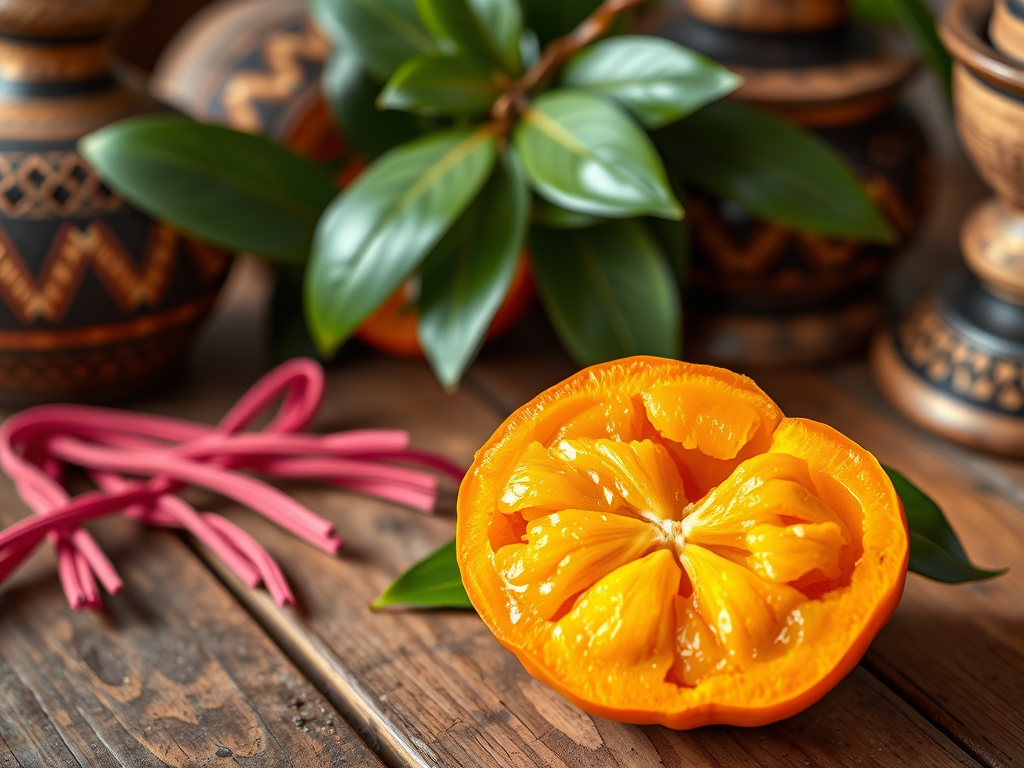
🍊 Imbe: Africa’s Citrus Gem with Medicinal Power
The Imbe fruit (Garcinia livingstonei), known as African mangosteen, is a vibrant orange berry native to tropical Africa. Its sweet-tart flavor and diverse medicinal uses make it a standout among indigenous fruits.
🌿 Cultural & Culinary Significance
- Traditional consumption: Eaten fresh, turned into jams, milkshakes, and vibrant drinks.
- Seasonal use: Typically harvested in summer across Africa, though subtropical regions enable year-round fruiting.
- Flavor profile: Citrus-mango tang with a juicy pulp that stains easily, hinting at its potent pigmentation.
🌱 Medicinal Applications
Indigenous communities have long revered Imbe for its healing properties:
| Part Used | Traditional Use |
|---|---|
| Bark & Root | Treat tuberculosis, fever, burns, parasitic infections |
| Bark Powder | Applied during ukugcaba, a healing ritual involving incisions |
| Leaves | Rich in antibacterial biflavonoids, helpful against Mycobacterium |
| Infusions | Used for toothaches, sore eyes, and male sexual disorders |
🧪 Proven Medical Insights on Imbe (Garcinia livingstonei)
1. Antibacterial Properties
- Biflavonoids in Imbe leaves have shown activity against Mycobacterium tuberculosis, the bacteria responsible for TB.
- These compounds are being studied for their potential in developing natural antimicrobial agents.
2. Traditional Use in Tuberculosis & Cancer
- The bark and root are traditionally used to treat tuberculosis, and some sources suggest anti-cancer potential, though clinical trials are still limited1.
3. Diabetes Management
- Imbe’s fiber content (approx. 5g per 100g) helps regulate blood sugar levels by slowing glucose absorption.
- Its low glycemic load and antioxidant profile make it suitable for diabetic diets when consumed in moderation.
4. Antioxidant Activity
Rich in flavonoids, carotenoids, and vitamin C, Imbe helps combat oxidative stress, which is linked to aging and chronic diseases3.
These antioxidants may reduce inflammation and support cardiovascular health.
5. Nutritional Support
Contains vitamin A, potassium, magnesium, and iron, all of which contribute to immune function, blood pressure regulation, and energy metabolism4.
💊 Nutritional Highlights (per 100g)
| Nutrient | Amount | Benefit |
|---|---|---|
| Vitamin C | 7.2 mg | Boosts immunity & collagen formation |
| Dietary Fiber | 5.1 g | Aids digestion |
| Vitamin A | 35 IU | Supports vision |
| Potassium | 48 mg | Regulates blood pressure |
| Magnesium | 13.9 mg | Enhances bone & muscle function |
| Iron | 0.17 mg | Oxygen transport |
| B Vitamins | Trace | Energy metabolism |
| Carotenes & Flavonoids | — | Antioxidant & anti-inflammatory properties |
🍇 Fruit Fusion: Global Healers with Imbe’s Power
Explore a lineup of fruits that echo Imbe’s nutritional and medicinal strengths. From South Asia to West Africa, nature’s pharmacy is vibrant, flavorful, and remarkably interconnected.
🌱 Comparative Phytonutrient Chart
| Fruit | Core Benefits | Key Phytonutrients | Culinary Use Highlights |
|---|---|---|---|
| Imbe | Antioxidant, antibacterial | Carotenes, flavonoids, tannins | Juices, jams, chutneys |
| Indian Gooseberry (Amla) | Immunity, digestion, skin health | Vitamin C, ellagic acid | Pickles, tonics, powders |
| Grapes | Heart health, anti-aging | Resveratrol, flavonoids | Wines, raisins, sauces |
| Papaya | Gut health, anti-inflammatory | Papain, carotenoids | Smoothies, salads, dried snacks |
| Pomegranate | Anti-inflammatory, skin health | Polyphenols, vitamin C | Juices, molasses, seeds |
| Guava | Immunity, digestive support | Carotenes, vitamin C | Smoothies, salsas, jams |
| Horned Melon | Hydration, magnesium support | Vitamin C, potassium | Raw slices, salads, smoothies |
| Ilama | Gut support, antioxidants | Vitamin C, phenolics | Eaten raw, desserts, drinks |
| Irvingia gabonensis | Weight & glucose management | Fiber, ellagic acid | Powders, supplements, soups |
✨ Cultural Insight: These fruits carry millennia of wellness wisdom—used in Ayurveda, African spiritual medicine, Central American folk healing, and beyond.
✨ Did You Know?
Imbe’s vivid orange pigment links it to a range of phytonutrients that fight inflammation and boost skin health. Its bark use in ukugcaba rituals reflects its deep cultural integration in the Southern African healing tradition
🌱 Sidebar: What Are Phytonutrients?
Phytonutrients, or phytochemicals, are plant-based compounds that support both plant survival and human health. They’re not classified as essential nutrients, but they offer powerful antioxidant, anti-inflammatory, and immune-boosting benefits.
🔍 Types Found in Imbe & Other Fruits
| Phytonutrient | Found In | Health Benefits |
|---|---|---|
| Carotenes | Imbe, carrots, mangoes | Eye health, skin repair, immune support |
| Flavonoids | Imbe leaves, berries, tea | Anti-inflammatory, heart protection |
| Tannins | Imbe bark, grapes, nuts | Eye health, skin repair, and immune support |
| Biflavonoids | Imbe leaves | Antioxidant, antimicrobial, and digestion aid |
| Ellagic Acid | Strawberries, pomegranate | Cancer prevention, DNA repair |
The Imbe fruit is a culinary chameleon—sweet, tangy, and packed with potential. Here’s a flavorful breakdown of how it’s used in kitchens across cultures 🍽️🌍
🍊 Culinary Uses of Imbe (Garcinia livingstonei)
🥭 Fresh & Raw
- Eaten straight off the tree for its mango-citrus flavor.
- Often added to fruit salads or served chilled as a refreshing snack.
🧃 Juices & Smoothies
- Blended into tropical juices or milkshakes—its vivid orange pulp adds color and zing.
- Pairs well with coconut milk, pineapple, or ginger.
🍯 Jams & Preserves
- Cooked with sugar and lemon juice to make Imbe jam—perfect for toast, pastries, or thumbprint cookies.
- Can be preserved as a fruit butter or compote.
🌶️ Chutneys & Sauces
- Used in spicy chutneys with vinegar, garlic, and chili—great with grilled meats or samosas.
- Adds depth to hot curried fruit dishes, balancing spices with its tartness.
🍨 Desserts
- Incorporated into ice creams, sorbets, and fruit tarts.
- Can be dried and added to trail mixes or granola bars.
🔥 Roasted Seeds
- In some regions, Imbe seeds are roasted and eaten as a crunchy snack.
Hot Curried Fruit: You can use imbe fruit to prepare delicious curried fruit. The tangy flavor of the fruit balances well with the spices and creates a unique taste.
Replace one fruit with an imbe fruit and combine it with vegetables, spices, and coconut milk for a flavorful curry.
🛍️ Sourcing Imbe: Where to Buy or Grow This African Gem
Whether you’re a tropical fruit enthusiast or a cultural gardener, Imbe (Garcinia livingstonei) is available through select vendors and nurseries. Here’s how to get started:
🌿 Buy the Fruit (Seasonal Availability)
Vendor Product Offered Notes Miami Fruit Fresh Imbe fruit Available late summer/fall; ships ripe Exotic Gourmand Fresh fruit & info May offer seasonal batches 🌱 Grow Your Own (Trees & Seeds)
Vendor Product Offered USDA Zone Compatibility Notes Sow Exotic Live tree Zones 9–11 Cold hardy to ~26°F; container-friendly Trade Winds Fruit Seeds Zones 9–11 Slow-growing; tolerates salt & shade Veliyath Gardens Seeds & plants Zones 9–11 Ships internationally Top Tropicals Trees & care guide Zones 10–11 Offers pruning tips & cold protection 🌎 Tip: Imbe thrives in full sun, tolerates salt, and enjoys year-round watering. In colder zones, grow it in containers and bring indoors during frost.
✨ Bonus Fact: The vivid orange pigment in Imbe suggests a rich supply of carotenoids, making it not only beautiful but biologically beneficial.
🌍 Final Reflection: Imbe as a Gateway to Holistic Heritage
In exploring Imbe, we rediscover the rich tapestry woven by traditional knowledge, nutritional science, and culinary creativity. This small orange berry isn’t just a fruit, it’s a living symbol of ancestral resilience, healing wisdom, and cross-cultural dialogue. From the sacred bark rituals of ukugcaba to antioxidant-rich jam on toast, Imbe invites us to nourish both body and spirit.
As EJADA continues its journey through global fruits, let Imbe be a reminder: nature’s pharmacy is flavorful, storied, and waiting to be reawakened.
 EJADA
EJADA 
Leave a comment