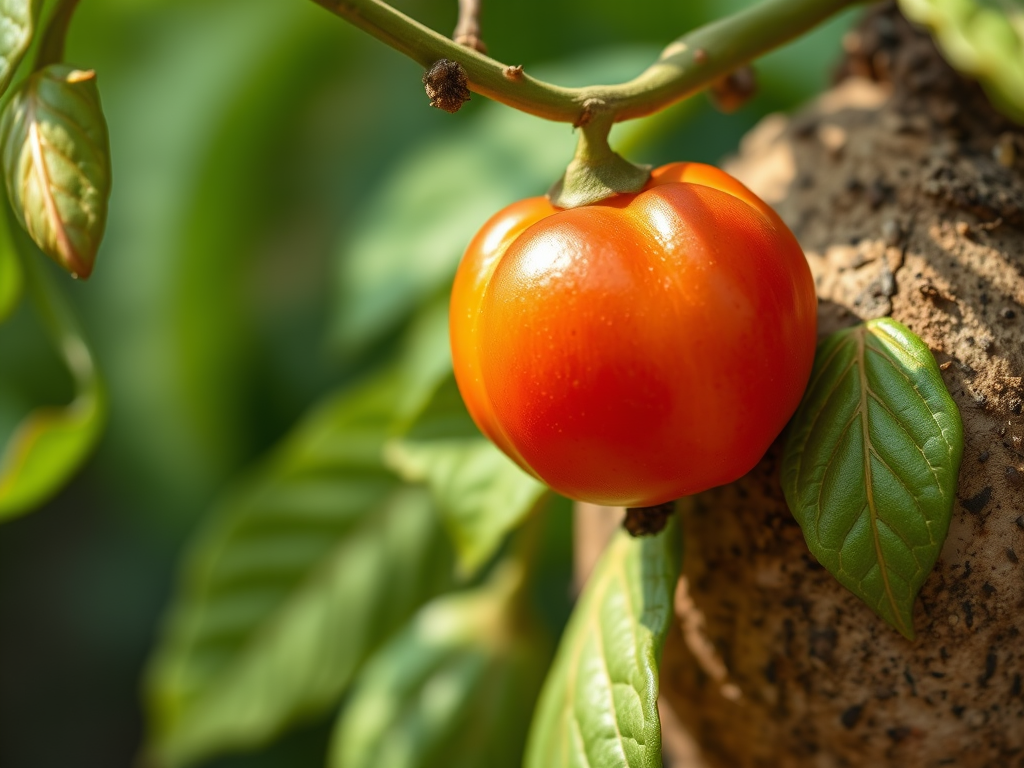
Icacunia Trichantha
🥔🍒 Is It a Fruit or a Tuber?
Both—but in different ways:
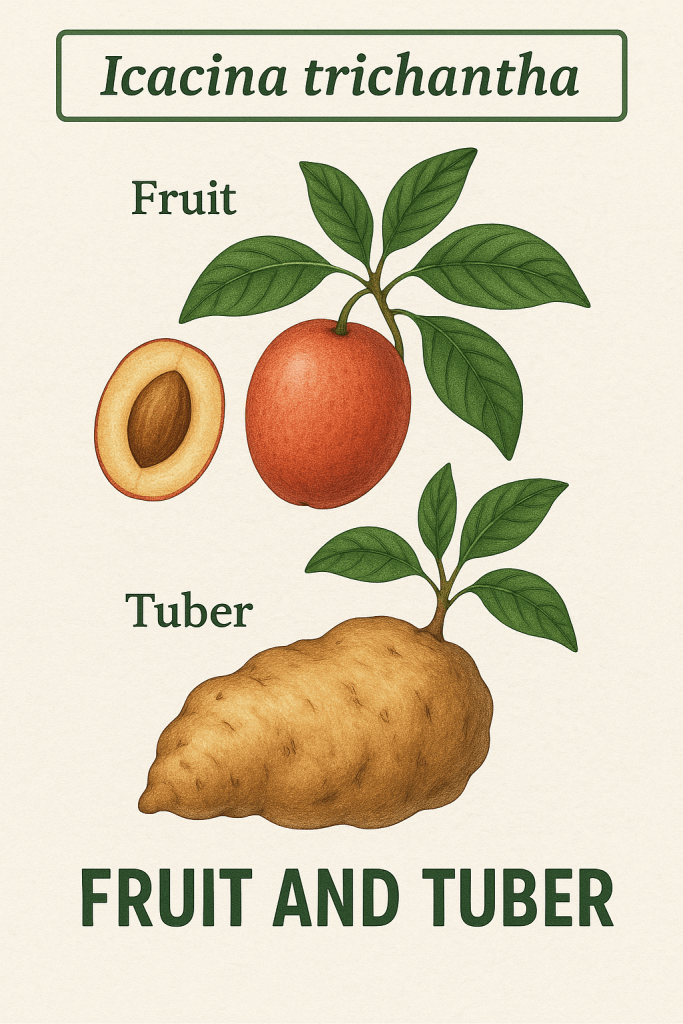
Fruit: Yes, it produces a drupe—a soft, pulpy fruit with a pit in the center. The outer flesh is edible and sweet, so it does qualify as a fruit in that sense.
Tuber: The plant is best known for its massive underground tuber, which is starchy and used as a famine food or fuel source. This tuber behaves more like a root vegetable than a fruit.
🌱 Botanical Profile
Family: Icacinaceae
Growth Habit: Climbing shrub up to 2 meters tall
Tuber: Large, yam-like and starchy—often used as a famine food
Fruit: A drupe with soft, sweet pulp; edible, but the kernel is typically not consumed
Icacina trichantha blurs botanical boundaries—its sweet drupe qualifies as a fruit, while its underground starchy tuber has long served as a famine food and fuel source during scarcity. This duality makes it both a nutritional and ethnobotanical marvel.”
🍲 Culinary Uses
Tuber: Can be boiled, dried, and pounded into flour (called gẹ-wutu), used in soups or mixed with roasted watermelon seeds (ìgbãlò)
Fruit: Eaten raw for its sweet pulp
Caution: Some preparations require prolonged soaking and washing to remove bitter or toxic compounds like alkaloids and benzophenones
🧪 Medicinal Applications
Traditional Uses:
Emergency remedy for food poisoning and constipation
Aphrodisiac in folk medicine
Used to treat malaria, rheumatism, toothache, and even mumps
Employed to induce emesis and abortion in traditional settings.
Treatment for food poisoning, constipation, malaria, and rheumatism
Scientific Insights:
Contains unusual pimarane-type diterpenes
Exhibits hepatoprotective, anti-inflammatory, antioxidant, and antimicrobial properties in lab studies
🔥 Other Noteworthy Traits
Fuel Source: The tuber is highly flammable and burns with intense heat
Cultural Names: Known as Urumbia or Eriagbo among the Igbo, and Gbegbe by the Yoruba—each name reflecting its emetic or cleansing properties
Pharmacological Activities
Hepatoprotective: Protects the liver from toxins like arsenic and paracetamol
Anti-inflammatory: Reduces edema in animal models
Antioxidant: Moderate activity linked to phenolic content
Antimicrobial: Active against E. coli, Staphylococcus aureus, Candida albicans, and more
Antidiabetic: Lowers blood glucose and improves lipid profiles in diabetic mice
CNS Effects: Sedative, anticonvulsant, and anesthetic properties observed in lab animals
🧬 Bioactive Compounds
Pimarane-type diterpenes: Rare structures with cytotoxic and anti-genotoxic potential
Stigmasterol & β-Sitosterol: Identified as key antimicrobial agents in the leaves
Alkaloids, tannins, saponins, flavonoids, glycosides: Contribute to its broad-spectrum activity
🌿 Icacina trichantha: Dual Identity in Nature
| Feature | Fruit | Tuber |
|---|---|---|
| Form | Soft, pulpy drupe with central pit | Large underground starchy root |
| Consumption | Eaten raw for sweet taste | Soaked, boiled, and pounded into flour |
| Cultural Uses | Food during scarcity; energy source | Famine food; flammable survival fuel |
| Medicinal Value | Mild antimicrobial properties | Treats malaria, constipation, rheumatism |
| Bioactive Compounds | Flavonoids, phenolics | Pimarane diterpenes, alkaloids, saponins |
| Toxicity Warning | Kernel not consumed | Requires detoxification (oxalates, cyanide) |
| Local Names | Urumbia, Eriagbo (Igbo) | Gbegbe (Yoruba) |
🌾 Scarcity & Survival Significance
Emergency Moisture & Energy Source: The massive underground tuber stores starch and moisture, allowing the plant—and the people who rely on it—to survive multi-year droughts2.
Famine Food: During food shortages, the tuber is harvested, detoxified through soaking and drying, and turned into flour for soups and porridges.
Seasonal Lifeline: The fruit ripens at the end of the dry season, precisely when other food stores are depleted, making it a critical bridge between hunger and harvest.
Cultural Resilience: In Nigeria, it’s known as Gbegbe or Ibugo, and is often left underground until absolutely needed, like a buried reserve of hope.
Wild Abundance: In some regions, families can collect hundreds of kilos of fruit per day from wild stands, offering a lifeline without cultivation.
🧪Healing Highlights
Antimicrobial: Active against E. coli, Candida albicans, and more
Anti-inflammatory & Hepatoprotective: Tested in lab models
Antidiabetic: Lowers blood sugar and improves lipid profile
CNS Impact: Sedative and anticonvulsant effects observed
Aphrodisiac & Emesis agent in traditional medicine
Possible Ceremonial Contexts
Ritual Cleansing: The Yoruba name Gbegbe translates to “cleanse,” hinting at its use in spiritual or bodily purification rites—possibly before initiation, healing, or ancestral offerings.
Emetic Ceremonies: Among the Igbo, names like Urumbia and Eriagbo refer to their emetic effects. Plants with such properties are often used in ritual vomiting to purge negative energies or prepare for trance states.
Aphrodisiac & Fertility Rites: Its reputation as an aphrodisiac may link it to fertility ceremonies, especially in rural settings where plant-based tonics are part of traditional courtship or marital rituals.
Protective Amulets or Offerings: While not confirmed, plants with strong medicinal and survival traits are sometimes used in protective charms or placed at shrines as symbols of resilience and ancestral wisdom.
Ceremonial use of Icacina trichantha isn’t widely documented in formal ethnobotanical literature, but its emetic, cleansing, and aphrodisiac properties suggest it may have played a role in ritual purification or spiritual healing among certain West African communities.
🌍 Where to Find Icacina trichantha: From Savannas to Seed Shops
| Source Type | Availability Highlights |
|---|---|
| Wild Regions | Native to West and Central Africa, especially Nigeria, Cameroon, and Ghana. Grows wild in Savannas and forest margins. |
| Ethnobotanical Use | Native to West and Central Africa, especially Nigeria, Cameroon, and Ghana. Grows wild in savannas and forest margins. |
| Online Retailers | Available as seeds or dried root from specialty suppliers like Dhara Seeds. |
| Botanical Gardens | Harvested seasonally by local communities, often uncultivated and reserved for times of famine or scarcity. |
| USDA Grow Zones | Occasionally grown for research or conservation, rare outside tropical zones. |
Icacina trichantha bridges the wild and the wise—from sweet fruit to famine tuber. Celebrated in West Africa as food, fuel, and folk remedy, its rare compounds offer modern hope, tempered by age-old caution. A true survival crop, rooted in healing and heritage
‘Survival Root & Healing Fruit.” It’s now reaching new soils via niche seed vendors like Dhara Seeds. Consider its potential in drought-resilient gardens—but remember, it’s a plant rooted in cultural survival.
⚠️ Disclaimer for Readers
This post explores the cultural, medicinal, and nutritional uses of Icacina trichantha based on traditional knowledge and emerging research. The plant contains potentially toxic compounds. It should only be consumed following proper detoxification and is not recommended for pregnant individuals, children, or those with liver or kidney conditions without professional guidance.
 EJADA
EJADA 
Leave a comment