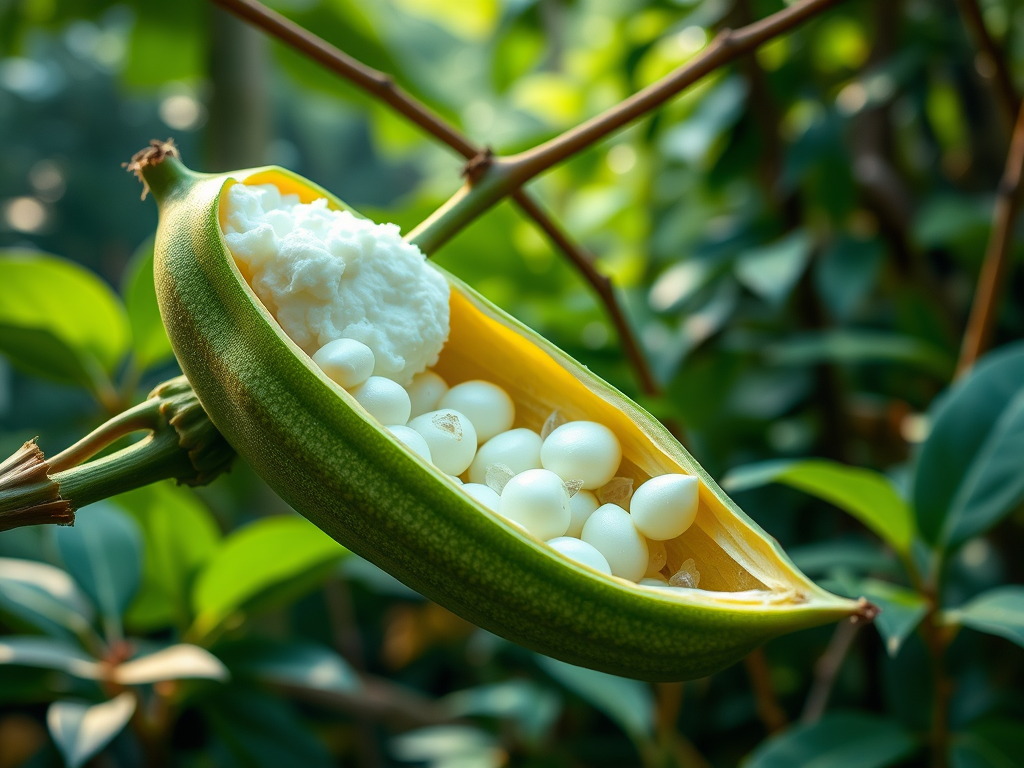
🍃The Ice cream bean is technically and botanically a fruit. It’s the seed pod of the Inga edulis tree, and pods that contain seeds and develop from flowers are considered fruits in botanical terms.
The edible part is the sweet, fleshy pulp surrounding the seeds inside the pod, just like a mango or tamarind. Despite looking like a giant green bean, it’s classified as a leguminous fruit because it’s part of the Fabaceae (pea) family.
Ice Cream Bean: Nature’s Dessert Wrapped in a Pod
Botanical name: Inga edulis Family: Fabaceae (pea family) Origin: Amazon Rainforest & tropical Central/South America
🧁 What It Is Don’t let the name fool you — this isn’t churned dairy, but it sure tastes like it. The Ice Cream Bean is the long, green seed pod of the Inga edulis tree, filled with a cottony white pulp that tastes sweet and creamy, often compared to vanilla ice cream.
🌱 Why It’s a Fruit Botanically, it’s a leguminous fruit, like a pea or tamarind. Fruits develop from flowers and contain seeds. In this case:
It grows from a flower
It contains seeds
The edible pulp surrounds those seeds
🍃 Cultural & Ecological Depth
Cultivated by Indigenous communities for food and soil enrichment
Used in agroforestry to shade coffee and cacao plantations
Helps improve degraded soil by fixing nitrogen
Pulp used in traditional Amazonian drinks like cachiri
👨🍳 Flavor Notes & Uses
Sweet, vanilla-like with a fluffy, fibrous texture
Eaten fresh or used in desserts
Seeds are not eaten raw — they must be cooked to neutralize compounds
✨ Mocktail Inspiration: Jungle Frost Combine fresh ice cream bean pulp, coconut water, crushed ice, and a touch of lime zest for a cooling, aromatic sip that bridges rainforests and refreshment. Garnish with mint and serve in a chilled bamboo cup for full sensory immersion.
🍃The Ice cream bean is technically and botanically a fruit.
🌱 Quick comparison:
| Fruit Type | Example | Pod Contains |
|---|---|---|
| Leguminous fruit | Ice cream bean | Seeds + edible pulp |
| Drupe | Mango | Pit + juicy flesh |
| Berry | Gooseberry | Seeds embedded in pulp |
It’s a fantastic example of how fruit doesn’t always mean juicy and round — sometimes it means long, fluffy, and bean-shaped with a hint of dessert magic
🩺 The ice cream bean (Inga edulis) has a fascinating medicinal legacy that bridges Indigenous wisdom and modern nutritional science. Let’s explore how its uses have evolved:
🌿 Traditional Medicinal Uses (Then)
Indigenous communities across the Amazon and Central America have long used various parts of the ice cream bean tree for healing:
Leaves & bark: Brewed into decoctions to treat headaches, nerve pain, and rheumatism
Seeds & pulp: Used to relieve dysentery, constipation, and digestive discomfort
Root extracts: Applied for ulcers and inflammatory conditions
Fermented pulp: In beverages like cachiri, believed to aid mood and detoxification
These remedies were often administered in ceremonial or communal settings, blending healing with cultural rituals.
🧬 Contemporary Health Insights (Now)
Modern research has uncovered bioactive compounds that support many of these traditional claims:
Antioxidants: High levels of flavonoids and phenolic acids help combat oxidative stress and aging
Anti-inflammatory agents: Shown to reduce inflammation and support immune health
Antimicrobial properties: Extracts from leaves and bark show promise against bacterial infections
Blood sugar regulation: Soluble fiber slows glucose absorption, aiding in diabetes management
Heart health: Rich in potassium and saponins, which may help lower blood pressure and cholesterol
Cancer research: Some compounds exhibit cytotoxic effects that may inhibit tumor growth
🧠 Cultural Continuity Meets Scientific Validation
The ice cream bean is a prime example of how Indigenous knowledge systems anticipated many of the findings now confirmed by lab studies.
While the ice cream bean is generally safe and nutritious, there are a few groups who should approach it with caution or avoid it altogether:
🚫 Who Should Be Careful or Avoid Ice Cream Bean
1. People with legume allergies
Ice cream bean belongs to the Fabaceae family (same as peas and beans)
Those allergic to legumes may experience itching, swelling, or digestive upset
2. Individuals with sensitive digestion
The pulp is high in fiber, which can cause bloating or gas if consumed in large amounts
Start with small portions to assess tolerance
3. Anyone with a history of food allergies
Though rare, some people may react to the lectins or proteins in the seeds or pulp
Best to consult a healthcare provider before trying it
4. Pregnant or breastfeeding individuals
There’s limited research on its safety during pregnancy or lactation
Traditional use suggests it’s safe, but modern guidelines recommend caution with unfamiliar fruits
5. Children under 5
The fluffy pulp can be a choking hazard
Seeds must never be eaten raw — they contain phytohemagglutinin (PHA), a toxin that must be neutralized by cooking
6. People with autoimmune conditions
Lectins in raw seeds may stimulate immune responses, potentially aggravating symptoms
Only consume cooked seeds if cleared by a healthcare provider
The ice cream bean is available in the U.S., but it’s still considered a niche tropical fruit with limited distribution. Here’s how you can get your hands on it:
🛒 Where to Find It
Online retailers:
Miami Fruit offers fresh and frozen ice cream beans via pre-order, especially during harvest season (typically spring to early summer).
iHeartFruitBox ships sampler and bulk boxes nationwide, though availability depends on seasonal harvests.
Sasoun Produce sells California-grown ice cream beans with overnight shipping options.
Amazon: You can even buy a live ice cream bean tree to grow your own in warmer zones like 9–11.
Local farmers markets: Especially in South Florida, where small farms cultivate the tree.
Ethnic grocery stores: Latin American markets may carry frozen or canned versions occasionally.
🌱 Growing It Yourself
If you’re feeling adventurous, the tree can be grown in containers and overwintered indoors in colder climates. It’s fast-growing, nitrogen-
final thought
🌱 The ice cream bean is more than just a quirky rainforest treat — it’s a symbol of how nature fuses flavor, medicine, ecology, and culture in a single, velvety pod. Whether it’s revitalizing soil in cacao farms, soothing inflammation in Amazonian communities, or surprising first-time tasters with its vanilla-like fluff, this fruit invites us to rethink what healing and nourishment look like.
It’s a perfect case study — where Indigenous wisdom meets scientific validation, and food becomes a gateway to storytelling. It reminds us that not all fruits wear bright colors or grow in Instagram-friendly shapes… some hide their magic inside a bean.
 EJADA
EJADA 
Leave a comment