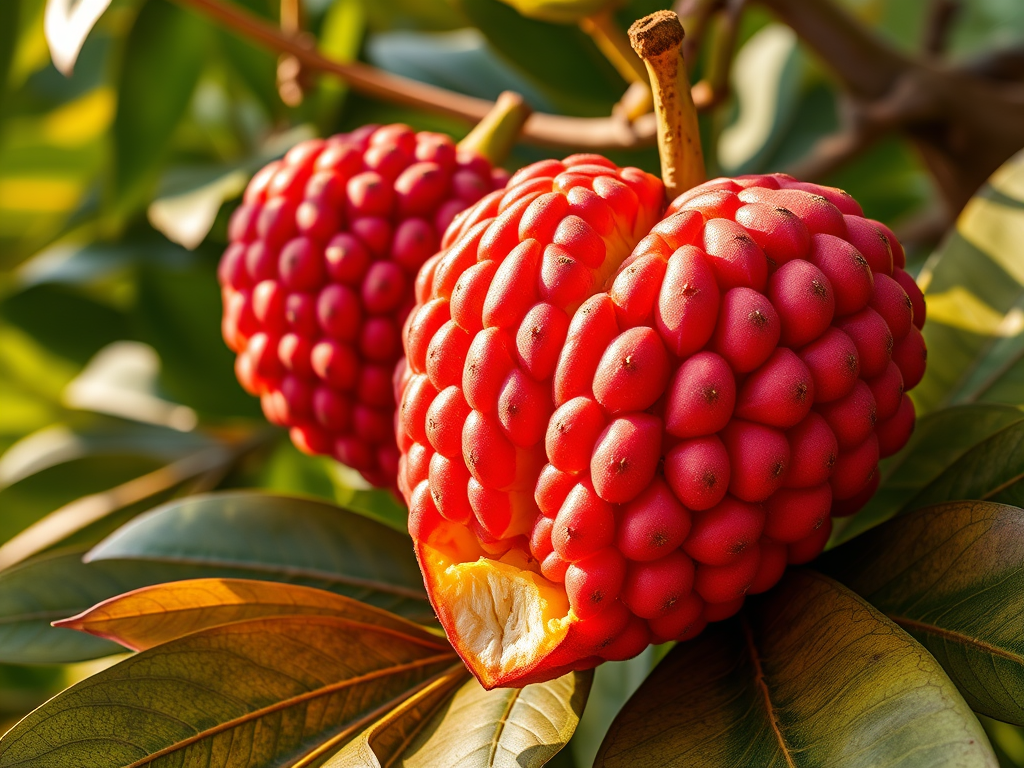
The Ilama fruit was first documented in 1570 by Francisco Hernández, a Spanish physician and naturalist sent by King Philip II to catalog the useful plants of Mexico. Also known by the synonym Annona macroprophyllata, Ilama belongs to the custard apple family and has been honored for centuries in Mesoamerican gardens and gatherings.
Hernández’s early records helped distinguish Ilama, Annona diversifolia, as a unique species native to the tropical foothills of southwest Mexico, Guatemala, and El Salvador. Its name, derived from the Nahuatl word ilamatzapotl, translates to “old woman’s sapote,” hinting at its deep cultural roots and folkloric charm: read more
But ask the elders, and they’ll tell you Ilama’s story didn’t start there.
🌿 What the Name Means
- Macroprophyllata comes from Greek roots: makrós (large) and phúllon (leaf), referring to the tree’s big, glossy leaves.
- It was first formally described by John Donnell Smith in 1910, and later synonymized with Annona diversifolia, the name more commonly used in cultural and culinary contexts2.
🌱 Botanical Highlights
Grows up to 3–4 meters tall with elliptical, hairless leaves and fragrant, solitary flowers.
Produces the Ilama fruit, which is cone- or heart-shaped, velvety-skinned, and filled with creamy, aromatic pulp.
The fruit is highly perishable and traditionally served chilled with cream and sugar during seasonal rituals.
At the time, it was often confused with other members of the custard apple family, like soursop and cherimoya, due to its similar appearance and flavor profile.
🧪 Medicinal & Cultural Relevance
Leaves contain alpha-glucosidase inhibitors, which may help regulate blood sugar.
The tree is deeply embedded in Mesoamerican traditions, often cultivated in backyard orchards and celebrated during harvest festivals.
🦙 Say Hola to the Ilama Fruit: Nature’s Tropical Daydream
If fruit were cast in a Latin telenovela, the Ilama would be the mysterious stranger with a fragrant smile and a juicy plot twist.
Native to Central America, this custard apple cousin isn’t just a tropical snack—it’s a luscious legend wrapped in thick green skin. Beneath that bumpy exterior lies soft, velvety flesh that tastes like a love affair between pineapple and strawberry, with hints of vanilla whispering sweet nothings.
🎭 Fun Facts:
🌿 “Ilama” is thought to stem from the Nahuatl word ilamatzapotl, meaning “old woman’s sapote.” Romantic, right?
🍧 Traditionally chilled and enjoyed with cream and sugar—a true dessert diva.
🌞 Said to cool the body and uplift the mood, making it an ideal sidekick for sun-soaked siestas.
Ilama Fruit: A Flavor Steeped in History and Heritage:
Long before tropical smoothies and farmers markets, the Ilama fruit was already a star. Francisco Hernández, a royal naturalist who journeyed through Mexico, cataloged its botanical riches.
Among the custard apple clan, the Ilama—Annona diversifolia—stood out as a fragrant anomaly nestled in the foothills of southwest Mexico, Guatemala, and El Salvador.
🌺 A Fruit with a Feminine Soul
Named from the Nahuatl ilamatzapotl, meaning “old woman’s sapote,” Ilama embodies a mix of reverence, mystery, and maternal wisdom. Its thick skin hides an aromatic flesh that whispers tales of pineapple, strawberry, and vanilla—like a recipe passed down by a grandmother with an herbal garden and a storyteller’s soul.
🎉 Rituals in Every Bite
For many Mesoamerican communities, Ilama is more than food—it’s a ceremony:
💠 Harvest Harmony: July to August becomes a cultural crescendo as families gather to pick, celebrate, and share this seasonal gem.
🫖 Sacred Serve: Chilled with cream and sugar, Ilama is prepared for festive rituals, ancestral offerings, and communal feasts.
🎨 Color Matters: Indigenous groups often prefer white pulp, symbolizing purity and ancestral connection, while mestizo communities embrace the vibrant rainbow, each hue reflecting stories of vitality and social unity.
Ilama fruit is a tropical powerhouse packed with nutrients that support immunity, digestion, and overall vitality. Here’s a breakdown of its vitamin profile per 100g of edible pulp:
🍈 Vitamin & Nutrient Highlights of Ilama Fruit
| Nutrient | Amount per 100g | Benefits |
|---|---|---|
| Vitamin C (Ascorbic Acid) | 13.6 mg | Boosts immunity, skin health, and antioxidant defense |
| Niacin (Vitamin B3) | 2.177 mg | Supports metabolism and energy production |
| Riboflavin (Vitamin B2) | 0.297 mg | Aids in cellular function and energy |
| Thiamine (Vitamin B1) | 0.235 mg | Helps convert food into energy |
| Carotene (Provitamin A) | 0.011 mg | Supports vision and immune health |
🌿 Bonus Nutrients
Calcium: 31.6 mg – bone health and nerve function
Phosphorus: 51.7 mg – energy metabolism and cell repair
Iron: 0.70 mg – oxygen transport and energy
Protein & Fiber: Supports digestion and satiety
These values reflect traditional nutritional analyses of Annona diversifolia and may vary slightly by variety and ripeness.
🌿 Medicinal Uses of Ilama Fruit (Annona diversifolia)
🧬 Traditional & Cultural Applications
Cooling Agent: In Mesoamerican folk medicine, Ilama was used to cool the body during hot seasons or fevers—often served chilled with cream or sugar as a soothing remedy.
Mood Uplifter: Its sweet aroma and creamy texture were believed to uplift spirits, making it a ceremonial comfort food during seasonal transitions.
Digestive Aid: The fiber-rich pulp was consumed to ease digestion and promote gut health, especially after heavy meals or during fasting rituals.
🧪 Modern Scientific Insights
Antioxidant Powerhouse: Rich in vitamin C, polyphenols, and flavonoids, Ilama helps neutralize free radicals and reduce oxidative stress, supporting heart, skin, and cellular health.
Anti-inflammatory Effects: Phytochemicals in Ilama may help reduce inflammation, potentially aiding conditions like arthritis and autoimmune disorders.
Blood Sugar Regulation: Extracts from Ilama leaves have shown alpha-glucosidase inhibitor activity, which may help regulate blood sugar levels, making it a candidate for diabetes support.
Immune Boosting: With its blend of vitamins and minerals (like calcium, iron, and niacin), Ilama supports overall immunity and metabolic function.
🍃 Heritage That Heals
Antioxidants and anti-inflammatory compounds give Ilama its wellness credentials, but it’s the fruit’s cultural resilience that truly nurtures the soul. Grown by heart, not hype, Ilama’s survival rests in the hands of communities who value tradition over mass production.
🌱 Why You’ll Love It:
With antioxidants to boot and potential anti-inflammatory perks, Ilama isn’t just a flavor bomb—it’s a whole wellness vibe. It may be hard to find, but if you stumble on one at a market, treat it like a rare gem.
🍧 Dessert Diva
- Ilama Sundae: Scoop out the creamy flesh and layer it with coconut whipped cream, toasted nuts, and a drizzle of hibiscus syrup.
- Frozen Ilama Pops: Blend with mango and lime juice, pour into molds, and freeze—tropical chill on a stick!
- Ilama Custard Tart: Bake its pulp into a buttery tart shell with cinnamon and vanilla for a silky finish.
🥂 Mocktail Muse
- Ilama Breeze: Muddle with mint, splash in sparkling water, and garnish with edible flowers.
- Sunset Sipper: Blend with strawberry, lemon, and basil for a sunset-hued refresher that’s perfect for ceremonial toasts.
🥗 Savory Twist
- Ilama Salsa: Dice and mix with red onion, jalapeño, and cilantro—serve over grilled fish or plantain chips.
- Tropical Slaw: Shred Ilama with cabbage, carrots, and a tangy tamarind dressing for a crunchy sidekick.
🍰 Breakfast Glow-Up
- Ilama Yogurt Parfait: Layer with granola, chia seeds, and a drizzle of honey.
- Ilama Pancake Topping: Warm pulp with cinnamon and clove—spoon over pancakes like a tropical compote.
🍹🌺 Ceremonial Pairing: The Ilama Whisper
Inspired by ancestral gatherings and seasonal rituals, this mocktail channels the cooling, mood-lifting essence of Ilama fruit with ingredients that echo its Mesoamerican heritage.
🌿 Ingredients:
- ½ cup Ilama pulp (white or pink preferred for symbolic purity or vitality)
- ¼ cup hibiscus tea (chilled)
- 1 tbsp agave nectar (for sweetness and ancestral connection)
- Juice of ½ lime (for balance and cleansing)
- A few mint leaves (symbolizing renewal)
- Optional: splash of sparkling water for effervescence
🧉 Ritual Touch:
Serve in a clay cup or gourd to honor Indigenous vessels
Garnish with a marigold petal or edible flower—used in offerings and celebrations
Sip during sunset or harvest gatherings, paired with storytelling or music
🌞 Cultural Symbolism:
Hibiscus: Often used in traditional drinks like agua de jamaica, it represents vitality and heart health
Agave: Sacred in many Indigenous cultures, symbolizing endurance and the sweetness of life
Mint & Lime: Cooling agents that align with Ilama’s folkloric use in seasonal transitions
🦙🌴 Rare Fruit Alert: Meet Ilama, the Tropical Heartthrob You’ll Probably Never Find (But Should Totally Know About)
Just when you thought you knew all the exotic fruits worth chasing, enter Ilama. Not llama (the furry friend), but Ilama (the fruity legend). Native to the sun-kissed foothills of Mexico, Guatemala, and El Salvador, this custard apple cousin is like that cool indie track you’ll never hear on Top 40—but once you do, you’re hooked.
🔍 Why It’s So Hard to Find
💨 Spoils Fast: Ilama fruit is ultra-perishable—think “eat me within days or regret it forever.”
🌎 Tiny Grower Network: Mostly grown in backyard orchards or by local farmers for seasonal community rituals.
🗓️ Short Harvest Season: July to September, and only if the weather behaves.
🛒 Not in Supermarkets: Unless your supermarket is in rural Guerrero or a fruit-foraging utopia.
🌺 A Cultural Treasure, Not a Cash Crop
Cultural Nuance by Pulp Color
In regions like Tierra Caliente, Mexico, ceremonial preference varies by pulp color: Indigenous communities often favor white pulp, symbolizing purity and ancestral connection, while mestizo families embrace more colorful varieties, representing vitality and celebration.
Ilama isn’t mass-produced—it’s honored. Shared during festivals, gifted between families, and used in ceremonial mocktails that might just be the elixir of ancestral happiness.
✨ What to Do If You Spot One
🛍️ Buy it. Immediately.
🍧 Chill it with cream and sugar—just like the elders do.
📸 Take a photo and brag. This is fruit folklore in your hand.
While its creamy pulp is a tropical delight, there are a few important cautions to keep in mind:
⚠️ Who Should Avoid Ilama Fruit
🚫 Parts of the Plant to Avoid
Seeds: Toxic if ingested. Never eat or blend them.
Leaves & Bark: Not edible and may contain harmful compounds.
🧬 Health Conditions & Medication Interactions
Blood Thinners: Ilama may interact with anticoagulant medications due to its vitamin K and antioxidant profile.
Allergies to Tropical Fruits: Those with sensitivities to fruits like cherimoya or soursop should approach Ilama with caution. Symptoms may include itching, swelling, or digestive upset.
👶 Vulnerable Groups
Young Children: Due to the risk of choking on seeds and potential allergic reactions, it’s best to introduce Ilama cautiously.
Pregnant or Breastfeeding Individuals: No specific contraindications are documented, but due to limited research, moderation is advised.
✅ Safe Consumption Tips
Always eat only the pulp—scoop it out and discard the seeds.
Start with a small amount if it’s your first time trying Ilama.
Consult a healthcare provider if you’re on medication or have dietary restrictions.
:
🍈 Ilama: A Whisper of Wisdom, Flavor, and Ritual
From the sun-kissed hills of Mesoamerica to the pages of Francisco Hernández’s 1570 botanical chronicles, Ilama fruit (Annona diversifolia, also known as macroprophyllata) is more than a rare tropical delight—it’s a living story. Rooted in ancestral wisdom and wrapped in fragrant mystery, its name from ilamatzapotl (“old woman’s sapote”) honors the matriarchs and medicine keepers of Indigenous tradition.
Medicinally, Ilama cools the body, lifts the spirit, and supports digestion—its pulp packed with vitamin C, B-complex, iron, and antioxidant magic.
Ceremonially, it stars in festivals, communal rituals, and culinary creations that echo centuries of seasonal celebration.
Whether whipped into custard, stirred into mocktails, or honored in backyard feasts, Ilama invites us to taste legacy, not just fruit.
Rare? Absolutely. Revered? Undoubtedly. Delicious? No contest.
So if you ever encounter this fragrant enigma—buy it, celebrate it, and sip it like you’ve been initiated into a tropical secret 🌿🍹
 EJADA
EJADA 
Leave a comment