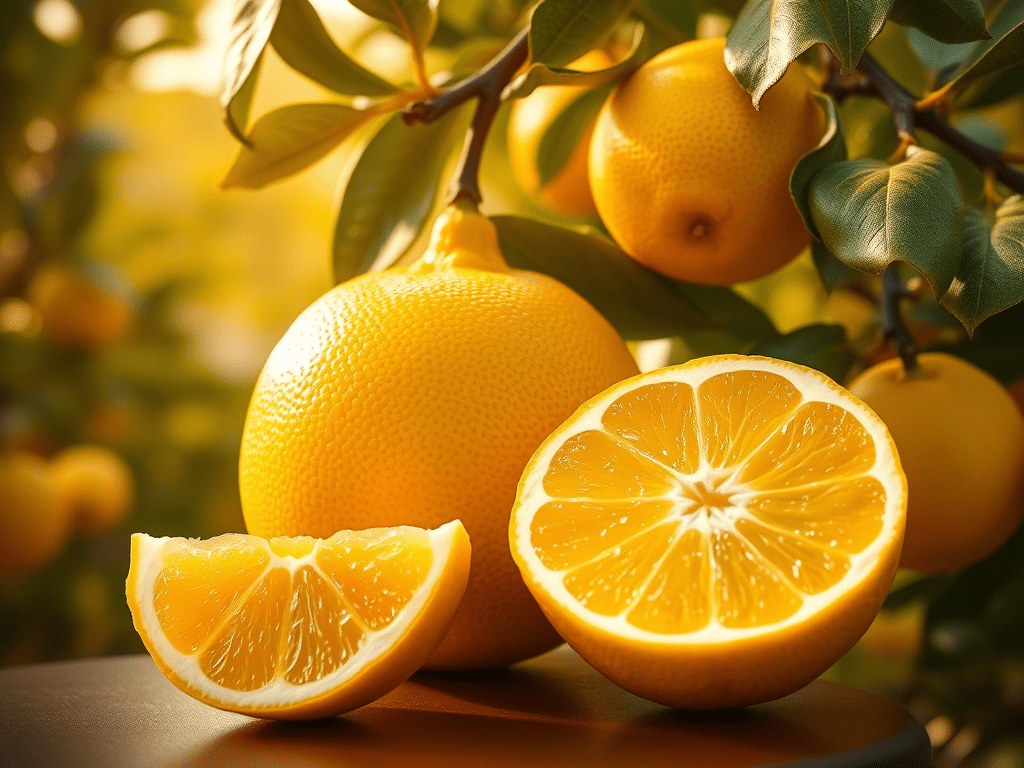
Hyuganatsu is a rare Japanese citrus fruit known for its refreshing flavor and unique edible white pith. 🍋 Here’s a quick breakdown of what makes it special:
🌱 Botanical Identity
- Scientific name: Citrus tamurana
- Believed to be a natural hybrid of yuzu and pomelo
- Discovered as a chance seedling in Miyazaki Prefecture in the 19th century
🍊 Appearance & Taste
- Medium-sized, round to slightly oblong
- Bright yellow rind with a thick, sweet white pith
- Flesh is juicy, sweet-tart, with floral and honeyed notes
- Aromatic—think lemon meets grapefruit
🍊 Hyuganatsu Cultivation
- Origin: Discovered as a chance seedling in Miyazaki Prefecture in the 1820s.
- Climate Needs: Thrives in warm, temperate zones with mild winters, especially in Miyazaki’s coastal and mountainous regions.
- Growing Season: Outdoor orchards yield fruit from early to late spring; greenhouse cultivation starts in mid-winter.
- Organic Practices: In towns like Aya, farmers use manure-based compost, avoid chemical fertilizers, and bag fruits to prevent blemishes.
- Harvesting Rituals: Fruits are often picked with the white pith intact, emphasizing their ceremonial and culinary uniqueness.
- Cultural Layer: The original tree was declared a national monument in 1935, and its legacy lives on through gifts like Hyuga-no-Kaori
🧑🌾 Cultural & Culinary Significance
The Hyuganatsu citrus isn’t just a fruit—it’s a cultural gem with ceremonial flair, especially in Miyazaki Prefecture, where it originated. While there’s no formal “Hyuganatsu ceremony” like you might find with tea or sake, its presentation and gifting traditions carry deep symbolic weight.
🎎 🍊 Citrus Alchemy: How Hyuganatsu’s Sweet Core Nourishes Body and Spirit
🌿 Beyond Bitterness—The Edible White Pith
Unlike most citrus, Hyuganatsu’s white pith is sweet and tender, not bitter.
Symbolizes hidden gentleness, adding emotional weight to seasonal rituals and traditional meals.
Visually stunning—served with pith intact to highlight the fruit’s delicate contrast and elegance.
🍽️ Nutritional Brilliance
| Component | Benefit | Cultural Insight |
|---|---|---|
| Vitamin C | Immune support, collagen boost | Tied to springtime renewal |
| Dietary Fiber | Digestive aid, blood sugar regulation | Linked to balance and internal harmony |
| Hesperidin | Anti-inflammatory, vascular wellness | Celebrated in traditional Japanese medicine |
| Pectin | Gut health, cholesterol management | Strengthens the “core” metaphor |
| L-carvone | Mood-lifting, floral aroma | Mirrors Hyuganatsu’s poetic identity |
🌸 Citrus as Ceremony
In desserts like Hyuga-no-Kaori, the essence of the fruit is preserved in jelly-filled peels, echoing themes of healing and fragrance.
Gifting Hyuganatsu is seen as giving sweetness and light—a gesture of health, sincerity, and respect.
Meibutsu Status: Hyuganatsu is a regional specialty gift (meibutsu) in Miyazaki, often given as a sign of respect or seasonal celebration.
Hyuga-no-Kaori Confection: A traditional wagashi made by candying the peel and filling it with citrus-flavored yokan jelly. It’s sliced into wedges to resemble the fruit and is gifted in ornate boxes, symbolizing fragrance, purity, and regional pride.
Seasonal Rituals: In spring, locals celebrate the fruit’s peak by incorporating it into dishes served during family gatherings and festivals. Its bright yellow color and sweet aroma evoke renewal and sunshine.
🍽️ How It’s Served Ceremonially
With the White Pith Intact: Unlike most citrus, Hyuganatsu’s sweet white pith is left on when sliced, creating a visually striking and symbolic contrast of sour and sweet.
Paired with Soy Sauce or Salads: In Miyazaki, it’s sometimes served with soy sauce or in savory dishes, blending tradition with culinary innovation.
A regional meibutsu (specialty gift) of Miyazaki, often given as a symbol of respect
Used in desserts, salads, marinades, and even savory dishes like chicken Nanban
The Pith is edible and sweet, unlike most citrus fruits, and is often left intact when served
🍊 Nutritional Highlights of Hyuganatsu
| Boosts immunity, collagen production, and antioxidant | Benefit | Notes |
|---|---|---|
| Vitamin C | Found in both the pith and the flesh | Higher than typical citrus per gram |
| Dietary Fiber | Aids digestion, regulates blood sugar | Found in both the pith and flesh |
| Hesperidin | Anti-inflammatory, supports cardiovascular health | Concentrated in the white pith |
| Pectin | Promotes gut health, lowers cholesterol | From peel and pith—helps with satiety |
| Potassium | Regulates blood pressure, muscle function | Contributes to electrolyte balance |
| L-carvone & trans-β-farnesene | Aromatic compounds linked to mood-lifting effects | May offer subtle therapeutic benefits |
| Low Calories | Light and hydrating | Ideal for spring cleansing diets |
🌱 Pith Power!
Unlike other citrus fruits, Hyuganatsu’s edible white pith is not just a texture element—it’s nutritionally valuable, delivering:
Extra flavonoids for antioxidant support
Gentle bitterness that stimulates digestion
A unique sweetness rarely found in citrus piths
Hyuganatsu is available in the U.S., though it’s a bit of a citrus treasure hunt! 🍋
🛒 Where You Can Find It
Fresh Fruit: Specialty Asian grocery platforms like Weee! occasionally offer Hyuganatsu with nationwide delivery, especially during its peak season (late winter to early spring).
Nurseries: You can purchase Hyuganatsu trees from places like Madison Citrus Nursery and Dhara Seeds. These are grafted with mature buds, meaning they can fruit within a season or two, perfect for citrus collectors.
Seasonal Availability: Because it’s rare and highly seasonal, fresh fruit is only available for a few weeks each year. Greenhouse-grown varieties may extend availability slightly.
🚫 Shipping Restrictions
Citrus trees cannot be shipped to certain states like California, Florida, Texas, Arizona, Hawaii, and Louisiana due to USDA regulations.
🍊 Citrus Kinship Across Borders
How Japan’s Heritage Citrus Inspires a Global Palette
🌸 The Seed of Ceremonial Flavor: Hyuganatsu
- Origin: Discovered in Miyazaki, Japan—known for its sweet edible pith and poetic gifting tradition
- Symbolism: Renewal, gentleness, seasonal transitions
- Culinary Flair: Served with pith intact, used in Hyuga-no-Kaori confections, and gifted as regional meibutsu
🌐 Botanical Relatives with Borderless Charm
| Fruit | Cultural Origin | Shared Traits | U.S. Presence |
|---|---|---|---|
| Haruka | Japan (Fukuoka) | Sweet pith, mild floral flavor | 🌱 Tree nurseries (Madison Citrus, Dhara Seeds) |
| Banpeiyu | Japan & Southeast Asia | Mild flesh, edible pith, pomelo lineage | 🍊 Fresh via Instacart, trees available |
| Iyokan | Japan (Ehime) | Balanced sweet-sour, aromatic rind | 🍬 Dried peels, marmalade online |
| Dekopon | Japan (Kumamoto) | Seedless, juicy, low acidity | ✅ Widely sold as “Sumo Citrus” |
| Amanatsu | Japan | Sweet-tart flesh, ceremonial gifting | 🍬 Available as candied peels, rare fresh |
✨ Sensory Threads Across Cultures
Aroma Connection: Shared aromatic compounds like l-carvone evoke honeyed citrus and emotional warmth
Ritual & Gifting: Many of these fruits are used as seasonal gifts, aligning with Japanese and global traditions of health, celebration, and transition
Visual & Textural Appeal: Pith-forward presentation highlights an aesthetic rarely embraced outside Japan, challenging Western norms around bitter vs. sweet
A Taste That Travels
Citrus Kinship Across Borders reminds us that flavor carries lineage, memory, and meaning. These fruits whisper stories from mountain orchards and coastal groves, now making quiet appearances on American shelves and in home gardens.
⚠️ Who Might Need to Avoid or Limit Hyuganatsu
| Group | Reason for Caution | Notes |
|---|---|---|
| Citrus Allergy Sufferers | May trigger reactions like itching, swelling, or GI discomfort | Rare, but possible with any citrus |
| People on Certain Medications | Citrus (especially with pith) may interact with drugs like statins or antihypertensives | Grapefruit is the usual culprit, but caution is wise |
| GERD or Acid Reflux Patients | Citrus acidity can aggravate symptoms like heartburn | Hyuganatsu is milder, but still acidic |
| Post-Surgery or Sensitive GI Conditions | High fiber and acidity may be irritating during recovery | Pith and peel are fibrous |
| Infants and Toddlers | Choking hazard from seeds or thick pith; acidity may upset stomach | Best introduced in small, peeled segments |
🧪 Special Consideration: Bone Health Supplements
Hyuganatsu contains arabinogalactan, a compound shown to enhance calcium absorption in postmenopausal women. While this is beneficial, those already on bone health supplements or medications should monitor their intake to avoid excessive calcium levels.
⚠️ Disclaimer: Citrus with Care
Hyuganatsu and its citrus relatives offer remarkable flavor and cultural significance. However, this content is intended for educational and storytelling purposes only.
🧾 Please consult a healthcare professional before consuming these fruits if you:
- Have citrus allergies or sensitive digestion
- Take medications that may interact with citrus compounds
- Are managing GERD, post-surgery recovery, or feeding infants
We celebrate global fruit traditions and their vitality, but always value mindful consumption and personal wellness.
 EJADA
EJADA 
Leave a comment