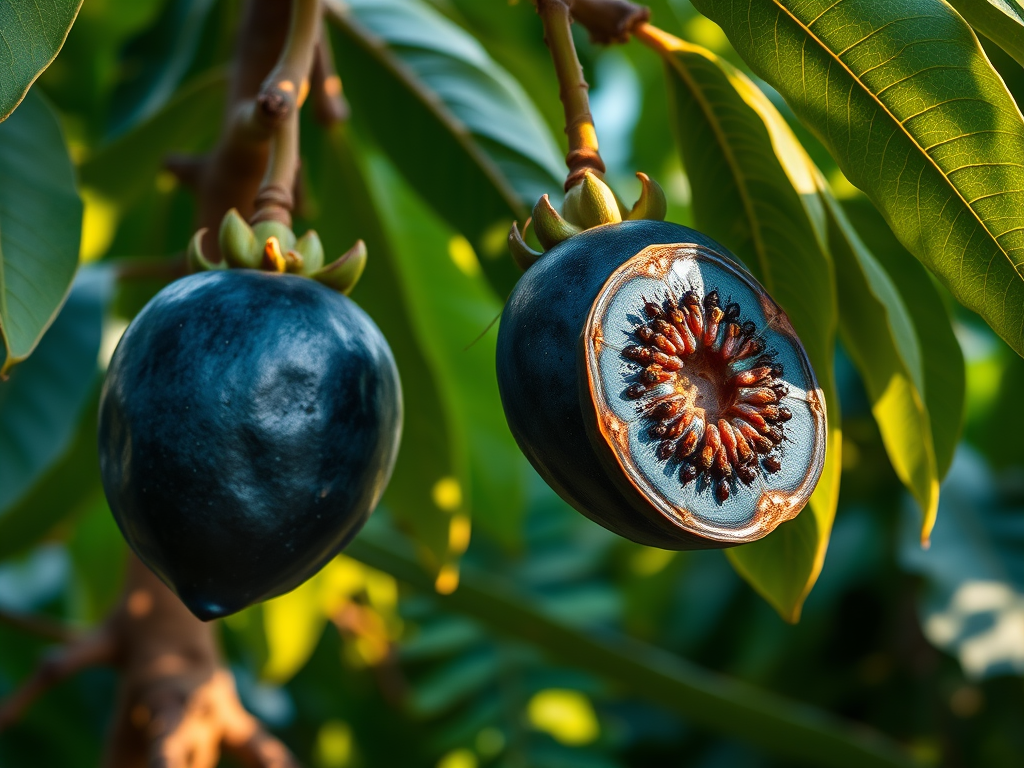
🌌 Huito: A True “Strange Fruit”
In the spirit of Billie Holiday’s haunting metaphor, Huito (Genipa americana) stands as a botanical “strange fruit”—not for sorrow, but for its mystical transformation, cultural symbolism, and medicinal depth.
🌀 Why Huito Is Strange—in the Best Way
Color Alchemy: Its white pulp turns deep blue-black when exposed to air, thanks to genipin, a natural compound used for ink, dye, and healing.
Spiritual Ink: For over 2,500 years, Indigenous peoples like the Shipibo-Conibo and Asháninka have used it to mark rites of passage, ward off spirits, and tell ancestral stories—literally wearing the forest’s memory on their skin.
Medicinal Marvel: From liver detox to respiratory relief, Huito is a pharmacy in fruit form, bridging ancient wisdom with modern science.
Culinary Curiosity: Ripe Huito is sweet and tangy, used in jams, wines, and desserts, while the unripe fruit doubles as mosquito repellent and hair dye.
Let’s dive into the fascinating world of Huito—also known as Genipa americana, jagua, or jenipapo—and trace its deep cultural, medicinal, and botanical roots.
🌱 What Is Huito?
Scientific Name: Genipa americana
Family: Rubiaceae
Native Range: Tropical Central and South America, Caribbean, and southern Mexico
Tree Height: Up to 25 meters
Unique Trait: The unripe fruit’s white pulp turns deep blue-black when exposed to air due to genipin, a natural compound used as a dye and medicine.
💪 Health Benefits of Huito
Huito isn’t just a cultural icon—it’s a powerhouse of traditional medicine and emerging scientific interest:
Anti-inflammatory: Genipin reduces inflammation and is being studied for arthritis and chronic pain.
Antioxidant-rich: Helps neutralize free radicals, supporting cellular health and aging.
Digestive Aid: Traditionally used to treat constipation, indigestion, and intestinal parasites.
Respiratory Relief: Decoctions from the fruit and leaves are used to ease coughs and bronchial issues.
Skin Healer: Applied topically to treat wounds, fungal infections, and dermatitis.
Liver Support: Folk medicine uses it to detoxify and support liver function.
⚠️ Side Effects & Precautions
🚫 Tannin Sensitivity
Huito contains high levels of tannins, which can cause:
Stomach discomfort or nausea in sensitive individuals
Allergic reactions in those with tannin intolerance
If you’re prone to tannin-related issues (like with red wine or tea), it’s best to consume Huito in moderation.
🧴 Topical Use Caution
The genipin-based ink can stain skin for up to 2 weeks.
Rarely, some people may experience:
Skin irritation
Allergic dermatitis
Always do a patch test before applying Huito-based ink or dye to large areas of skin.
👶 Not Recommended for Pregnant or Breastfeeding Individuals
There’s limited scientific data on its safety during pregnancy or lactation.
Traditional use doesn’t report harm, but caution is advised.
💊 Drug Interactions
No major interactions are documented, but due to its liver-supporting and detoxifying effects, it may interact with medications metabolized by the liver.
If taking prescription meds, consult a healthcare provider before regular use.
🍎 Why So Many Fruits Share Similar Health Benefits
Fruits across cultures often offer overlapping benefits like antioxidant support, anti-inflammatory properties, and digestive aid because they’re all rich in:
Phytochemicals: Like flavonoids, carotenoids, and polyphenols
Vitamins: Especially C, A, and E
Fiber: Which supports gut health and detoxification
Minerals: Potassium, magnesium, and iron
These compounds are nature’s toolkit for cellular repair, immune defense, and metabolic balance, so it’s no surprise they show up again and again.
🍽️ So What Sets a Fruit Apart?
Availability, taste, and cultural context often determine which fruit becomes a staple or a standout. Here’s how:
| Factor | Why It Matters |
|---|---|
| Taste & Texture | Palatability drives popularity — think mango vs. noni. |
| Cultural Rituals | Some fruits are sacred or symbolic (like Huito or pomegranate). |
| Medicinal Legacy | Traditional uses often shape modern interest (e.g., turmeric, elderberry). |
| Visual Appeal | Vibrant colors signal health and attract culinary creativity. |
| Local Abundance | What grows well becomes woven into cuisine and healing practices. |
“Like many tropical fruits, Huito offers antioxidant and anti-inflammatory benefits. But what sets it apart isn’t just what it does for the body—it’s what it means to the people who’ve inked their stories into skin for generations.”
Popular Juice Blends Featuring Huito
🍹 1. Traditional Huito Juice
A simple, refreshing base that can be blended with other fruits:
Ingredients:
- 4–5 ripe Huito fruits
- 2 cups water
- Sugar or honey (optional)
Instructions:
- Cut fruits in half and remove seeds.
- Blend pulp with water until smooth.
- Strain through cheesecloth or sieve.
- Sweeten to taste and chill before serving.
🍍 2. Huito + Pineapple + Lime
A tangy, tropical blend that balances Huito’s earthy tones with citrus brightness.
- 1 cup Huito juice
- 1 cup fresh pineapple juice
- Juice of 1 lime
- Mint leaves (optional)
🧊 Serve over ice for a vibrant detox drink.
3. Huito + Blueberry + Coconut Water
This antioxidant-rich blend enhances Huito’s blue-black pigment with complementary flavors.
- ½ cup Huito juice
- ½ cup blueberry juice or puree
- 1 cup coconut water
- Dash of sea salt (for electrolytes)
Perfect for post-workout hydration or a morning energy boost.
🍓 4. Huito Smoothie Bowl Base
Blend Huito with banana, strawberries, and a splash of almond milk for a nutrient-dense smoothie bowl. Top with chia seeds, cacao nibs, and granola.
🎨 Did You Ink?
For over 2,500 years, Indigenous peoples like the Shipibo-Conibo, Asháninka, and Awajún have used Huito as more than food—it’s a sacred botanical ink:
✍️ Cultural Body Art
- Ceremonial Tattoos: The oxidized juice is delicately applied to skin in temporary patterns that represent ancestral stories, spiritual shielding, and rites of passage.
- Hair Coloring Rituals: Often used to darken hair and preserve its natural hue, especially in ritual settings.
🛡️ Symbolic Shielding
- Believed to ward off malevolent spirits and to honor transitions in life—from adolescence to elderhood.
- These designs serve as visual prayers and protective scripts.
🌱 Modern Echoes
- Today, artists and eco-conscious creators reimagine Huito as a tool for sustainable cosmetics, natural tattoos, and even climate storytelling.
“To mark the skin with Huito is to inscribe the forest’s wisdom—fluid, fleeting, and fiercely alive.”
🍯 Culinary & Practical Uses
🍹 1. Traditional Huito Juice
A simple, refreshing base that can be blended with other fruits:
Ingredients:
- 4–5 ripe Huito fruits
- 2 cups water
- Sugar or honey (optional)
Instructions:
- Cut fruits in half and remove seeds.
- Blend pulp with water until smooth.
- Strain through cheesecloth or sieve.
- Sweeten to taste and chill before serving.
Source
🍍 2. Huito + Pineapple + Lime
A tangy, tropical blend that balances Huito’s earthy tones with citrus brightness.
- 1 cup Huito juice
- 1 cup fresh pineapple juice
- Juice of 1 lime
- Mint leaves (optional)
🧊 Serve over ice for a vibrant detox drink.
3. Huito + Blueberry + Coconut Water
This antioxidant-rich blend enhances Huito’s blue-black pigment with complementary flavors.
- ½ cup Huito juice
- ½ cup blueberry juice or puree
- 1 cup coconut water
- Dash of sea salt (for electrolytes)
Perfect for post-workout hydration or a morning energy boost.
🍓 4. Huito Smoothie Bowl Base
Blend Huito with banana, strawberries, and a splash of almond milk for a nutrient-dense smoothie bowl. Top with chia seeds, cacao nibs, and granola.
Edible Pulp: When ripe, Huito’s yellow-orange pulp is sweet and tangy. It’s used in:
Jams and syrups
Fermented beverages and wines
Traditional desserts and sauces
Natural Mosquito Repellent: Crushed fruit is applied directly to the skin to deter insects—an age-old Amazonian remedy.
Agricultural Yield: A mature Huito tree can produce up to 150 pounds of fruit annually, making it a sustainable resource for food, dye, and medicine.
Eco-Friendly Dye Source: Indigenous communities have used Huito for millennia, not just for aesthetics but for spiritual and ecological harmony.
🌿 Final Reflections: A Strange Fruit, A Living Legacy
Huito is more than a botanical curiosity—it’s a living archive of ancestral knowledge, a natural pharmacy, and a canvas for cultural expression. From the ceremonial tattoos of the Shipibo-Conibo to the antioxidant studies in modern labs, this “strange fruit” bridges worlds.
“To ink with Huito is to wear the forest’s memory on your skin.”
As we rediscover fruits like Huito, let’s honor the communities who have safeguarded their wisdom for generations. In every drop of blue-black ink lies a story—not just of survival, but of resilience, reverence, and renewal.
 EJADA
EJADA 
Leave a comment