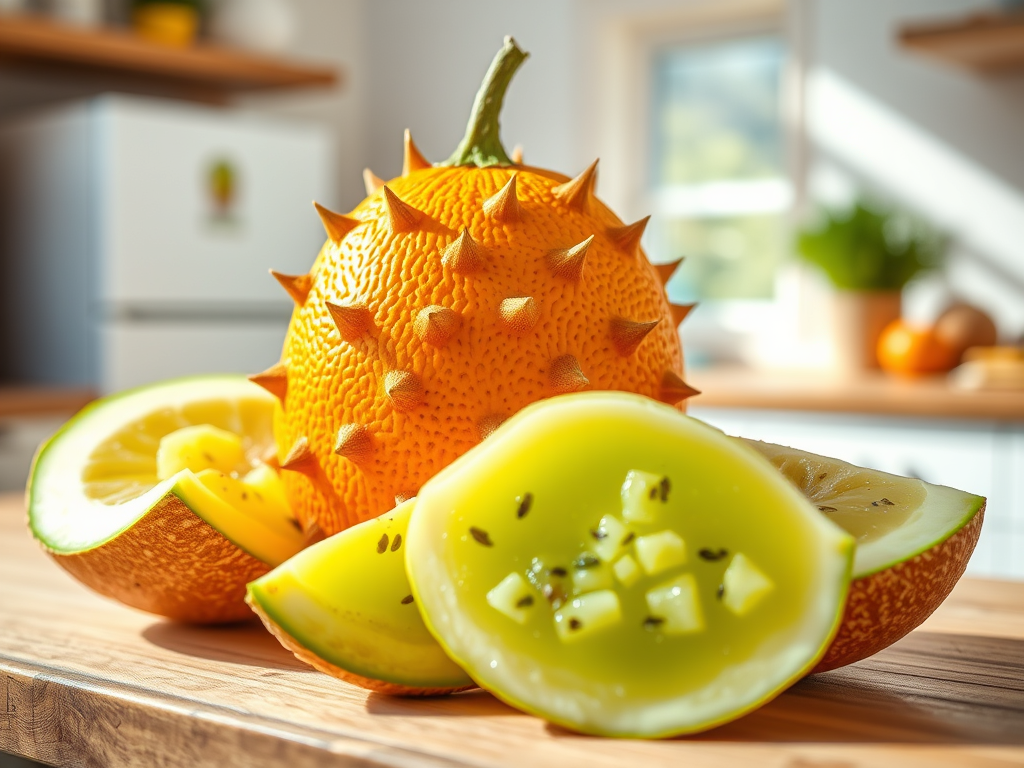
The horned melon, also known as kiwano or Cucumis metuliferus, is a striking fruit with deep cultural roots and impressive nutritional value. Here’s a comprehensive look at this spiky wonder.
🥒 What Is Horned Melon?
Scientific Name: Cucumis metuliferus
Common Names: Horned melon, kiwano, African horned cucumber, jelly melon, blowfish fruit
Origin: Native to Southern and Central Africa, especially in arid regions like the Kalahari Desert
Appearance: Bright orange skin with horn-like spines; jelly-like lime-green interior filled with edible seeds.
📅 Timeline of the Horned Melon
| Period | Significance |
|---|---|
| Ancient Times | Used by Indigenous peoples in Africa as a hydration source and food staple in arid regions |
| 20th Century (1930s–1960s) | Introduced to Western botanists and agricultural researchers; studied for its drought resistance |
| 1980s | Commercial cultivation begins in New Zealand, where it’s branded as “kiwano” and marketed as an exotic fruit |
| 1990s–2000s | Gains popularity in the U.S., Europe, and Japan as a decorative and health-conscious fruit |
| Today | Recognized globally as a superfruit, featured in wellness diets, gourmet cuisine, and cultural storytelling |
🌿 Nutritional & Medicinal Benefits
Horned melon is more than just a visual marvel—it’s a nutrient powerhouse:
| Nutrient (per 209g fruit) | Amount | % Daily Value |
|---|---|---|
| Calories | 92 | — |
| Protein | 3.7g | High for fruit |
| Vitamin C | 18% | Antioxidant |
| Magnesium | 21% | Muscle & nerve |
| Iron | 13% | Blood health |
| Zinc | 7% | Immunity |
Key Benefits:
Rich in antioxidants: Vitamins A, C, E, zinc, and lutein help combat oxidative stress
Supports red blood cell production due to its iron content
High water content (nearly 89%) makes it hydrating and refreshing
🍽️ Culinary Uses & Flavor Profile
Taste: A mix of cucumber, banana, and lime; some detect hints of passionfruit or kiwi
How to Eat:
Slice in half and scoop out the jelly-like pulp
Seeds are edible and soft
Can be added to smoothies, fruit salads, or used as a garnish
Storage Tip: Do not refrigerate; store at room temperature until ripe (bright orange skin)
While horned melon (kiwano) is generally safe and nutritious for most people, there are a few groups who should exercise caution or avoid it altogether:
⚠️ Who Should Avoid or Limit Horned Melon?
1. People with Allergies to the Cucurbitaceae Family
- Horned melon belongs to the Cucurbitaceae family, which includes cucumbers, melons, and squash.
- Those with known allergies to these fruits may experience itching, swelling, or digestive upset.
2. Individuals with Low Blood Pressure (Hypotension)
- Horned melon may have a mild blood pressure-lowering effect due to its potassium content.
- People already on antihypertensive medication or prone to low blood pressure should consume it in moderation.
3. People with Hypoglycemia
- Some sources suggest that excessive consumption may lower blood sugar levels, which could be risky for individuals with hypoglycemia or those on insulin.
4. Those Sensitive to High Fiber Intake
- Its high fiber content can cause bloating, gas, or intestinal discomfort if consumed in large quantities, especially without adequate hydration.
5. Pregnant or Nursing Individuals (in Excess)
- While not inherently harmful, excessive intake during pregnancy or breastfeeding is not well studied. It’s best to consult a healthcare provider before making it a regular part of the diet.
🌍 Cultural & Agricultural Notes
Cultural Spotlight: From Kalahari Survival to Global Superfruit
The horned melon’s journey from the Kalahari Desert to upscale grocery aisles is a story of resilience, reinvention, and cultural depth:
Ancestral Wisdom: In regions like Zimbabwe and Namibia, the horned melon (gaka or gakachika) has long been a hydration source and nutrient-rich snack, especially during dry seasons. Its spiny exterior and jelly-like interior made it ideal for long treks and traditional diets.
Symbol of Survival: Among Indigenous communities, it represents adaptability and endurance, thriving in poor soils and harsh climates—qualities mirrored in the people who cultivated it.
Modern Rebirth: Today, it’s celebrated as a superfruit in wellness circles, praised for its antioxidants, hydration, and exotic appeal. Yet, its cultural roots remain largely untold in mainstream narratives.
🌿 “To honor the horned melon is to honor the ingenuity of those who first cultivated it—not just for sustenance, but for survival.”
Indigenous Use & Symbolism
- Traditional Name: In Zimbabwe, it’s known as gaka or gakachika.
- Cultural Role: Often consumed as a snack or salad ingredient, especially in rural communities where it grows wild or is cultivated in home gardens.
- Survival Food: In arid regions like the Kalahari Desert, the horned melon is valued as a natural water source, making it vital for hydration during dry seasons or long treks, similar to how Indigenous Australians use bush fruits for sustenance.
🌱 Agricultural Wisdom
- Resilience Symbol: Its ability to thrive in poor soils and drought conditions has made it a symbol of resilience and adaptation in African agricultural traditions.
- Rootstock Use: Farmers sometimes use it as a rootstock for other melons, showcasing its role in sustainable farming practices.
🧭Cultural Spotlight: From Kalahari Survival to Global Superfruit
The horned melon’s journey from the Kalahari Desert to upscale grocery aisles is a story of resilience, reinvention, and cultural depth:
- Ancestral Wisdom: In regions like Zimbabwe and Namibia, the horned melon (gaka or gakachika) has long been a hydration source and nutrient-rich snack, especially during dry seasons. Its spiny exterior and jelly-like interior made it ideal for long treks and traditional diets.
- Symbol of Survival: Among Indigenous communities, it represents adaptability and endurance, thriving in poor soils and harsh climates—qualities mirrored in the people who cultivated it.
- Modern Rebirth: Today, it’s celebrated as a superfruit in wellness circles, praised for its antioxidants, hydration, and exotic appeal. Yet, its cultural roots remain largely untold in mainstream narratives.
🌿 “To honor the horned melon is to honor the ingenuity of those who first cultivated it—not just for sustenance, but for survival.”
- Modern Export: Now grown in New Zealand, California, and Israel, the horned melon has become a culinary curiosity in global markets, often featured in gourmet dishes and exotic fruit displays.
- Cultural Reframing: While once a humble survival fruit, it’s now rebranded in the West as a superfruit, reflecting how cultural context can shift the perception of traditional foods.
Availability of Horned Melon in the U.S.
🛍️ Where to Buy
- Whole Foods Market: Carries fresh kiwano horned melons in the produce section.
- Instacart: Offers delivery or pickup from stores like Costco, Sam’s Club, and local grocers that stock exotic fruits.
- Melissa’s Produce: A major distributor that grows horned melons in California and ships them year-round across the U.S..
📦 Online Options
- You can order horned melons directly from Melissa’s Produce or through Instacart for same-day delivery in many areas.
🌱 U.S. Cultivation
- Originally grown in New Zealand, horned melons are now cultivated in California, making them more accessible and fresher for U.S. consumers.
🌟 Final Thoughts: Honoring the Horned Melon
The horned melon is more than a vibrant curiosity—it’s a living thread between ancient survival and modern wellness. From its role as a hydration source in the Kalahari to its rise as a superfruit in global markets, this spiky gem tells a story of resilience, cultural ingenuity, and nutritional power.
Whether you’re savoring it in a smoothie, spotlighting it in a cultural post, or simply admiring its wild beauty, the horned melon invites us to reconnect with the roots of nourishment, both literal and ancestral.
🍃 “To eat the horned melon is to taste the wisdom of the land and the legacy of those who thrived from it.”
 EJADA
EJADA 
Leave a comment