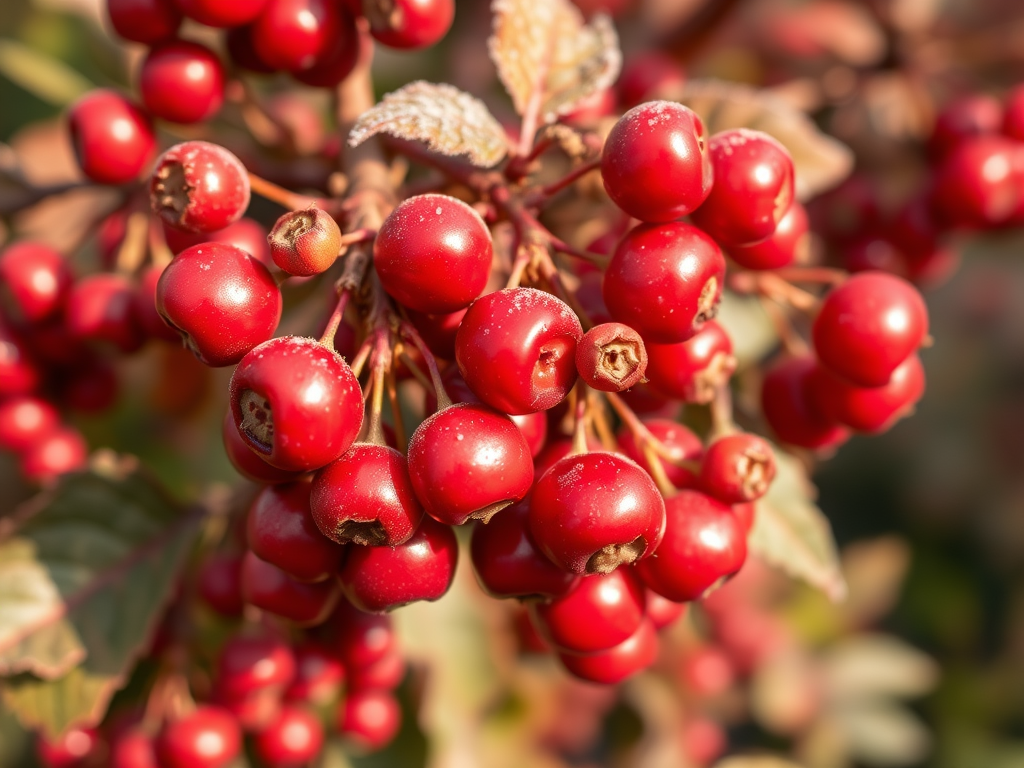
Highbush Cranberry, Discovery and Classification
The highbush cranberry (Viburnum trilobum Marshall) is not a true cranberry but a member of the Adoxaceae (formerly Caprifoliaceae) family.
Botanists often treat it as a variety of the European cranberry‐bush, giving it the name Viburnum opulus var. americanum Ait..
In colonial America, the berry was prized for its red fruit, and John Bartram’s Philadelphia nursery listed it for sale as early as 1783. In 1791, Thomas Jefferson ordered “bush cranberries” by mail from Long Island, cementing its place in early American horticulture.
Today, the plant is widely known as cranberrybush viburnum, American cranberrybush, or simply highbush cranberry.
Cultivation History and Domestication
Highbush cranberry has been part of North American life long before European arrival. Indigenous peoples from the Algonquin to the Ojibwe harvested its berries for food, medicine, and dyes, calling them names such as sassamenesh or ibimi.
European settlers soon adopted these practices, planting the shrubs around homesteads in New England and beyond. By the mid-1800s, small‐scale cultivation emerged in Massachusetts and New Jersey, with growers transplanting wild vines into purpose‐built bogs.
In the 1930s and ’40s, the U.S. Department of Agriculture and cooperating states undertook one of the first formal cranberry‐bush breeding programs. Forty key crosses yielded hardy, productive cultivars such as ‘Stevens’, ‘Beckwith’, and ‘Pilgrim’ that became the foundation of modern plantings.
Uses
Highbush cranberry offers a trifecta of uses:
Culinary: After frost, the bright red drupes can be eaten raw or cooked into lusciously tart sauces, jellies, and baked goods. Like true cranberries (Vaccinium), they are rich in vitamin C and pectin, making them ideal for preserves and syrups.
Culinary Uses: From Foraged Tartness to Gourmet Flair
Highbush cranberry’s culinary versatility shines brightest after the first frost, when its tartness mellows and its flavor deepens. Here’s how it’s used across cultures and cuisines:
Preserves & Sauces: The berries are rich in pectin and vitamin C, making them ideal for jellies, chutneys, and relishes. Their tangy profile pairs beautifully with game meats like venison or duck.
Baked Goods: Incorporated into muffins, scones, and rustic tarts, the berries lend a cranberry-like zing that balances sweetness.
Fermented Drinks: Some Indigenous and homesteading traditions include fermenting the berries into wines or shrubs (vinegar-based syrups), offering a probiotic-rich beverage.
Winter Provisions: Dried berries were traditionally pressed into cakes or mixed with fat and grains to form pemmican—a high-energy survival food.
Modern Fusion: Contemporary chefs are reimagining the berry in glazes, vinaigrettes, and even high-end cocktails or mocktails, often paired with herbs like rosemary or thyme.
⚠️ Culinary Precautions
While highbush cranberries (Viburnum trilobum) are edible and rich in vitamin C and pectin, a few important precautions should be noted:
Raw Consumption: The berries are extremely tart and can have a musky, almost fetid scent when raw—some describe it as “wet dog.” Cooking or freezing after the first frost helps mellow the flavor.
Look-Alikes: Be cautious not to confuse native Viburnum trilobum with the European Viburnum opulus (Guelder Rose), which looks nearly identical but has a more bitter, unpleasant taste and may cause digestive upset in some people.
Unripe Berries: Avoid consuming unripe berries—they are more acidic and can cause stomach discomfort.
Allergic Reactions: Though rare, some individuals may experience mild allergic reactions. Start with small amounts if trying for the first time.
Seed Removal: The seeds are not toxic but are bitter and best removed when making sauces or preserves.
🥣 Culinary Favorite: Highbush Cranberry Maple Butter
This preserve celebrates the berry’s dual identity—wild and cultivated, medicinal and delicious. It’s a taste of history in every spoonful.
Ingredients:
- 2 cups highbush cranberries (fresh or frozen)
- ½ cup water
- ½ cup pure maple syrup
- 1 tbsp lemon juice
- Pinch of cinnamon (optional)
Instructions:
- Simmer the cranberries and water in a saucepan over medium heat until the berries burst (about 10–15 minutes).
- Press the mixture through a fine sieve or food mill to remove seeds and skins.
- Return the pulp to the pan. Stir in maple syrup, lemon juice, and cinnamon.
- Simmer gently until thickened to a spreadable consistency (10–15 minutes).
- Pour into sterilized jars and refrigerate for up to 3 weeks—or water-bath can for longer storage.
Serving Ideas:
- Spread on warm cornbread or bannock
- Swirl into yogurt or oatmeal
- Glaze roasted root vegetables or poultry
✅ Tip: Always taste-test a small batch before preparing large quantities, and consider blending with sweeter fruits or natural sweeteners to balance the tartness.
Medicinal Uses: Crampbark and Beyond
The medicinal legacy of highbush cranberry is deeply rooted in both Indigenous and Western herbal traditions:
Medicinal: Under the name crampbark, the shrub’s bark has long been used as an antispasmodic to ease menstrual cramps, muscle tension, and gastrointestinal spasms. Herbalists attribute these effects to compounds such as valerenic and antispasmodic acids. It’s often prepared as a tincture or decoction.
Crampbark Tinctures: The bark, known as “crampbark,” is a classic remedy for menstrual cramps, uterine spasms, and muscle tension.
Digestive Aid: Traditional use includes easing gastrointestinal spasms and calming irritable bowel symptoms.
Nervine Properties: Herbalists consider it mildly sedative, useful for anxiety-related tension or insomnia.
Anti-inflammatory: The bark contains compounds like viburnin and valerenic acid, which may contribute to its anti-inflammatory and antispasmodic effects.
Folk Remedies: Some communities used berry infusions as blood purifiers or mild laxatives, while others brewed the leaves into teas for colds and respiratory ailments.
🩺 Extended Medicinal Benefits
Highbush cranberry’s bark—known as crampbark—has long been revered in both Indigenous and Western herbal traditions. Beyond easing menstrual cramps and muscle tension, it offers a broader range of therapeutic applications:
- Muscle Relaxant: Eases uterine, intestinal, and skeletal muscle spasms.
- Nervous System Support: Calms anxiety, tension headaches, and insomnia.
- Reproductive Health: Regulates menstrual flow and tones the uterus.
- Kidney Support: May help prevent kidney stones due to its citrate content.
- Anti-inflammatory & Astringent: Useful for diarrhea, colds, and tissue inflammation.
- Traditional Remedies: Leaf teas for respiratory ailments; berries as blood purifiers and mild laxatives.
⚠️ Always consult a qualified herbalist or healthcare provider before using crampbark medicinally, especially during pregnancy or with existing conditions.
Ornamental: With showy lace cap flowers in late spring, glossy green leaves that flame crimson in fall, and persistent red fruit through winter, highbush cranberry is prized in landscape design for year-round interest.
Ornamental Uses: A Four-Season Showstopper
Highbush cranberry is a landscape designer’s dream, offering beauty and biodiversity benefits year-round:
Spring: Lacecap flower clusters attract pollinators and add elegance to woodland gardens.
Summer: Dense, glossy foliage provides lush greenery and privacy as a hedge or screen.
Autumn: Leaves turn brilliant shades of crimson and burgundy, rivaling maples in fall color.
Winter: Clusters of red berries persist into the snowy months, feeding birds and adding visual interest.
Wildlife Habitat: The shrub supports native bees, butterflies, and birds, making it a valuable addition to ecological gardens.
Cultural Landscaping: In heritage gardens or Indigenous plantings, it serves as a living symbol of resilience and tradition.
Habitat and Distribution
Native to cool, northern regions of North America, highbush cranberry ranges from Newfoundland and Labrador across to British Columbia, and southward to northern Virginia and Washington State. It thrives in wet woods, bog margins, and moist thickets, preferring rich loam soils and partial to full sun. Established plants tolerate short droughts and occasional flooding. Though once confined to natural wetlands, it is now widely planted in gardens, parks, and as a hedge for its ornamental and edible qualities.
Cultural Significance and Indigenous Traditions
Long before commercial cultivation, highbush cranberry was woven into the fabric of Indigenous life. Tribes such as the Algonquin and Cree dried the berries into cakes for winter stores, brewed the leaves into tea for respiratory remedies, and used the fruit as “blood purifiers” and laxatives.
In French-Canadian communities the berry became known as pembina, a name so beloved that it was lent to rivers in Manitoba and Alberta.
✨ Cultural Significance and Indigenous Traditions
Long before commercial cultivation, highbush cranberry was woven into the fabric of Indigenous life. Tribes such as the Algonquin and Cree dried the berries into cakes for winter stores, brewed the leaves into tea for respiratory remedies, and used the fruit as “blood purifiers” and laxatives.
🧺 Harvesting Rituals and Seasonal Gatherings
In many Indigenous communities, berry harvesting is more than sustenance—it’s a sacred seasonal ritual. Among the Ojibwe and Cree, families gather in traditional territories to harvest berries, often offering thanks to the land and spirits. In Southeast Alaska, the Tlingit avoid saying the word “bear” while picking, a cultural practice rooted in respect and spiritual caution.
These gatherings are intergenerational, reinforcing ecological knowledge, language, and kinship. The act of harvesting becomes a living ceremony—one that honors the past while nourishing the present.
🍁 French-Canadian Legacy
In French-speaking communities, the berry—known as pembina—became so culturally significant that rivers in Manitoba and Alberta were named after it. It features in local festivals and farm-to-table menus, celebrating its dual heritage as both a wild food and cultivated crop.
Whether served in a traditional feast or infused into a modern herbal tonic, highbush cranberry continues to bridge ancestral wisdom and contemporary wellness.
Today, the berry honors its Indigenous and early-settler heritage through cultural festivals, farm-to-table menus, and modern herbal formulations. Whether as a heirloom remedy or a click-and-order tonic, highbush cranberry continues to bridge traditional wisdom and contemporary tastes.
No matter whether you encounter highbush cranberry on a woodland walk or in a local nursery, its ruby fruit and rich history make it a plant worth celebrating. From its early days in wild North American wetlands to the refined cultivars of today’s boutique farms, the highbush cranberry stands as a testament to nature’s bounty and human ingenuity.
 EJADA
EJADA 
Leave a comment