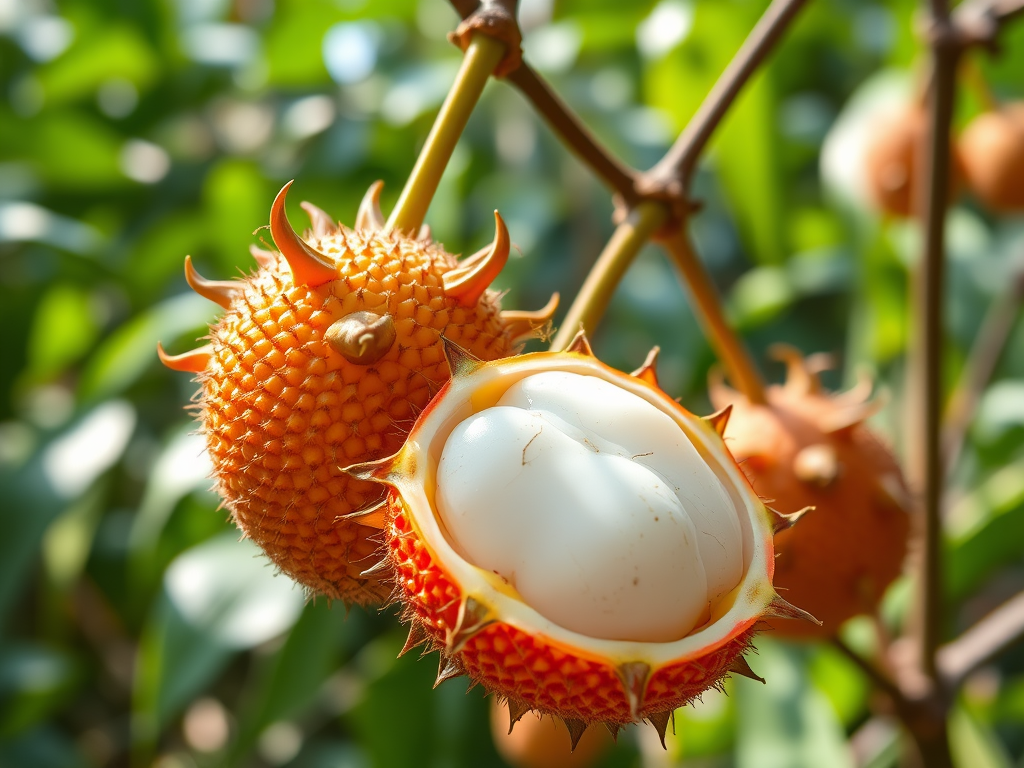
Have you heard of this one? The “Hairless Ramitar,” known scientifically as Nephelium xerospermoides, is commonly called the hairless rambutan.
🌱 What is Hairless Ramitar?
Scientific Name: Nephelium xerospermoides
Common Name: Hairless rambutan
Family: Sapindaceae (same as lychee and longan)
Distinct Feature: Unlike the traditional rambutan (Nephelium lappaceum), this species lacks the characteristic hairy spines on its skin, hence the name “hairless”
🌍 Origin and Cultivation
Native Region: Southeast Asia, like its more famous cousin, the traditional rambutan.
Cultivation Status:
It is not widely cultivated or commercialized.
Typically found in home gardens or wild groves.
The fruit is edible and similar in flavor to rambutan but is less well-known in global markets.
Development and Breeding
While there’s no specific record of who exactly cultivated the first Hairless Ramitar, it is likely a naturally occurring species or a result of selective breeding aimed at reducing the hairy exterior for easier consumption.
In contrast, seedless rambutan varieties (sometimes confused with hairless types) are developed through grafting, air layering, and genetic modification, often in agricultural research centers in Southeast Asia
he Hairless Ramitar (Nephelium xerospermoides), while not widely commercialized, has seen some modest and localized use in Southeast Asia, primarily in ways similar to its more famous cousin, the traditional rambutan (Nephelium lappaceum). Here’s a breakdown of its most common uses:
🍽️ Culinary Uses
Eaten Fresh: Like traditional rambutan, the Hairless Ramitar is typically consumed fresh. Its translucent, juicy flesh is sweet and mildly acidic, making it a refreshing snack.
Home Gardens: It is often grown in home gardens or wild groves rather than commercial orchards.
Occasional Ingredient: In rural or indigenous communities, it may be used in fruit salads, desserts, or local preserves, though this is anecdotal and not widely documented.
🌿 Medicinal and Folk Uses (Inferred from Related Species)
While there are no specific records of Hairless Ramitar being used medicinally, its close relative, the traditional rambutan, has been used in folk medicine:
Leaves: Used in decoctions for treating fever and headaches.
Seeds: Sometimes roasted and consumed for their supposed aphrodisiac or medicinal properties (though they can be mildly toxic if not prepared properly).
Rind: Occasionally used in traditional remedies for dysentery or as an astringent.
Given the botanical similarity, it’s plausible that Hairless Ramitar may have been used in similar ways on a local, informal scale.
🌱 Agricultural and Botanical Interest
Botanical Curiosity: The hairless variety is of interest to horticulturists and plant collectors due to its unusual appearance.
Not Commercially Cultivated: Unlike the traditional rambutan, it has not been adopted for large-scale farming, likely due to lower yield or market unfamiliarity
The Hairless Ramitar (Nephelium xerospermoides), while not widely studied on its own, is closely related to the traditional rambutan (Nephelium lappaceum), and likely shares a very similar nutritional profile. Based on this, we can confidently say:
🥗 Is Hairless Ramitar Healthy?
Nutritional Highlights (per 100g, based on rambutan data):
| Nutrient | Amount | Benefits |
|---|---|---|
| Calories | ~75–82 kcal | Low-calorie, good for weight management |
| Carbohydrates | ~16–20 g | Natural energy source |
| Fiber | ~1 g | Aids digestion, prevents constipation |
| Vitamin C | 15–78 mg | Boosts immunity, antioxidant support |
| Copper | 0.2 mg | Supports heart, brain, and bone health |
| Potassium | ~100–324 mg | Regulates blood pressure, and heart function |
| Iron | ~0.6–1.1 mg | Supports red blood cell production |
Sources:
Healthline,ToneOp,and FoodStruct
🌿 Health Benefits
Boosts Immunity: High in vitamin C and antioxidants
Supports Digestion: Thanks to its fiber content
Hydrating: High water content helps maintain hydration
Weight-Friendly: Low in fat and calories, helps with satiety
Heart Health: Potassium and copper support cardiovascular function
Skin & Tissue Repair: Vitamin C aids collagen production
⚠️ Cautions
Seeds and Peel: Not recommended for consumption unless properly prepared. They may contain compounds that are mildly toxic if eaten raw.
Sugar Content: While natural, it’s still relatively high in sugar—best enjoyed in moderation for those managing blood sugar levels.
Availability in the U.S.
❌ Not Commercially Available, but we did learn about another fruit that begins with the ” H”
- There are no known distributors, nurseries, or grocery chains in the U.S. that offer Hairless Ramitar fruit or saplings.
- It is not listed in specialty fruit catalogs, tropical fruit nurseries, or online seed banks that typically carry rare fruits like pulasan or langsat.
🌱 Possible Exceptions
- Private collectors or botanical gardens may have specimens for research or conservation purposes.
- Ethnobotanical networks or Southeast Asian diaspora communities might grow it in home gardens, but this is anecdotal and not documented for public access.
 EJADA
EJADA 
Leave a comment