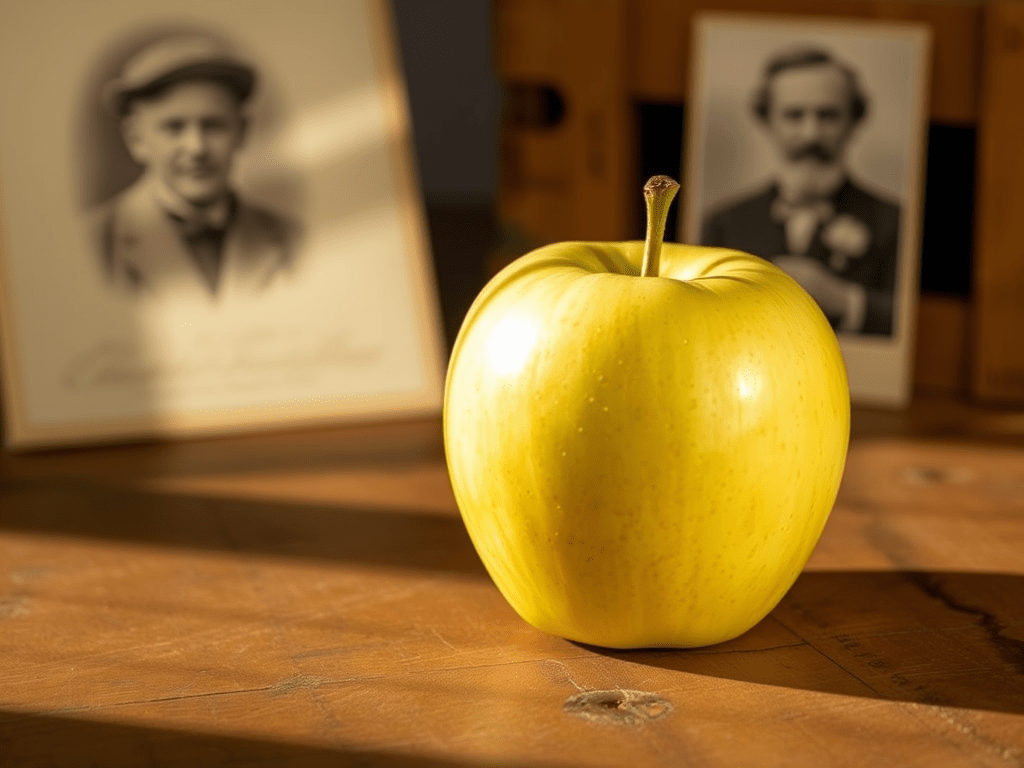
Golden Delicious apples are not only a sweet favorite but also a nutritional powerhouse with a fascinating backstory.
🌳 Origin & Discovery of Golden Delicious
Golden Delicious apples have a rich American heritage:
📍 Where & When
Discovered: Around 1905–1912 in Clay County, West Virginia, USA5.
Discoverer: Anderson Mullins, who found the tree growing as a chance seedling on his farm.
Original Name: “Mullins’ Yellow Seedling.”
🧬 Genetic Background
Likely a hybrid of Grimes Golden and Golden Reinette, though it was a natural, unplanned cross.
📈 Rise to Fame
In 1914, Mullins sent samples to Stark Brothers Nurseries, which purchased the tree and rights for $5,000, a substantial sum at the time.
Stark Brothers renamed it Golden Delicious to complement their already popular Red Delicious.
It became a marketing sensation and was widely propagated across the U.S. and beyond.
🏅 Legacy
Named the official state fruit of West Virginia in 1995.
Parent to many modern cultivars like Gala, Jonagold, Mutsu, and Pink Lady.
Its genome was sequenced in 2010, revealing it had the highest number of genes (57,000) of any plant studied at the time
🍏 Health Benefits of Golden Delicious Apples
Golden Delicious apples are more than just a tasty snack—they offer a range of health perks:
🧬 Nutritional Highlights (per medium apple ~182g)
| Nutrient | Amount |
|---|---|
| Calories | ~95 |
| Fiber | ~4g |
| Sugars | ~19g |
| Vitamin C | ~6% of DV |
| Potassium | ~195mg |
| Iron & Zinc | Trace amounts |
| Antioxidants | Polyphenols, carotenoids, quercetin |
🌿 Vitamins
| Vitamin | Amount | % DV |
|---|---|---|
| Vitamin C | 6.3mg | 7% |
| Vitamin A (RAE) | 5.1mcg | 1% |
| Vitamin K | 3mcg | 3% |
| Vitamin E | 0.3mg | 2% |
| Vitamin B6 | 0.09mg | 5% |
| Thiamin (B1) | 0.03mg | 3% |
| Riboflavin (B2) | 0.04mg | 3% |
| Niacin (B3) | 0.16mg | 1% |
| Folate (B9) | 5.1mcg | 1% |
| Choline | 8.6mg | 2% |
🧲 Minerals
| Mineral | Amount | % DV |
|---|---|---|
| Potassium | 169–195mg | 4% |
| Calcium | 6.5–10mg | 1% |
| Iron | 0.16–0.22mg | 1% |
| Magnesium | 5.5–8.5mg | 2% |
| Phosphorus | 10.9–16.9mg | 1% |
| Zinc | 0.07mg | 1% |
| Copper | 0.05mg | 6% |
| Manganese | 0.06mg | 3% |
Source:MyFoodData,FatSecret
🌿 Key Health Benefits
Digestive Health: High fiber content supports gut health and regularity.
Heart Health: Antioxidants like quercetin and fiber help lower cholesterol and reduce heart disease risk.
Immune Support: Vitamin C boosts immunity and skin health.
Weight Management: Low in calories and high in fiber, they promote satiety.
Blood Sugar Control: Polyphenols and fiber help regulate glucose levels.
Bone Health: Flavonoids may support bone density and reduce osteoporosis risk.
Well-Known Facts About Golden Delicious
Origin: Discovered around 1905–1912 in Clay County, West Virginia, by Anderson Mullins2.
Original Name: “Mullins’ Yellow Seedling.”
Commercial Debut: Introduced to the market in 1914 by Stark Brothers Nurseries.
Color & Flavor: Golden-yellow skin with a sweet, mellow flavor and low acidity.
Versatility: Excellent for eating fresh, baking, making applesauce, and pairing with savory dishes like pork or cheese.
Parent Apple: Used to breed many popular varieties like Gala, Jonagold, Mutsu, and Pink Lady.
State Symbol: Named the official state fruit of West Virginia in 1995.
Genome Superstar: In 2010, it became the first apple to have its genome fully sequenced, revealing a record 57,000 genes.
🔍 Little-Known & Surprising Facts
| 🍏 Fact | 💡 Detail |
|---|---|
| Nickname | Originally called “Mildew 6” due to its resistance to fungal diseases. |
| Not Related to Red Delicious | Despite the name, it’s genetically unrelated to Red Delicious. |
| Cooler = Sweeter | Apples grown in cooler climates taste sweeter due to higher acidity enhancing flavor. |
| Postal Fame | Featured on a U.S. postage stamp in 2013 as one of four historic apple varieties. |
| Delicate Skin | Its thin skin bruises easily, making careful handling essential during harvest and transport. |
| Flavor Notes | Described as having floral, honeyed, and even gingerbread-like undertones when fully ripe. |
| Decline in Popularity | Once a top seller, it has declined in favor due to the rise of crisper varieties like Honeycrisp. |
| Festival Favorite | Celebrated annually at the Golden Delicious Festival in Clay County, WV since 1972. |
| Self-Pollinating | Apples grown in cooler climates taste sweeter due to higher acidity, enhancing flavor. |
Golden Delicious apples, botanically classified as Malus domestica, are an American variety belonging to the Rosaceae family. It is one of the 15 most popular apple cultivars in the United States. It is not closely related to Red Delicious.
This apple variety was discovered in 1912 by Anderson Mullins, a farmer in Clay County, West Virginia. Initially, the apple was known as “Mullin’s Yellow Seedling.” The tree was found growing on Mullins’ farm, and its: READ MORE@golden-delicious-apples
⚠️ Who Should Be Cautious with Golden Delicious Apples
1. People with Apple Allergies
Oral Allergy Syndrome (OAS): Some individuals, especially those allergic to birch pollen, may experience itching or swelling in the mouth and throat after eating raw apples.
Symptoms: Itchy lips, tongue, throat, or even mild swelling.
Tip: Cooking the apple (e.g., baking or boiling) often neutralizes the allergenic proteins.
2. Individuals with Fructose Intolerance
Fructose Malabsorption: Apples are high in fructose and sorbitol, which can cause bloating, gas, or diarrhea in sensitive individuals.
Hereditary Fructose Intolerance (HFI): A rare genetic condition where even small amounts of fructose can be harmful.
3. People on Low-FODMAP Diets
- Apples are considered high-FODMAP due to their fructose and polyol content, which can trigger symptoms in people with IBS (Irritable Bowel Syndrome).
4. Diabetics (in excess)
- While Golden Delicious apples have a moderate glycemic index, their natural sugar content (~17–19g per apple) can spike blood sugar if consumed in large quantities.
- Tip: Pairing with protein or fat (like nuts or cheese) can help moderate the glycemic response.
5. Infants and Toddlers
- Apple seeds contain amygdalin, which can release cyanide in the body. While a few seeds are unlikely to cause harm, they should always be removed before giving apples to children.
6. People Taking Certain Medications
Apples may interfere with the absorption of some medications, such as fexofenadine (Allegra), a common antihistamine.
Tip: Wait at least 4 hours after taking such medications before eating apples.
 EJADA
EJADA 
Leave a comment