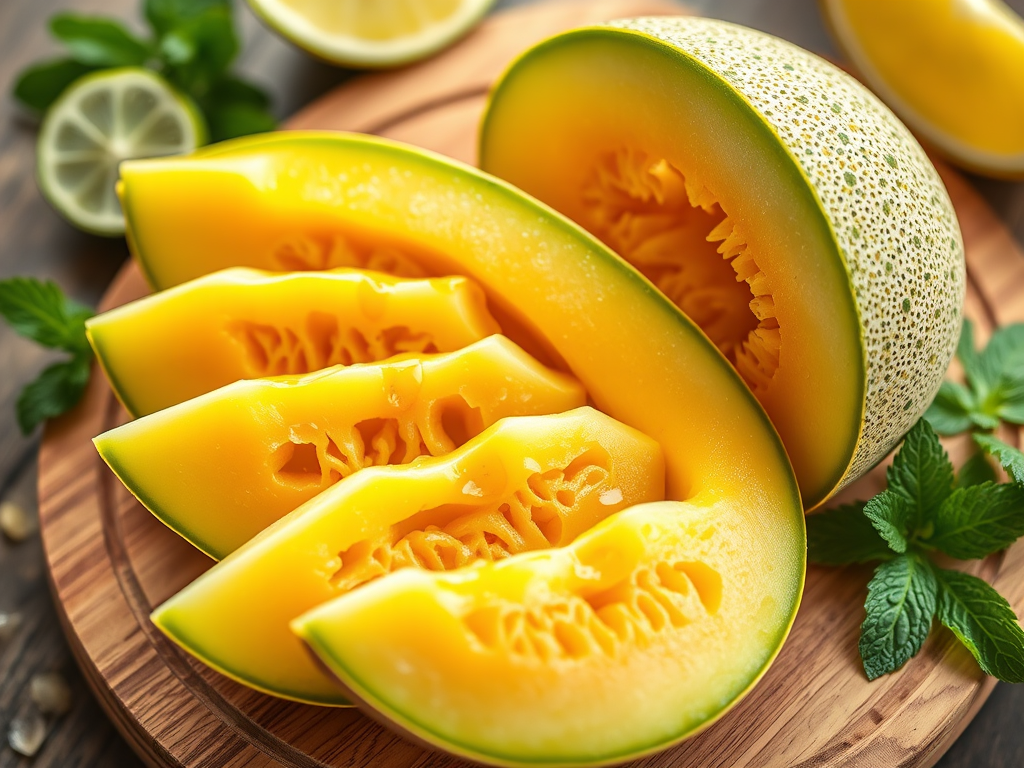
Galia melon is a sweet, juicy fruit that’s not just refreshing, it’s a nutritional powerhouse with a fascinating backstory.
Origin of Galia Melon
Developed in Israel in the 1960s by Dr. Zvi Karchi at the Nevé Yaar Research Center.
It’s a hybrid between the ‘Ha’Ogen’ (a green-flesh cantaloupe) and ‘Krymka’ (a netted-rind melon).
Named after Dr. Karchi’s daughter, Galia, which means “God’s wave” in Hebrew.
Flavor Profile and Culinary Uses
Galia melon greets the palate with a honeyed sweetness, subtle musky undertones and a refreshing, almost floral aroma. Its firm yet tender flesh holds up beautifully in both raw and lightly cooked preparations.
Fresh slices: drizzle with lime juice and mint for a simple snack or dessert.
Fruit salads and salsas: pair with berries, cucumber, jalapeño or prosciutto for sweet-savory contrasts.
Smoothies and cold soups: blend into yogurt or coconut water with ginger for a cooling treat.
Grilled or roasted: brush wedges with honey and char briefly for a caramelized twist.
Breakdown of Vitamins and Minerals in Galia Melon
Galia melon packs a variety of essential vitamins and minerals that support everything from immune function to bone health. Here’s what you’ll find in a 100 g serving:
Vitamins
Vitamin A (as beta-carotene)
Vitamin C (ascorbic acid)
Thiamin (B₁)
Riboflavin (B₂)
Niacin (B₃)
Vitamin B₆
Folate (B₉)
Minerals
Potassium: 267 mg (≈8 % Daily Value)
Calcium
Iron
Magnesium
Phosphorus
Sodium
Zinc
Manganese
Notes: •
Exact levels of the B-vitamins, calcium, iron and the trace minerals vary slightly by growing region and ripeness.
The high beta-carotene content is what gives Galia its golden-green flesh and provides a potent antioxidant boost.
Functional Benefits at a Glance
| Benefit | Key Nutrients | Impact |
|---|---|---|
| Hydration | Water, potassium | Supports fluid balance and muscle function |
| Immune support | Vitamins C & A, bioflavonoids | Strengthens defenses and fights free radicals |
| Heart health | Soluble fiber, potassium | Helps regulate blood pressure and cholesterol |
| Digestive wellness | Dietary fiber | Promotes regularity and gut health |
| Eye protection | Beta-carotene | May lower risk of macular degeneration |
| Anti-inflammatory action | Polyphenols, carotenoids | Reduces inflammation and chronic disease risk |
Proven Medical Benefits of Galia Melon
Galia melon’s reputation isn’t just folklore—it’s rooted in its nutrient profile, which has been medically reviewed to support several aspects of health. Most evidence comes from its vitamins, minerals, fiber, and antioxidant content rather than large clinical trials specifically on this variety.
Heart Health
Its soluble dietary fiber can help lower LDL (“bad”) cholesterol, while the high potassium content supports healthy blood-pressure regulation. Together, these effects contribute to reduced risk of atherosclerosis and stroke when included in a balanced diet.
Immune System Support
Galia melon delivers generous amounts of vitamin C and vitamin A. These micronutrients stimulate white-blood-cell function and bolster antibody production. Additionally, carotenoids and bioflavonoids act as antioxidants to neutralize free radicals that can impair immune response.
Digestive Health
The melon’s soluble fiber content aids in forming soft, bulky stools and promotes regular bowel movements. This can relieve occasional constipation and help maintain a healthy gastrointestinal tract.
Weight Management
With just 37 calories per 100 g and a water-dense flesh, Galia melon provides volume and sweetness that help curb appetite and reduce total caloric intake. Its natural sugars satisfy sweet cravings without added fats or refined sugars, making it a low-energy-density snack for weight control.
Eye Health
Beta-carotene (provitamin A) in Galia melon converts to vitamin A in the body, supporting retinal function and helping prevent age-related macular degeneration when consumed as part of an overall nutrient-rich diet.
Antioxidant and Anti-Inflammatory Actions
Beyond the immune benefits, the melon’s blend of carotenoids and polyphenols exhibits anti-inflammatory properties. These compounds help counter chronic inflammation, a driver of many noncommunicable diseases, although direct clinical trials on Galia melon itself remain limited.
Note: While these benefits are grounded in established nutritional science, direct randomized controlled trials on Galia melon specifically are scarce. Its effects mirror those of other melons rich in fiber, vitamins, and antioxidants.
Nutrient Highlights and Whole-Body Support
| Nutrient | Amount | % Daily Value |
|---|---|---|
| Calories | 36 kcal | 2 % |
| Total Fat | 0.14 g | 0 % |
| – Saturated Fat | 0.04 g | 0 % |
| Sodium | 18 mg | 1 % |
| Total Carbohydrate | 9.1 g | 3 % |
| – Dietary Fiber | 0.8 g | 3 % |
| – Total Sugars | 8.1 g | — |
| Protein | 0.5 g | 1 % |
| Vitamin C | 30 mg | 33 % |
| Calcium | 6 mg | 1 % |
| Iron | 0.2 mg | 1 % |
| Potassium | 228 mg | 5 % |
How These Nutrients Work Together
Weight Control: Low energy density means you can enjoy satisfying portions without derailing calorie goals.
Balanced Hydration & Electrolytes: High water content plus potassium makes Galia melon ideal for post-exercise recovery and daily fluid balance.
Dual-Action Antioxidants: Vitamin C and carotenoids team up to protect cells from damage, supporting everything from skin health to chronic-disease prevention.
Gut-Friendly Fiber: Its soluble and insoluble fibers feed beneficial gut bacteria, aiding digestion and nutrient absorption.
Cardiovascular Support: The synergy of fiber and potassium fosters healthy blood vessels and cholesterol levels.
Vision & Immunity: Provitamin A precursors and vitamin C not only keep eyes sharp but also reinforce barriers against pathogens.
Read More @ https://www.webmd.com.galia-melon
The soluble dietary fiber in Galia melon aids in healthy digestion. Beyond this, the melon contains no fat, no cholesterol, and is low in calories. It melon can aid in weight loss and management as a part of a balanced diet.
In addition, Galia melon can provide other health benefits like:
Heart Health
The melon contains dietary fiber, which can help lower LDL or bad cholesterol. A surplus of cholesterol can lead to atherosclerosis. It also contains potassium, which can aid in lowering blood pressure and lowering the risk of stroke and heart disease.
Digestive Health
Fiber, especially soluble fiber, also helps reduce constipation and a variety of other gastrointestinal issues and discomfort.
Selecting and storing Galia melon well preserves both its taste and nutrients. Look for a fragrant scent at the blossom end, a golden rind and a slight give when pressed. Refrigerate cut fruit in an airtight container for up to three days.
Macronutrient & Micronutrient Breakdown per 100 g Galia Melon
Here’s a nutrient breakdown per 100 g serving of Galia melon (percent Daily Values based on a 2,000 kcal diet)
| Nutrient | Amount | % Daily Value |
|---|---|---|
| Calories | 36 kcal | 2 % |
| Total Fat | 0.14 g | 0 % |
| – Saturated Fat | 0.04 g | 0 % |
| Sodium | 18 mg | 1 % |
| Total Carbohydrate | 9.1 g | 3 % |
| – Dietary Fiber | 0.8 g | 3 % |
| – Total Sugars | 8.1 g | — |
| Protein | 0.5 g | 1 % |
| Vitamin C | 30 mg | 33 % |
| Calcium | 6 mg | 1 % |
| Iron | 0.2 mg | 1 % |
| Potassium | 228 mg | 5 % |
Most other vitamins and minerals—vitamin A (as beta-carotene), B-complex (thiamin, riboflavin, niacin, B₆, folate), magnesium, phosphorus, zinc and manganese—are present in smaller amounts that vary by cultivar and growing conditions. For a fully detailed USDA profile, consult the USDA FoodData Central database.
Beyond Flavor and Functionality
We’ve seen how Galia melon captivates our taste buds and elevates our health. Beyond flavor and functionality, this extraordinary fruit is reinventing agriculture, driving economies, and even inspiring beauty products.
1. Agronomic Advantages
High Yield and Early Maturity Galia melon plants typically fruit earlier and more abundantly than many cantaloupe varieties, giving growers a competitive edge in markets.
Disease Resistance Through targeted breeding, Galia melon shows improved tolerance to powdery mildew and fusarium wilt, reducing the need for heavy fungicide use.
Adaptable Cultivation Thrives in diverse climates—from Mediterranean fields to greenhouses—allowing growers across five continents to add it to their rotations.
2. Economic and Cultural Impact
Global Market Demand Its distinctive netted rind and sweet aroma command premium prices in Europe, North America, and Asia, boosting export revenues for producing countries.
Culinary Tourism In regions like Murcia (Spain) and Negev (Israel), “melon festivals” celebrate the harvest with tastings, contests, and farm tours, drawing food-curious travelers.
Fair-Trade Opportunities Smallholder farmers in Morocco and Brazil have organized cooperatives around Galia melon, leveraging certifications to access higher-value specialty markets.
3. Sustainability Profile
| Aspect | Galia Melon Edge |
|---|---|
| Water Use Efficiency | Deeper root systems improve water uptake, trimming irrigation needs. |
| Crop Rotation Value | Leaves soil enriched with organic matter, benefiting subsequent plantings. |
| Reduced Chemical Load | Disease-resistant varieties lower pesticide applications. |
4. Culinary Innovation & Mixology
Molecular Gastronomy Chefs spherify Galia juice into “melon caviar” pearls for plated desserts.
Craft Cocktails Fresh Galia purée lends bright sweetness to gin tonics, margaritas, and mocktails, often paired with basil or Thai chili.
Fermented Delights Small-batch producers are experimenting with melon wine and kombucha blends, showcasing its floral aroma.
5. Beauty and Wellness Uses
Skincare Ingredients Galia extract appears in luxury serums for its hydrating sugars, vitamin C, and gentle alpha-hydroxy acids that promote skin renewal.
Aromatherapy & Home Fragrance The melon’s light, fresh scent is captured in spa mists and candle blends to evoke a calming, summery atmosphere.
6. Decorative & Experiential
Fruit Carving Art Its firm, netted rind and stark color contrast make Galia melon a favorite canvas for banquet-style carvings.
Sensory Workshops Culinary schools and wellness retreats use melon tasting flights—sampling under-ripe, just-ripe, and over-ripe slices—to train taste awareness and mindfulness.
Whether you’re a grower, chef, entrepreneur, or wellness enthusiast, Galia melon offers innovations that stretch well beyond its juicy sweetness
Who Should Avoid or Limit Galia Melon?
Most people can enjoy Galia melon without issue, but certain groups may need to steer clear or consume it sparingly:
People with melon allergies or oral allergy syndrome May experience itching, swelling, or respiratory symptoms after eating melons.
Those with fructose malabsorption or sensitive to FODMAPs Can develop bloating, gas, cramps, or diarrhea from the melon’s natural sugars.
Patients with chronic kidney disease on potassium-restricted diets Risk hyperkalemia due to Galia’s high potassium content.
Individuals with uncontrolled diabetes Should monitor carbohydrate intake and treat Galia melon like any other sugary fruit.
Anyone with latex-fruit syndrome Cross-reactivity can trigger allergic reactions in latex-sensitive individuals.
If you fall into one of these categories, consult your healthcare provider before adding Galia melon to your regular diet!
How about starting with the most favorite recipe,
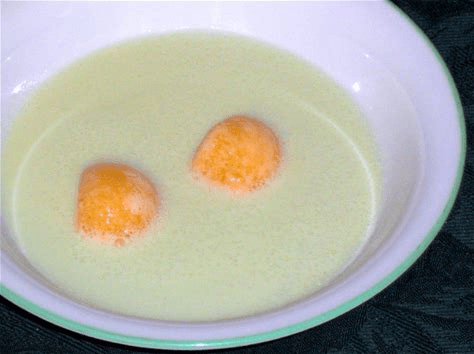
Cold Melon Soup
NOTE: chilling time not included with prep time.
NUTRITION INFO
Serving Size: 1 (200) g
Servings Per Recipe: 4
AMT. PER SERVING% DAILY VALUE
Calories: 81
Calories from Fat 2 g3 %
Total Fat 0.3 g0 %
Saturated Fat 0.1 g0 %
Cholesterol 0 mg0 %
Sodium 34.8 mg1 %
Total Carbohydrate 20.7 g6 %
Dietary Fiber 1.6 g6 %
Sugars 18.5 g74 %
Protein 1.1 g2 nu
Ingredients
Units: US
4cups ripe honeydews, cut into small balls
4teaspoons lime juice
2teaspoons honey
1cup nonfat vanilla yogurt
1⁄2cup honeydew balls (to garnish)
In a blender container, combine honeydew, lime juice, and honey. Blend until smooth. Pour into a bowl and add yogurt.
Beat with a fork or wire whisk until blended.
Chill several hours.
Serve cold
Whisk before serving and garnish each bowl with a few melon balls.
In a blender container, combine honeydew, lime juice, and honey. Blend until smooth. Pour into a bowl and add yogurt.
Recipe: @ www.food.com
 EJADA
EJADA 
Leave a comment