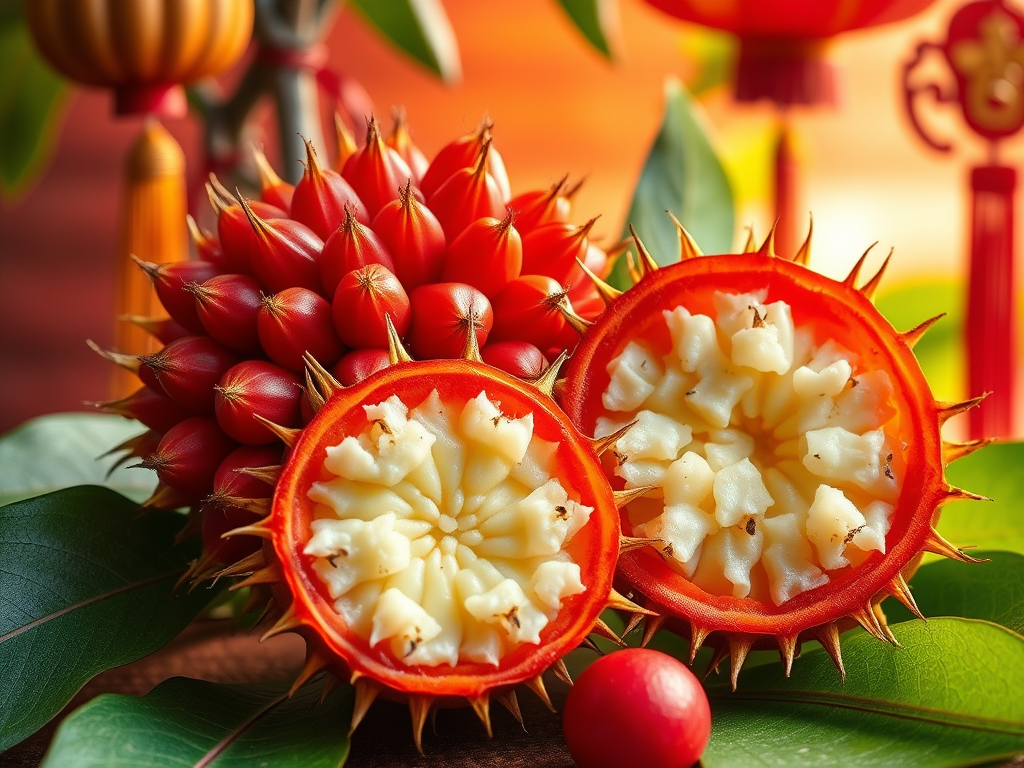
🌺 Gac Fruit: The Ancient Superfruit of Southeast Asia
Scientific Name: Momordica cochinchinensis Common Names: Baby jackfruit, sweet gourd, spiny bitter gourd
🧭 A Fruit Rooted in Tradition
Gac fruit has been revered for centuries across Southeast Asia, especially in Vietnam, Thailand, and Laos. Known for its vibrant red arils and spiky orange skin, Gac is more than just a visual marvel—it’s a symbol of health, prosperity, and celebration.
In Vietnam, Gac is the star of xôi gấc, a red sticky rice dish served at weddings and the Lunar New Year. Its bold color represents luck and longevity, making it a cherished part of cultural rituals.
🌿 Medicinal Legacy
Long before it was labeled a “superfruit,” Gac was used in traditional Vietnamese and Chinese medicine to treat:
Eye disorders (thanks to high beta-carotene and zeaxanthin)
Skin ailments and wounds
Fatigue and immune weakness
Inflammation and microbial infections
Its seeds, known as mù bát gấc, were often ground into pastes or decoctions for healing purposes.
🧬 Modern Science Meets Ancient Wisdom
Today, Gac is celebrated for its extraordinary nutrient density:
| Nutrient | Gac Fruit vs. Common Sources |
|---|---|
| Lycopene | 70x more than tomatoes |
| Beta-carotene | 10x more than carrots |
| Vitamin C | 40x more than oranges (in oil extract) |
| Essential fatty acids | Supports absorption of fat-soluble vitamins |
These compounds are linked to eye health, cancer prevention, cardiovascular support, and anti-aging benefits.
🍽️ Culinary Uses
While Gac is rarely eaten raw, its arils are used in:
Rice dishes (like xôi gấc)
Smoothies and juices
Natural food coloring
Nutraceutical supplements
Its mild flavor pairs well with coconut milk, sticky rice, and tropical fruits.
Gac fruit is steeped in cultural symbolism and traditional practices far beyond its nutritional value. Here are some lesser-known cultural uses and meanings of the Gac fruit across Southeast Asia:
Cultural Uses of Gac Fruit
| Region | Cultural Use | Symbolism & Significance |
|---|---|---|
| Vietnam | Xôi gấc (red sticky rice) served at weddings and Lunar New Year (Tết) | Symbolizes luck, happiness, and longevity. The red color is auspicious and believed to ward off evil. |
| China | Known as Mu Bie Zi in traditional Chinese medicine | Used for over 1,000 years to treat wounds, inflammation, and liver disorders. |
| Thailand & Laos | Gac is included in ritual offerings and seasonal harvest festivals | Represents fertility and abundance. The fruit’s vibrant color is associated with life force and vitality. |
| Indonesia (Toraja & Javanese) | Gac (known as teruah or pupia) is used in ancestral offerings | Seen as a sacred fruit in some animist traditions, symbolizing a connection to ancestors. |
| Cambodia & Myanmar | Gac is used in folk remedies and postpartum tonics | Believed to restore strength and balance the body after childbirth. |
🧧 Symbolic Themes Across Cultures
Red as a sacred color: In many Asian cultures, red symbolizes life, protection, and celebration. Gac’s natural hue makes it a powerful symbol in rituals.
Fertility and renewal: Its seasonal harvest (October–February) aligns with agricultural cycles, making it a fruit of new beginnings.
Healing and resilience: The use of Gac seeds and arils in traditional medicine reflects a belief in the fruit’s restorative powers, both physical and spiritual.
Gac fruit is used in rituals, especially in Vietnamese culture, where its symbolism and ceremonial role are deeply rooted:
1. Vietnamese Weddings: Xôi Gấc as a Blessing of Prosperity
Dish: Xôi gấc (red sticky rice made with Gac arils)
Occasion: Served during traditional Vietnamese weddings
Symbolism: The deep red color of Gac represents luck, happiness, and fertility. It’s believed to bless the couple with a prosperous and harmonious life.
Ritual Detail: The rice is often molded into heart or lotus shapes and placed on the ancestral altar before being shared with guests.
🧧 2. Lunar New Year (Tết): A Symbol of Renewal and Good Fortune
Dish: Again, xôi gấc takes center stage
Occasion: Eaten on the first day of the Lunar New Year
Symbolism: Red is the color of new beginnings and protection against evil spirits. Gac’s natural hue makes it a sacred food for ushering in the new year.
Ritual Detail: Families offer xôi gấc to ancestors on home altars, asking for blessings in the coming year.
🕯️ 3. Ancestral Worship and Spirit Offerings
Occasion: Used in death anniversaries and ancestral rites
Symbolism: Gac’s red arils are seen as a bridge between the living and the spiritual realm.
Ritual Detail: In some Vietnamese and Indonesian communities, Gac is included in offerings to honor ancestors and ensure spiritual harmony.
🌾 4. Harvest Festivals and Agricultural Rites
Occasion: Celebrated in rural areas of Vietnam, Laos, and Thailand
Symbolism: Gac is harvested during the dry season (Oct–Feb) and symbolizes abundance and fertility.
Ritual Detail: The fruit is sometimes offered to Mother Earth or agricultural deities as a gesture of thanks for a bountiful harvest.
These rituals reflect how Gac fruit is not just a food but a cultural artifact—a carrier of meaning, memory, and identity.
Additional Cultural Rituals (NEW)
Ancestral worship: Use of Gac in offerings during death anniversaries
Harvest festivals: Gac as a symbol of fertility and agricultural abundance
Postpartum tonics: Traditional use in Cambodia and Myanmar for recovery
Spiritual symbolism: Red arils as a bridge between the living and the spirit world
🧠 1. Supports Brain and Nervous System Health
Gac is rich in selenium, zinc, and B vitamins, which are essential for neurological function.
Some studies suggest it may help combat depression and cognitive decline.
🦠 2. Antibacterial and Antiviral Properties
Gac contains natural antimicrobial compounds that may help fight infections.
Traditionally used to treat skin infections and internal inflammation.
🧬 3. Cancer-Fighting Potential
High levels of lycopene and beta-carotene are linked to reduced risk of prostate, breast, and skin cancers.
These antioxidants help neutralize free radicals that damage DNA.
🩺 4. Anti-Inflammatory Effects
Gac’s carotenoids and flavonoids may reduce chronic inflammation, which is linked to arthritis, heart disease, and autoimmune disorders.
🩹 5. Wound Healing and Skin Regeneration
Traditional use of Gac seed oil for topical healing is now supported by studies showing collagen-boosting and skin-repairing effects.
🩸 6. Blood Sugar and Diabetes Support
Gac may help regulate blood glucose levels and improve insulin sensitivity, making it beneficial for people with or at risk of type 2 diabetes.
🧘♀️ 7. Anti-Aging and Skin Health
The combination of vitamin C, lycopene, and beta-carotene helps protect skin from UV damage and oxidative stress.
Promotes youthful skin, elasticity, and reduced wrinkles
Gac in Rituals and Spiritual Traditions
Beyond its culinary and medicinal value, Gac fruit plays a sacred role in Southeast Asian rituals. From ancestral offerings to harvest festivals, its vibrant red hue is seen as a symbol of life force, protection, and renewal.
Learn More @Gac has been a mystery outside of its native lands, but the juice has since been promoted as a dietary supplement because of its allegedly high phytonutrient content. It’s only harvested for two months each year (December and January) and is often used on special occasions in Vietnam as well as in traditional Chinese medicine. Traditionally, gac fruit, seed, and its leaves have also been used as a traditional medicine in the regions in which it grows.
Imagine a fruit so unique and beneficial to your health that it’s often called “fruit from heaven” in its native Vietnam. Meet Gac fruit—an emerging superfood that’s captivating health enthusiasts worldwide. But what makes this eye-catching fruit so special, and how does it earn the superfood title? Let’s explore gac fruit and its remarkable benefits.
Gac Fruit Availability in the U.S.
🛒 1. Fresh Gac (Seasonal & Limited)
Miami Fruit offers fresh Gac fruit by pre-order during its short harvest season (typically late November to January).
Their Gac is grown in South Florida, and orders are fulfilled on a first-come, first-served basis.
Miami Fruit – Gac Fruit Pre-Order
🧊 2. Frozen Gac Products
Sunlee Frozen Grated Gac Fruit is available through Instacart and select Asian grocery stores.
This is a convenient option for smoothies, rice dishes, or natural coloring.
Sunlee Frozen Gac on Instacart
💊 3. Supplements and Extracts
Amazon carries a variety of GAC-based products:
Gac oil capsules (for eye and skin health)
Gac powder (for smoothies or daily nutrition)
G3 juice blends (with Gac and other superfruits)
Gac Fruit Products on Amazon
Here are some fruits similar to Gac in terms of nutritional profile, cultural use, or culinary versatility.
| Fruit | Why It’s Similar | Cultural or Medicinal Notes |
|---|---|---|
| Lucuma (Pouteria lucuma) | Rich in beta-carotene and antioxidants; mild, sweet flavor | Used in Peruvian desserts and traditional medicine for skin and digestion |
| Kiwano (Horned Melon) | Bright orange skin, high in vitamin C and antioxidants | Native to Africa; used in hydration and skin health |
| Golden Berry (Physalis peruviana) | High in carotenoids and polyphenols; tart-sweet taste | Used in Andean medicine for inflammation and immunity |
| Sea Buckthorn (Hippophae rhamnoides) | Extremely high in vitamin C, E, and omega fatty acids | Used in Tibetan and Mongolian medicine for skin, heart, and liver health |
| Red Palm Fruit (Elaeis guineensis) | Rich in carotenoids and tocotrienols (vitamin E) | Used in West African cuisine and traditional healing |
| Momordica charantia (Bitter melon) | Same genus as Gac; used for diabetes and inflammation | Widely used in Asian and African traditional medicine |
| Ground Plum (Astragalus crassicarpus) | Native to North America; used by Indigenous peoples | Similar in texture and used for sustenance and mild medicinal purposes |
Gac’s Global Cousins: Fruits with Similar Superpowers:
While Gac is unique in its cultural and nutritional profile, several fruits around the world share its antioxidant richness and traditional significance. From the golden berries of the Andes to the lucuma of Peru, these fruits echo Gac’s legacy of healing and nourishment.
⚠️ Who Should Avoid or Limit Gac Fruit
| Group | Reason for Caution | Details |
|---|---|---|
| Smokers and Former Smokers | 🚬 High-dose beta-carotene may increase lung cancer risk | Large studies (like the ATBC and CARET trials) found that beta-carotene supplements increased lung cancer risk in smokers. While food-based beta-carotene is generally safer, excessive intake from Gac oil or powder may still pose a risk. |
| People with Asbestos Exposure | 🧪 Similar cancer risk as smokers | Asbestos-exposed individuals in the CARET study also showed increased cancer risk with high beta-carotene intake. |
| Those on Certain Medications | 💊 Potential interactions | Lycopene and carotenoids may interact with medications for blood pressure, cancer, or hormone therapy. Always consult a healthcare provider before adding Gac supplements. |
| Pregnant or Breastfeeding Women | 🤰 Caution with supplements | While dietary carotenoids are generally safe, high-dose supplements (like Gac oil capsules) may not be recommended without medical guidance. |
| People with Low Blood Pressure | 🩸 Lycopene may lower blood pressure further | Gac’s compounds may have a hypotensive effect, which could be risky for those already managing low blood pressure. |
| Individuals with Liver or Kidney Conditions | 🧬 Fat-soluble vitamin overload | Gac is rich in fat-soluble nutrients (like vitamin A precursors), which can accumulate in those with impaired liver or kidney function. |
| People with Carotenemia | 🟠 Skin discoloration from excess beta-carotene | Overconsumption of carotenoid-rich foods like Gac can cause orange skin tint, especially in children or those with metabolic sensitivities. |
Use with Care: Who Should Limit Gac Fruit
While Gac is a nutrient-dense superfruit, its high levels of beta-carotene and lycopene mean that some individuals should consume it in moderation, especially in supplement or oil form.
🚫 Use with Caution If You:
Smoke or have a history of smoking → High-dose beta-carotene may increase lung cancer risk.
Have been exposed to asbestos → Similar risks as smokers in clinical studies.
Take medications for blood pressure, cancer, or hormones → Carotenoids may interact with certain drugs.
Have liver or kidney conditions → Fat-soluble nutrients may accumulate in the body.
Are you pregnant or breastfeeding? → Avoid high-dose supplements unless advised by a doctor.
Have low blood pressure → Lycopene may lower it further.
Are prone to carotenemia → Excess beta-carotene can cause an orange skin tint.
Have allergies to melons or gourds → Gac belongs to the Cucurbitaceae family.
🩺 Tip: Whole Gac fruit in food form is generally safe. But if you’re considering Gac oil, capsules, or powders, consult a healthcare provider—especially if you fall into one of the above categories.
 EJADA
EJADA 
Leave a comment