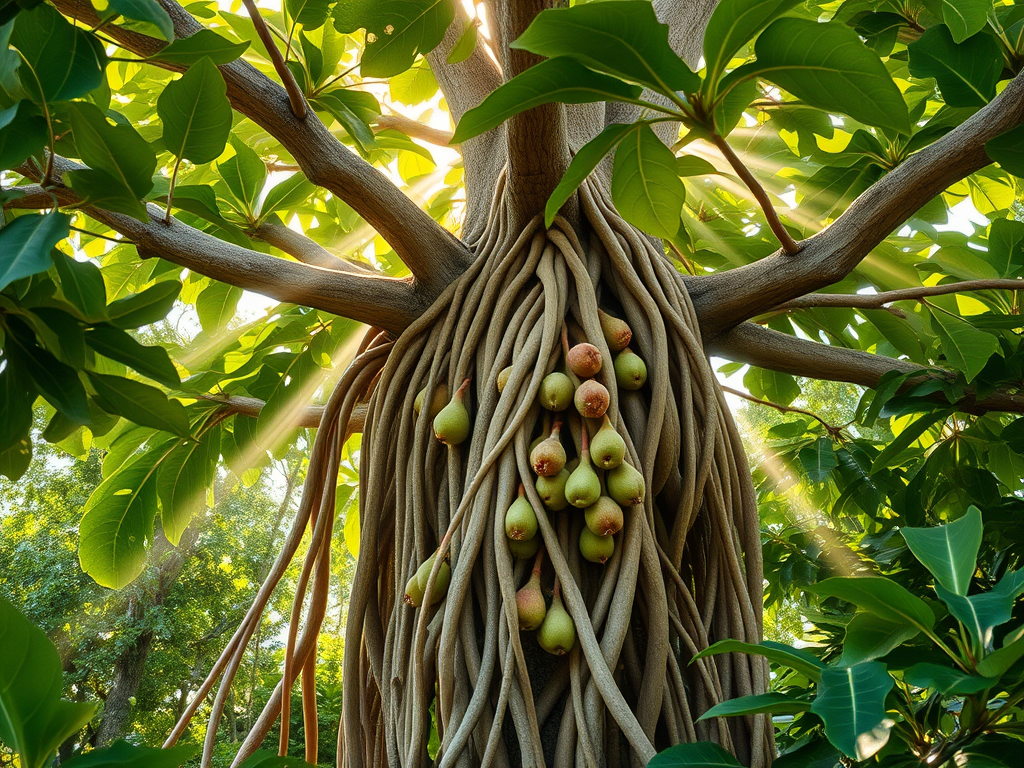
The Florida Strangler Fig (Ficus aurea), also known as the golden fig, is not a cultivated species in the traditional agricultural sense—it is a native wild species that has long existed in its natural habitat rather than being selectively bred or domesticated.
The Florida Strangler Fig (Ficus aurea) gets its dramatic name from the way it grows and interacts with its environment. Here’s why it’s called the “strangler fig”:
🌿 Growth Habit
Ecological Role: It typically begins life as an epiphyte (a plant growing on another plant) and later envelops its host tree with aerial roots, eventually becoming a self-supporting tree.
As it grows, it sends down aerial roots that eventually reach the ground and thicken.
Over time, these roots envelop the host tree, wrapping around its trunk and branches.
🌳 Strangling Effect
The fig’s roots and trunk gradually constrict the host tree, competing for sunlight, water, and nutrients.
Eventually, the host tree may die and decay inside the fig’s lattice-like structure, leaving behind a hollow core.
This process gives the appearance that the fig has “strangled” its host—hence the name.
📍 Florida Connection
It’s native to Florida, as well as parts of Central America and the Caribbean, which is why it’s regionally identified as the “Florida” Strangler Fig.
The species was first described in 1846 by English botanist Thomas Nuttall, who coined the name Ficus aurea. However, this was a botanical classification, not a health-related discovery.
🌱 Traditional and Cultural Insights
First Cultivation: There is no specific historical record of its “first cultivation” because it is a native species that grows naturally in tropical and subtropical environments. However, it has been used in:
Reclamation projects
Indoor bonsai cultivation
Tropical landscaping, especially in large spaces, is due to its aggressive growth and size.
Indigenous Use: Revered for its vitality-enhancing properties and spiritual symbolism.
Early Settlers: Consumed the fruit for its nutritional value, indicating early recognition of its health-promoting qualities.
🌿 Growth Characteristics
Height: Up to 60 feet
Spread: Up to 70 feet
Growth Rate: Fast
Hardiness Zones: USDA zones 10B through 11
Fruit: Small figs that ripen from green to red or purple, typically in spring and summer
The health benefits of the Florida Strangler Fig (Ficus aurea)** have been recognized primarily through traditional knowledge and more recent nutritional analysis, rather than a single documented “discovery” date. Here’s a breakdown of what we know:
🌿 Traditional and Historical Use
Early Use by Settlers and Indigenous Peoples: The fruit was enjoyed by early settlers and local communities in Florida, suggesting long-standing familiarity with its edibility and potential health benefits.
Indigenous Lore: In various Indigenous traditions, the Florida Strangler Fig is revered not just ecologically but spiritually, often associated with vitality and healing.
🧪 Documented Health Benefits (Modern Understanding)
According to recent sources, the fig offers several nutritional and medicinal benefits:
| Health Benefit | Key Compounds | Potential Effects |
|---|---|---|
| Blood Sugar Regulation | Chlorogenic acid, potassium | May help lower blood sugar levels in diabetics |
| Bone Health | Calcium | Supports bone density and strength |
| Reproductive Health | Magnesium, zinc, and manganese | Contributes to hormonal balance and fertility |
| Weight Management | Dietary fiber | Promotes satiety and reduces cravings |
| Blood Pressure Control | Potassium | Helps regulate blood pressure |
| Heart Health | Fiber, potassium | Supports cardiovascular function |
| Air Purification (Indoor Use) | Leaf surface area | Absorbs pollutants and improves air quality indoors |
✅ Safety Profile
- Non-toxic to humans: The ripe fruit is safe for both adults and children to eat.
- Used traditionally: Its sap has even been used as a natural chewing gum, and the leaves have culinary uses like food wrapping.
⚠️ Potential Side Effects and Precautions
While the Florida Strangler Fig (Ficus aurea)** is generally considered safe and even beneficial when consumed in moderation, there are a few potential side effects and precautions worth noting:
| Concern | Details |
|---|---|
| Choking Hazard | The small size of the figs poses a risk for young children. Supervision is advised. |
| Allergic Reactions | As with many figs, some individuals may experience mild allergic responses, especially to the milky sap, which contains latex-like compounds. |
| Digestive Upset (Rare) | Overconsumption of the fruit may cause mild gastrointestinal discomfort in sensitive individuals. |
| Skin Irritation (Topical) | The sap can cause skin irritation in some people, especially if exposed to sunlight afterward (a condition known as phytophotodermatitis). |
| Messy Fruit Drop | While not a health risk, the fallen fruit can ferment and attract insects, which may be a concern in landscaping contexts. |
🌿WebMD does not have a dedicated entry for the Florida Strangler Fig (Ficus aurea), but it does provide extensive information on the common fig (Ficus carica), which shares many nutritional and medicinal properties.
Here’s a summary of what WebMD reports about fig health benefits, which may be cautiously extended to Ficus aurea based on similar phytochemical profiles
Source: WebMD – Fig: Uses, Side Effects, and More
| Benefit | Details |
|---|---|
| Digestive Health | Contains fiber and prebiotics that support gut health and relieve constipation |
| Blood Sugar Control | May help regulate blood sugar levels due to natural compounds in the leaves and fruit |
| Cholesterol Management | Some compounds may help lower cholesterol levels |
| Bone Health | Rich in calcium and potassium, which support bone density |
| Skin Conditions | Traditionally used for eczema and other skin issues (though not well-studied) |
⚠️ WebMD Notes on Side Effects Webmd.com
Fig leaf sap can cause photosensitivity (sunburn-like reactions when exposed to sunlight).
Allergic reactions may occur in people sensitive to latex, mulberry, or weeping fig.
Blood sugar caution: Fig may lower blood sugar, so it should be used cautiously with diabetes medications or before surgery.
🧭 Application to Ficus aurea
While Ficus aurea is less studied, it shares similar compounds (e.g., chlorogenic acid, fiber, potassium), so it may offer comparable benefits. However, more targeted research is needed to confirm these effects specifically for the Florida Strangler Fig..
Tip: Always consume ripe figs and avoid contact with the sap if you have sensitive skin or latex allergies.
🧭 Summary
The Florida Strangler Fig (Ficus aurea) offers several health benefits rooted in both traditional use and modern nutritional insights.
The Florida Strangler Fig is safe and nutritious when ripe and consumed responsibly. The main concerns are choking hazards for children, possible skin irritation from sap, and mild allergies in sensitive individuals.
 EJADA
EJADA 
Leave a comment