“Blushing Gold: The Fuji Apple’s Sweet Secret”
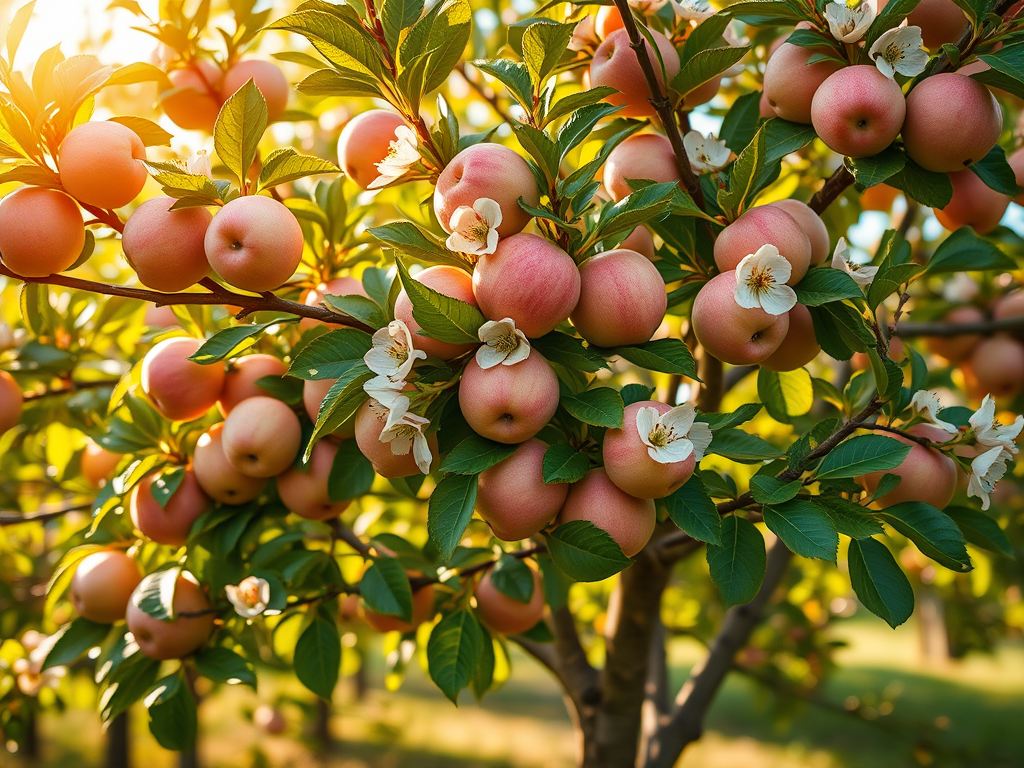
Nestled beneath a canopy of emerald leaves, the Fuji apple tree stands like a quiet magician—its branches heavy with orbs of golden-pink delight.
Born from a cross between Red Delicious and Ralls Janet in Japan, the Fuji apple is a global ambassador of balance, firm yet juicy, sweet yet subtly tart. It’s not just grown; it’s cultivated with care, thriving in temperate climates where patience yields perfection.
The tree grows with a graceful symmetry, its limbs spreading wide and low, inviting both bees and breeze. In spring, it erupts in a froth of pale pink blossoms, perfuming the orchard with a scent that whispers of sweetness to come. By late fall, its fruit ripens slowly, soaking in the sun to develop that signature crunch and complex flavor
Each apple gleams with a sun-kissed blush, as if the tree itself has captured the last light of autumn. Crisp, dense, and honey-sweet, the Fuji isn’t just an apple—it’s a revelation.
🍏 Historical Highlights of the Fuji Apple
📍 Born in Japan, not Mount Fuji. Despite popular belief, the Fuji apple isn’t named after Japan’s iconic mountain. It was actually developed in 1939 at the Tohoku Research Station in Fujisaki, Aomori Prefecture—and it’s the town of Fujisaki that lent the apple its name.
🌱 A Transpacific Hybrid. The Fuji apple is a cross between two American varieties: Red Delicious and Ralls Janet (also known as Rawls Jennet), combining the sweetness and storage longevity of both parents.
🛍️ Market Debut in 1962. After over two decades of careful cultivation and testing, the Fuji apple was officially released to the market in 1962. It quickly became a favorite in Japan for its crisp texture and honeyed flavor.
🌍 Global Expansion in the 1980s. Fuji apples were introduced to the United States in 1980, where they rapidly gained popularity. Today, they’re one of the top five most consumed apple varieties in the U.S., especially thriving in Washington State.
🌞 Sun vs. Moon Fuji In Japan, growers developed two unique cultivation methods:
Sun Fuji apples are exposed to direct sunlight, enhancing their sugar content.
Moon Fuji apples are bagged during growth to protect their skin and create a paler, more delicate appearance.
🍎 Aomori’s Crown Jewel Aomori Prefecture, where the Fuji was born, remains Japan’s apple capital—producing over 500,000 tons of apples annually, with Fuji being the undisputed favorite.
Fuji apples aren’t just a sweet treat—they’re a nutritional powerhouse with both well-documented and lesser-known benefits.
🍎 Known Health Benefits of Fuji Apples
| Benefit | How It Works |
|---|---|
| 🛡️ Rich in Antioxidants | High in quercetin, catechins, and polyphenols that combat oxidative stress and reduce inflammation. |
| ❤️ Supports Heart Health | Soluble fiber (especially pectin) lowers LDL cholesterol; potassium helps regulate blood pressure. |
| 🧠 Boosts Brain Function | Antioxidants like quercetin may protect neurons and support cognitive longevity. |
| 🧘 Aids in Weight Management | High fiber and water content promote satiety and reduce overall calorie intake. |
| 💩 Improves Digestion | Pectin acts as a prebiotic, feeding beneficial gut bacteria and easing bowel movements. |
| 💪 Strengthens Immunity | Vitamin C and phytonutrients enhance immune response and cellular repair. |
| ✨ Nourishes Skin | Vitamin C boosts collagen production; Vitamin A and antioxidants help reduce wrinkles and dark spots. |
| 🦴 Supports Bone Health | Contains boron and potassium, which contribute to bone density and strength. |
| 🌬️ Optimizes Lung Function | Antioxidants may help reduce the risk of asthma and improve respiratory health. |
🔍 Lesser-Known or Emerging Benefits
🧂 Blood Sugar Regulation: Despite their sweetness, Fuji apples have a low glycemic index and may help stabilize blood sugar when eaten with the skin.
🧬 Epigenetic Influence: Some studies suggest polyphenols in apples may influence gene expression related to inflammation and metabolism, though more research is needed.
🦠 Antiviral Potential: Preliminary research hints at antiviral properties of apple polyphenols, especially against certain flu strains.
🧪 Detox Support: Pectin may bind to heavy metals and toxins in the gut, aiding in gentle detoxification.
🧬 Mutant Cultivars Over time, several “sports” or natural mutations of Fuji apples have emerged, such as Yataka Fuji and Redsport, each offering slight variations in color, size, or harvest timing.
Here’s a comprehensive look at their nutritional profile and what makes them so good for you:
🧪 Nutritional Snapshot (per medium Fuji apple, ~200g)
| Nutrient | Amount | Benefit |
|---|---|---|
| Calories | ~90 | Provides natural energy |
| Carbohydrates | ~25g | Mostly natural sugars and fiber |
| Sugars | ~19g | Natural fructose for quick energy |
| Dietary Fiber | ~3–4g | Aids digestion, lowers cholesterol |
| Vitamin C | ~8% DV | Boosts immunity, skin health |
| Potassium | ~195mg | Regulates blood pressure |
| Vitamin A | Trace | Supports vision and skin health |
| Antioxidants | High | Includes quercetin, catechins, and chlorogenic acid |
🌟 Top Nutritional Benefits
🧘 Digestive Health Pectin acts as a prebiotic, feeding beneficial gut bacteria and promoting regularity
🛡️ Antioxidant Powerhouse Rich in polyphenols like quercetin and catechins, Fuji apples help neutralize free radicals, reducing the risk of chronic diseases like heart disease and cancer.
❤️ Cardiovascular Support Soluble fiber (especially pectin) helps lower LDL cholesterol, while potassium supports healthy blood pressure.
🧠 Brain Health Regular consumption may protect against neurodegenerative diseases like Alzheimer’s and Parkinson’s due to antioxidant and anti-inflammatory effects.
💪 Blood Sugar Regulation, Despite their sweetness, Fuji apples have a low glycemic index and high fiber, which helps stabilize blood sugar levels, especially beneficial for people with type 2 diabetes.
🦴 Bone Strength contains boron and potassium, which support bone density and reduce the risk of osteoporosis.
🧬 Cancer Prevention Potential Compounds in the skin, like triterpenoids and flavonols, have shown anti-cancer properties in lab studies, particularly against liver, colon, and breast cancer cells.
Fuji apples are generally very healthy, but like any food, they come with a few caveats, especially for sensitive individuals or in specific contexts. Here’s a clear breakdown of both common and lesser-known risks:
⚠️ Known Risks of Eating Fuji Apples
| Risk | Details |
|---|---|
| 🤧 Allergic Reactions | Some people may experience oral allergy syndrome (OAS), especially if allergic to birch pollen. Symptoms include itching, swelling, or tingling in the mouth and throat. |
| 🍬 High Natural Sugar | Fuji apples are among the sweetest apple varieties. While they have a low glycemic index, their high sugar content can still affect blood sugar levels in people with diabetes or insulin resistance. |
| 🦷 Dental Concerns | The natural sugars and acidity can contribute to tooth enamel erosion if consumed excessively without proper dental hygiene. |
| 🧴 Pesticide Residue | Apples often rank high on the Environmental Working Group’s “Dirty Dozen” list. Washing thoroughly or choosing organic can reduce exposure. |
🌿 Lesser-Known or Tree-Related Risks
| Risk | Details |
|---|---|
| 🌿 Skin Irritation from Leaves or Sap | The leaves and sap of the Fuji apple tree can cause skin rashes or eye irritation. Gloves are recommended when pruning or harvesting. |
| 🤢 Gastrointestinal Upset | Overeating Fuji apples may lead to bloating, gas, or mild nausea due to their high fiber and fructose content. |
| 🌸 Pollen Sensitivity | During bloom season, the tree’s pollen may trigger allergies in sensitive individuals. |
✅ How to Stay Safe
🍏 Eat in moderation, especially if you’re sensitive to sugar or fiber.
🧼 Wash thoroughly or opt for organic to reduce pesticide exposure.
🧤 Wear gloves when handling the tree or pruning branches.
🦷 Rinse your mouth after eating to protect your teeth.
Read More @ healthbenefitstime
Fuji is an alluring apple variety characterized by a pink speckled flush over a yellow to green background. The color ranges from light pink to crimson pink. It is juicy, crisp, with dull white flesh. It possesses a refreshing and sweet flavor. Being a late ripening apple variety, Fuji apples are available during November/December (in the northern hemisphere) and May/June (in the southern hemisphere). Generally, Fuji apples are round, large to very large, about 75 mm in diameter.
Learn more at seniorfitness.org
In this article, we’re going to dive into twelve fantastic health benefits that make Fuji apples a wonderful addition to any diet. Whether you’re a health buff or just looking for tasty ways to step up your everyday nutrition, you’ll see why adding Fuji apples to your routine is such a smart and tasty choice!
🍎 Summary: Fuji Apple: A Fascinating Fruit to Try
Sweet as honey, crisp as autumn air—the Fuji apple is a fruit that delights both the senses and the soul. Born in Japan and now beloved worldwide, it’s a perfect fusion of science and nature. With its blushing skin, juicy crunch, and rich antioxidant profile, the Fuji apple isn’t just a snack—it’s a story of innovation, health, and heritage. Whether you’re savoring it fresh, baking it into a pie, or exploring its cultural roots, this apple is a must-try marvel of the modern orchard.
 EJADA
EJADA 
Leave a comment