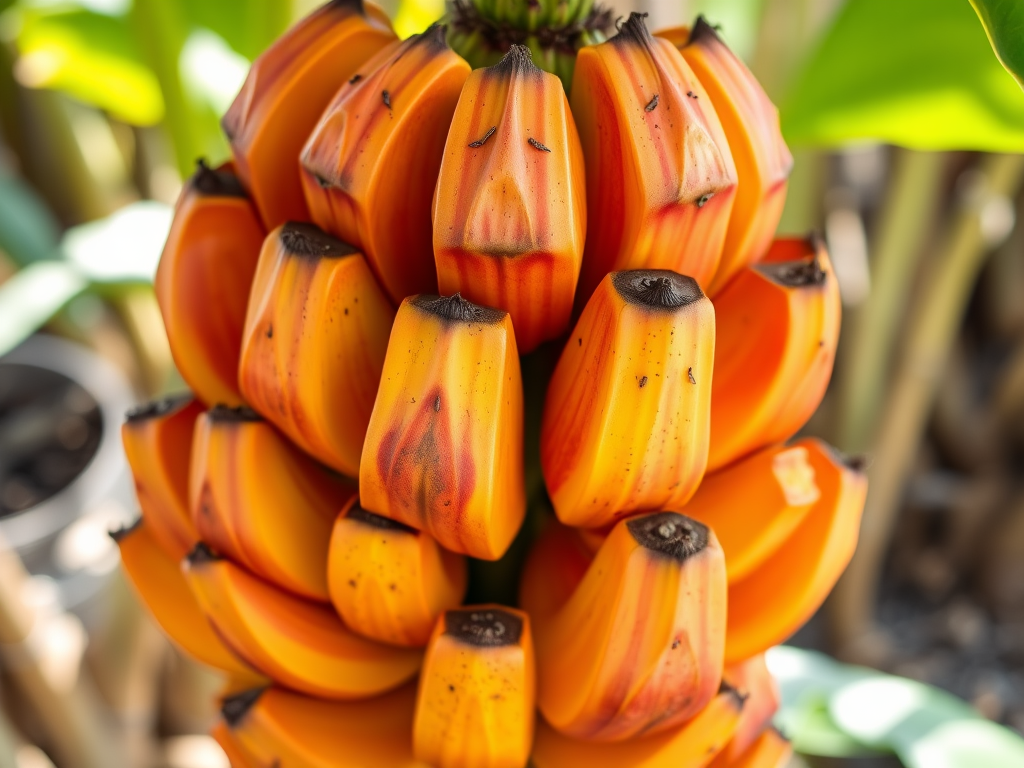
Fe’i bananas are a unique group of cultivated bananas (Musa × troglodytarum) found primarily in the Pacific islands. They stand apart from the common dessert bananas and plantains both in appearance and usage.
Key Characteristics
Upright fruiting stems (bunches point skyward rather than droop)
Brilliant orange, copper-red, or yellow skin; flesh ranges from yellow to deep orange
Squarish cross-section with prominent ridges
Sap that stains vivid pink to dark purple
Shiny green bracts on the flowering spike (inflorescence)
Origin & Distribution
Although the precise wild ancestors are unclear, Fe’i bananas likely first appeared in New Guinea and spread with Austronesian voyagers throughout Polynesia, Melanesia, and Micronesia. They remain culturally and nutritionally important in French Polynesia and other Pacific communities.
Culinary Uses
Eaten cooked: their high starch content and firm texture give them a plantain-like consistency when prepared.
Raw when fully ripe: flesh can be astringent and dry, so cooking (steaming, baking, or frying) brings out a mild sweetness and softer texture.
In Tahiti, they’re a staple in starch-based dishes and traditional desserts.Creative Ways to Cook with Fe’i Bananas
1. Fe’i Banana Coconut Curry
A fragrant, comforting curry that lets the banana’s firm flesh soak up spices. Ingredients (serves 4) • 2 cups green (just-ripe) Fe’i banana, peeled & cubed • 1 tbsp coconut oil • 1 small onion, thinly sliced • 2 cloves garlic, minced • 1 tbsp fresh ginger, grated • 1–2 tbsp red curry paste (to taste) • 1 can (13½ oz) coconut milk • 1 cup vegetable or chicken broth • 1 red bell pepper, sliced • 1 cup snap peas or green beans • Juice of ½ lime + cilantro for garnish • Salt to taste
Steps
In a large pot, heat coconut oil over medium. Sauté onion until translucent.
Add garlic, ginger and red curry paste; cook 1 minute until fragrant.
Stir in coconut milk and broth; bring to a gentle simmer.
Add banana cubes, bell pepper and snap peas. Simmer 10–12 minutes until veggies are tender but still bright.
Season with salt and lime juice. Serve over steamed jasmine rice, topped with cilantro.
2. Fe’i Banana Breakfast Muffins
Wake up to vitamin-A–rich muffins that sneak in extra fiber. Ingredients (makes 12 muffins) • 1½ cups mashed ripe Fe’i banana (~2 medium) • ⅓ cup coconut or olive oil, melted • 2 large eggs • ½ cup plain yogurt or kefir • 1 tsp vanilla extract • 1⅓ cups whole-wheat or spelt flour • 1 tsp baking soda + ½ tsp baking powder • ½ tsp salt • 1 tsp ground cinnamon • ¼ cup chopped nuts or seeds (optional)
Steps
Preheat oven to 350 °F (175 °C). Line a 12-cup muffin tin or grease well.
Whisk banana, oil, eggs, yogurt and vanilla in a bowl.
In another bowl, combine flour, baking soda, powder, salt and cinnamon.
Gently fold dry into wet ingredients until just combined. Stir in nuts/seeds if using.
Divide batter among muffin cups. Bake 18–20 minutes (toothpick comes out clean). Cool on a rack.
3. Fe’i Banana Chips with Savory or Sweet Seasoning
A crunchy, portable snack—perfectly customizable. Ingredients • 2 firm Fe’i bananas, sliced thinly (⅛″–⅛″) • 1–2 tbsp oil (olive, coconut or avocado) • Seasoning of choice: – Savory: smoked paprika, garlic powder, sea salt – Sweet: cinnamon + a pinch of sea salt or coconut sugar
Steps
Preheat oven to 225 °F (105 °C).
Toss banana slices lightly in oil and seasoning.
Arrange in a single layer on a parchment-lined baking sheet.
Bake 60–75 minutes, flipping halfway, until crisp.
Cool completely (they’ll firm up as they cool). Store in an airtight container.
Storage & Handling Tips
• Room-Temperature Ripening – Keep unripe Fe’i bananas at 65–75 °F. They’ll soften over 3–5 days. – To speed ripening, place in a paper bag with an apple or ripe banana—the ethylene gas jump-starts the process.
• Short-Term Storage – Once ripe, store at 50–55 °F (if you have a cool pantry). Otherwise, refrigerate up to 7 days. The skin may darken, but the flesh stays firm.
• Freezing for Smoothies & Baking – Peel and slice, then flash-freeze on a tray.
Transfer to freezer bags for up to 3 months. Great for smoothies, “nice‐cream” or quick breads.
Nutritional Profile
Fe’i bananas are especially rich in provitamin A carotenoids (beta-carotene), making their orange-fleshed varieties an excellent source of vitamin A precursors. They also provide dietary fiber and complex carbohydrates.
Traditional & Practical Uses
Beyond food, Pacific Islanders have long utilized the whole plant:
- Purple-red sap for natural dyes and inks
- Pseudostems woven into rafts or matting
- Leaf midribs crafted into ropes or placemats
- Large leaves used as thatch or serving platters
Availability
In tropical climates, Fe’i bananas can be harvested year-round. Their rarity in global markets is often due to susceptibility to pests and traditional harvesting practices rather than seasonality.
Fe’i bananas pack a surprising punch of phytonutrients and micronutrients that translate into real health perks:
Cardiovascular support: Their high potassium-to-sodium ratio plus magnesium and trace B-vitamins help relax blood vessels, regulate heart rhythm and fluid balance, and lower hypertension risk—key factors in reducing cardiovascular disease.
Blood-sugar regulation & diabetes prevention: Fe’i bananas boast both soluble fiber (which forms a gel to slow glucose absorption) and resistant starch (especially in less-ripe fruit), together blunting post-meal blood-sugar spikes and aiding long-term glycemic control.
Digestive health & weight management: The mix of soluble fiber and resistant starch feeds beneficial gut bacteria, promotes regularity and fosters satiety—so you feel fuller, longer, without excess calories, supporting healthy weight loss or maintenance.
Vision support & antioxidant protection: Their vivid orange flesh is rich in provitamin A carotenoids (beta-carotene), lutein, vitamin E and other antioxidants, which help protect retinal cells, lower macular-degeneration risk and neutralize free radicals throughout the body.
Skin health & collagen production: Fe’i bananas supply vitamin C and manganese—co-factors in collagen synthesis—plus antioxidant vitamins that shield skin from oxidative stress, helping maintain elasticity and youthful tone.
Mood elevation, muscle & bone fortification: A good source of tryptophan, Fe’i bananas support serotonin production, which uplifts mood and may boost memory. Their magnesium and calcium content aid proper muscle contraction/relaxation, protein synthesis and bone-mineral density.
Anti-inflammatory effects:
Emerging research highlights Fe’i bananas’ unique profile of anti-inflammatory compounds—combining antioxidants with fiber and phytonutrients—that may help dampen gut inflammation and systemic inflammatory markers.
These sky-pointing bananas are more than a starch staple they’re a nutrient-dense ally for heart, gut, skin, eye, mood and bone health.
Breakfast Bowls & Porridges
Cooked-and-sliced Fe’i banana + hot oats or millet—stir in a spoonful of nut butter, sprinkle with chia or hemp seeds. Mash hot Fe’i banana into cream of rice or quinoa cereal for extra creaminess and vitamin A goodness.
Smoothies & Shakes
Blend steamed Fe’i chunks with spinach, frozen berries, a scoop of plain yogurt (or protein powder) and a drizzle of flax oil. • For an anti-inflammatory boost, pair Fe’i banana with pineapple, turmeric, coconut milk and a pinch of black pepper.
Savory Sides & Mashes
Roast ½-inch Fe’i banana rounds tossed in olive oil, garlic and rosemary—serve alongside grilled fish or chicken. • Mash steamed Fe’i banana with a dash of sea salt, pepper and a knob of butter or coconut oil—use it like mashed potatoes.
Stir-Fries & Curries
Cube green Fe’i banana and simmer in a coconut-ginger curry with veggies and chickpeas—its firmness soaks up spices beautifully. • Add sliced Fe’i banana to a stir-fry at the very end so it warms through but keeps a bit of bite.
Baked Goods & Snacks
Fe’i banana “muffins” or quick breads: swap mashed Fe’i for half the flour or all the mashed banana called for in your favorite recipe. • Thinly slice and bake into plantain-style chips—season with a touch of smoked paprika or cinnamon.
Salads & Salsas
Toss small cubes of ripe Fe’i banana with diced tomato, red onion, cilantro and lime for a sweet-savory pico. • Add chilled slices to a green salad with avocado, pumpkin seeds and a lemon–olive-oil dressing.
Desserts & Treats
Grill whole, peeled Fe’i bananas till caramelized; top with yogurt, chopped nuts and a drizzle of honey. • Freeze chunks, then blitz into a soft-serve “ice cream,” swirling in cacao nibs or peanut butter.
Tips to maximize nutrient uptake:
Pair with a healthy fat (nuts, seeds, avocado) to help absorb those fat-soluble carotenoids. • Light steaming or roasting preserves more beta-carotene than boiling. • Aim for ½–1 medium Fe’i banana (or its equivalent) per meal—this gives you fiber and micronutrients without spiking blood sugar.
Fe’i bananas are perfectly safe for the vast majority of people—but, like any high‐nutrient food, there are a few groups who may want to take extra care or consult a healthcare provider before making them a regular part of their diet.
Kidney disease or certain heart‐medications
Fe’i bananas are rich in potassium. People with impaired kidney function or those taking potassium‐sparing diuretics, ACE-inhibitors or certain beta-blockers risk hyperkalemia (high blood potassium) if they eat large amounts.
Irritable bowel syndrome (IBS) or FODMAP sensitivities
Their resistant starch and fiber can ferment in the gut, leading to gas, bloating or cramps—especially if you’re not used to high-fiber foods. Starting with small portions and cooking/steaming can help minimize discomfort.
Allergies & latex-fruit syndrome
Though rare, some individuals allergic to natural latex react to bananas (itching, hives, even anaphylaxis). If you’ve had fruit or latex allergies, proceed with caution and stop if symptoms develop.
Blood-sugar concerns
Fe’i bananas have a moderate glycemic index. Diabetics should monitor portion size (½–1 medium banana or its cooked equivalent) and pair with protein or healthy fats to blunt any glucose spike.
How to play it safe
Introduce Fe’i bananas gradually—treat them like any new high-fiber food. – Cook or roast rather than eating them completely raw to reduce resistant starch and FODMAP load. – Keep servings to ½–1 banana per meal, paired with fats/protein for balanced absorption.
Read More: www.promusa.org
Fei (Fe’i or Fehi) is the name given to a group of bananas easily recognized by their erect bunch. They have been domesticated independently from the bananas related to Musa acuminata and Musa balbisiana. Their origin is not as well understood beyond the fact that the ancestors belong to the former Australimusa section, which has since been merged with the Callimusa section1 . Musa maclayi has been proposed as an ancestor.
Disclaimer
This information is provided for general educational purposes and does not replace professional medical advice. Always consult a qualified healthcare provider before making changes to your diet—especially if you have preexisting conditions (e.g., kidney disease, IBS, diabetes) or take medications that affect potassium levels. Individual needs and tolerances vary; listen to your body and seek personalized guidance.
 EJADA
EJADA 
Leave a comment