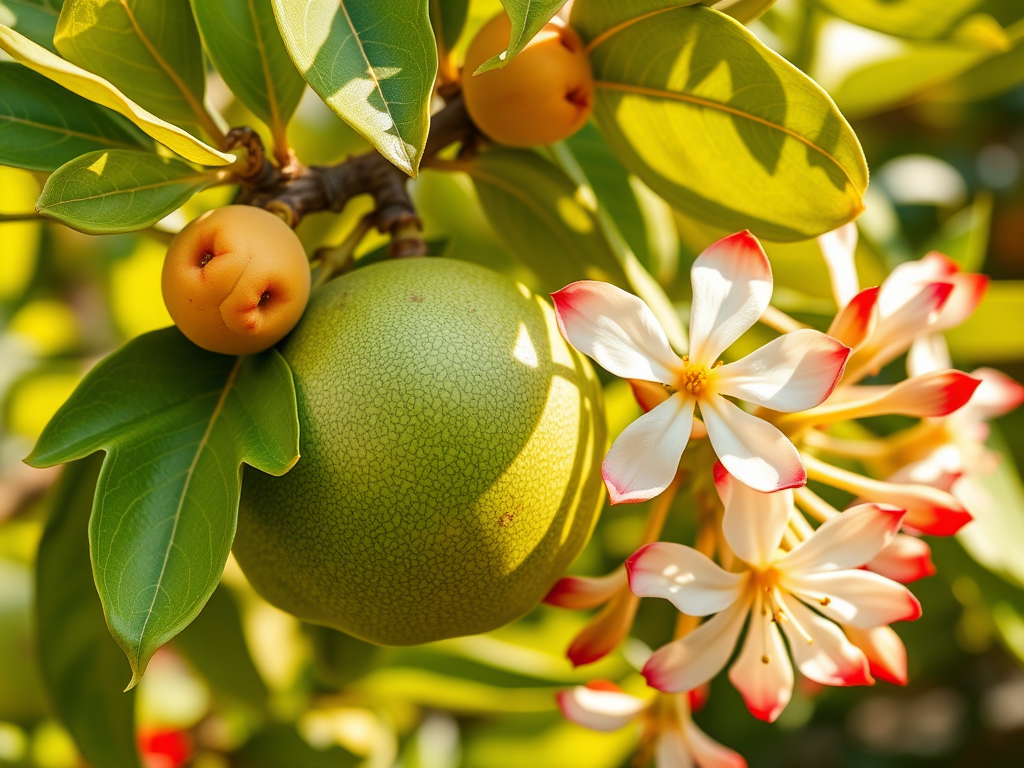
Feijoa—also known as pineapple guava or guavasteen—is a sweet, aromatic fruit from the evergreen shrub Acca sellowiana, part of the myrtle family. It’s native to the highlands of southern Brazil, northern Argentina, Paraguay, and Uruguay, and thrives in subtropical climates.
As for its cultivation history, feijoa has deep roots in South American indigenous agriculture, particularly among the Chibcha and Muisca peoples in Colombia.
The town of Tibasosa in Colombia is even dubbed the “Feijoa Capital,” where the fruit has been grown for centuries and is celebrated with an annual “Festival de la Feijoa”, honoring the fruit’s harvest and cultural heritage.
It was introduced to southern Europe in 1890 and made its way to California around 1900, where it’s now grown in small-scale orchards.
Anthropological and ethnobotanical records tell us about how pre‐Columbian indigenous peoples—and their descendants—used feijoa:
Fresh Fruit as Staple Food
The ripe green berries were eaten out of hand or scooped from the shell. Among the Muisca and Chibcha of Colombia, feijoas were a seasonal staple during the Andean autumn harvest, valued for their high sugars and long shelf life at altitude. • In some tribes, the slightly bitter skin was chewed along with the pulp to extract extra vitamin C and bitter phytochemicals that aid digestion.
Flower Petals as Delicacy
The fleshy, red-tipped petals of the feijoa blossom were prized for their sweet, cucumber-mint flavor. Tribal women layered them into salads or candied them as treats for ceremonial offerings.
Leaf & Bark Infusions for Ailments
Decoctions of crushed leaves were brewed as a cooling “tea” to relieve fevers, soothe sore throats, and treat gastrointestinal upsets. The tannins and essential oils in the leaves act as mild antiseptics and anti-inflammatories. • Poultices made from mashed bark and leaves were applied topically to wounds, insect bites, and skin infections thanks to the plant’s natural antimicrobial compounds.
Smoke & Fumigation
Dried feijoa leaves and twigs were burned in small ritual fireplaces to fumigate huts against respiratory pests and “bad spirits.” The aromatic smoke doubles as a mild disinfectant.
Ceremonial & Symbolic Uses
Some Andean communities wove feijoa sprays into healing “worry dolls” and protective amulets—leveraging the plant’s evergreen vigor as a symbol of resilience. Feijoa branches also adorned shamans’ altars in autumn rites invoking good health for the coming year.
These traditional practices underscore feijoa’s dual role as both daily sustenance and folk medicine. They also hint at why modern science is finding bioactive antioxidants, antimicrobials, and anti‐inflammatory compounds in every part of the plant.
Feijoa packs a surprising medical punch thanks to its rich mix of vitamins, minerals, fiber and bioactive compounds. Here’s what the science says:
Nutrient Powerhouse
Vitamin C: At about 67 mg per cup, feijoa rivals many citrus fruits for immune support and antioxidant defense.
Potassium: With ~350 mg per serving, it helps regulate blood pressure and fluid balance.
Fiber: Roughly 13 g per cup promotes healthy digestion, helps prevent constipation, and may lower colorectal cancer risk.
Here’s how cutting-edge science is validating—and extending—the ways indigenous peoples long used feijoa:
Antimicrobial & Antifungal Action
Modern lab assays show that feijoa leaf and peel extracts potently inhibit pathogens like Staphylococcus aureus and Candida species—directly corroborating traditional teas and poultices used for skin infections, mouth ulcers and sore throats.
Antioxidant & Anti-Inflammatory Effects
Researchers have isolated high levels of polyphenols and aromatic lipids in both fruit and leaves. These compounds scavenge free radicals and down-regulate inflammatory pathways—backing the ancestral practice of using feijoa decoctions to reduce fevers and soothe internal inflammation.
Anticancer Potential:
In vitro studies demonstrate feijoa fruit extracts can trigger apoptosis and inhibit proliferation in gastric and colon cancer cell lines—a modern echo of its folk use for digestive “purification” and gut health.
Antidiabetic & Metabolic Benefits Phytochemicals:
from feijoa improve insulin sensitivity and glucose uptake in animal models. Today they’re being explored as lead compounds in antidiabetic formulations—mirroring indigenous applications for balancing blood sugar and treating gastrointestinal upsets.
Thyroid & Cardiovascular Support:
Thanks to its iodine, potassium and bioactive flavonoids, feijoa is under study for modulating thyroid function and reducing vascular inflammation. This aligns with traditional uses for “cooling” fevers and supporting heart and fluid balance.
READ MORE: @ High in Folate Webmd.com :
Like other tropical fruits, feijoa is high in folate. Folate is the natural form of vitamin B9. The manmade version of folate is known as folic acid. The recommended daily amount of folate for adults is 400 micrograms. If you’re pregnant or planning to become pregnant, you should get 400 micrograms to 1,000 micrograms of folate. Folate is especially important during pregnancy because it can prevent birth defects of the neural tube, such as spina bifida. Folate may also help: Treat depression, Reduce your risk of certain cancers, Lower your risk of cardiovascular disease. “)
Taken together, these properties make feijoa more than just a tasty snack—it’s a functional fruit that may bolster immunity, support heart and gut health, aid in weight management, and even lend antimicrobial and anticancer benefits.
Nothing beats a healthcare professional’s guidance for personal concerns. I can only share general insights.
In the meantime, let’s turn that healing spark into something fun and practical:
DIY Feijoa Leaf Infusion • Inspired by traditional decoctions: gently simmer 1 cup chopped feijoa leaves in 2 cups water for 10 minutes. Strain and sip warm—perfect for soothing a scratchy throat. Modern twist: add a slice of ginger or a dash of honey to boost anti-inflammatory kick.
Gut-Friendly Feijoa Jam • Chop 1 lb ripe feijoas, stir with ¼ cup water and 2 Tbsp chia seeds. Heat until the fruit breaks down, then cool. • Chia adds extra fiber; this spread fuels your microbiome on toast, yoghurt or overnight oats.
Feijoa-Infused Skincare Mask • Mash 2 Tbsp feijoa pulp with 1 Tbsp plain yoghurt and 1 tsp raw honey. • Apply for 10 minutes to tap into the fruit’s antioxidants and gentle AHA-style exfoliation.
Sparkling Feijoa Cocktail (or Mocktail) • Muddle 2 feijoa halves with basil leaves, add fresh lime juice, top with soda water—or sparkling wine for a toast.
Still a niche item, feijoa can be found fresh in the U.S.
Grocery chains: Select Whole Foods Market locations carry feijoa in their produce section when in season.
Online pre-order: Miami Fruit offers limited feijoa pre-orders that ship to U.S. addresses once the fruit’s in season. •
E-commerce specialty: Vendors like ExoticFruitsUSA sell and ship feijoas nationwide year-round, while supplies last.
Think tropical: a mix of pineapple, mint, and guava. Not bad for a fruit that looks like a green egg.
 EJADA
EJADA 
Leave a comment