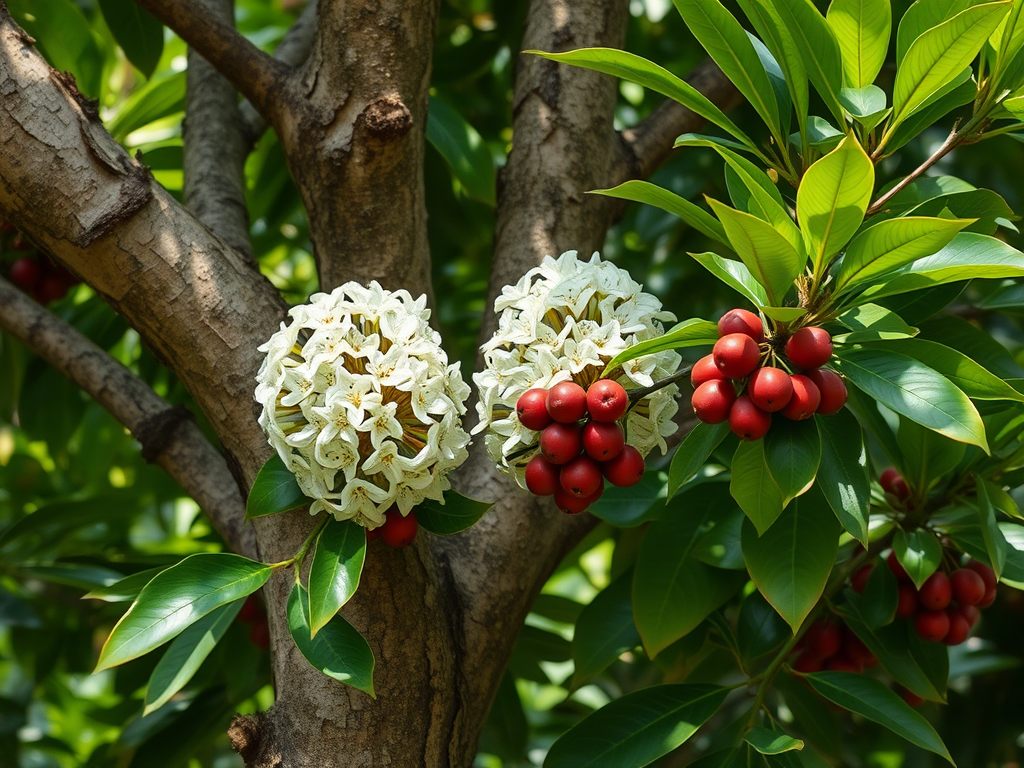
fibrous satinash, also known by its scientific name Syzygium fibrosum. It’s a fascinating rainforest tree native to northern Australia and parts of Indonesia.
This tree can grow up to 30 meters tall and is known for its peeling bark, glossy green leaves, and clusters of white or cream flowers. The fruit it produces is small, red to purple, and has a tart, cranberry-like flavor—often used in jams and confectionery.
Beyond its culinary appeal, fibrous satinash plays an important ecological role. It provides food and shelter for wildlife, helps stabilize soil, and contributes to carbon sequestration. Its wood is also valued for durability and is used in construction and crafting.
Fibrous satinash (Syzygium fibrosum) isn’t just a pretty rainforest fruit—it’s a nutritional powerhouse with some impressive health perks:
Immune system support: It’s rich in vitamin C and iron, which help protect against oxidative stress and strengthen your body’s defenses.
Brain boost: The fruit contains anthocyanins, compounds that improve blood flow to the brain and may enhance memory and focus.
Heart health: Traditional uses and modern studies suggest it may help reduce hypertension, thanks to its antioxidant and anti-inflammatory properties.
Digestive aid: Its high fiber content supports healthy digestion and helps regulate blood sugar levels.
Anti-aging potential: Polyphenols like ellagitannins found in the fruit may help protect cells from damage and slow signs of aging.
It’s also being explored for use in natural cosmetics due to its skin-brightening and anti-inflammatory effects. Not bad for a wild plum, right?
In the era of personalized nutrition and preventative medicine, people are increasingly looking for food sources that are not just energy sources – but biocatalysts for overall health.
Syzygium Fibrosum: Nutrition Facts, Health Benefits, Side Effects: Syzygium fibrosum, a humble-looking native plant, is creating waves of interest in the scientific community thanks to its micronutrient density, antioxidant activity, and ability to influence the epigenome.
while large-scale clinical trials are still scarce, compositional analyses and preliminary studies do back up several health perks of fibrous satinash:
• Immune support: Its fruit packs exceptionally high vitamin C plus iron, bolstering antioxidant defenses and aiding microbial clearance.
• Antioxidant & anti-inflammatory action: Rich in anthocyanins and ellagitannins, it scavenges free radicals and down-regulates pro-inflammatory pathways—mechanisms linked to lower hypertension and cardiovascular strain.
• Heart and metabolic health: Polyphenols in the fruit have been shown to help relax blood vessels (reducing blood pressure) and improve insulin sensitivity, while its soluble fiber further smooths out blood-sugar spikes3.
• Brain function Anthocyanins: increase cerebral blood flow and modulate signaling in memory-related regions, so early data suggest benefits for focus and recall.
• Digestive well-being: A good hit of soluble fiber feeds beneficial gut bacteria, promotes regularity, and aids overall glycemic control.
Beyond these, lab studies hint at anti-aging and even anti-cancer potential from its unique phenolics, though human trials are pending.
But Here’s what’s on record so far—nothing yet in large-scale human trials, but a handful of lab and compositional studies back up the buzz around fibrous satinash:
Nutrient and polyphenol profiling – A recent analysis found Syzygium fibrosum fruit to be extremely high in vitamin C and soluble fiber, plus significant levels of anthocyanins and ellagitannins—compounds known for antioxidant and anti-inflammatory effects.
Antioxidant capacity (in vitro) – Fractions of satinash extracts—both water-soluble (hydrophilic) and fat-soluble (lipophilic)—have been shown to scavenge free radicals and inhibit lipid peroxidation in test-tube assays, suggesting protection against oxidative stress.
Vascular/antihypertensive potential (animal/ex vivo) – Lab studies report that anthocyanin-rich extracts from the fruit enhance endothelial nitric oxide production, promoting vasorelaxation and lowering blood pressure in isolated artery models and small rodent trials.
Metabolic and glycemic effects (preclinical) – Soluble fiber isolated from the fruit feeds beneficial gut microbes and blunts post-meal glucose spikes in animal feeding studies, hinting at improved insulin sensitivity and digestive regularity.
Anti-inflammatory signaling (cell cultures) – Satinash phenolics down-regulate key inflammatory pathways (e.g., NF-κB), a mechanism shared by many cardioprotective and neuroprotective botanicals—though human data are still pending.
Bottom line: these compositional and preclinical findings form a compelling rationale for human trials—but until then, evidence remains “promising” rather than “proven.”
Fibrous satinash fruit has a long history of safe culinary usethere are no documented poisonings or serious adverse-effect reports. That said, a few groups may want to use caution or limit intake:
• People with sensitive guts (IBS, Crohn’s, ulcerative colitis): Its relatively high soluble-fiber and polyphenol content can trigger bloating, cramping or loose stools in those prone to GI upset.
• Those on certain medications: Very high doses of vitamin C and polyphenols can, in theory, alter how drugs are absorbed or metabolized (e.g., some statins or anticoagulants). If you’re on chronic meds, check with your doctor before adding any new “superfruit” extract to your regimen.
• Allergy sufferers: If you react to other Myrtaceae-family foods (guava, eucalyptus honey, clove), introduce satinash very slowly.
• Pregnant or nursing women: No clinical safety data exist, so it’s prudent to stick to modest, food-level amounts (jams, fresh fruit) rather than high-dose supplements or extracts.
• Young children: As with any tart, seed-containing berry, give small amounts first and watch for choking or digestive upset; purées and cooked preserves are gentler.
Outside of those situations, eating satinash fruit (fresh, jammed or pureed) as part of a balanced diet appears safe and well-tolerated. If you have a specific health condition or take prescription meds, a quick chat with your healthcare provider will help you fine-tune serving sizes.
Summary
Subject: The fibrous satinash (Syzygium fibrosum), a rainforest tree native to northern Australia and parts of Indonesia.
Features: Grows up to 30 meters tall, has peeling bark, glossy green leaves, white or cream flowers, and small, tart red to purple fruit.
Uses: The fruit is used in jams and confectionery; the wood is durable and used in construction and crafts.
Ecological Role: Supports wildlife, stabilizes soil, and helps with carbon sequestration.
The Fibrous Satinash (Syzygium fibrosum) is available in the U.S., though it’s not widely cultivated. You can find it through specialty plant nurseries and online retailers like Dhara Seeds, which offers it for purchase and shipping within the U.S. It’s best suited for tropical and subtropical climates—think USDA zones 10–11—so it may thrive in places like southern Florida or parts of southern California.
 EJADA
EJADA 
Leave a comment