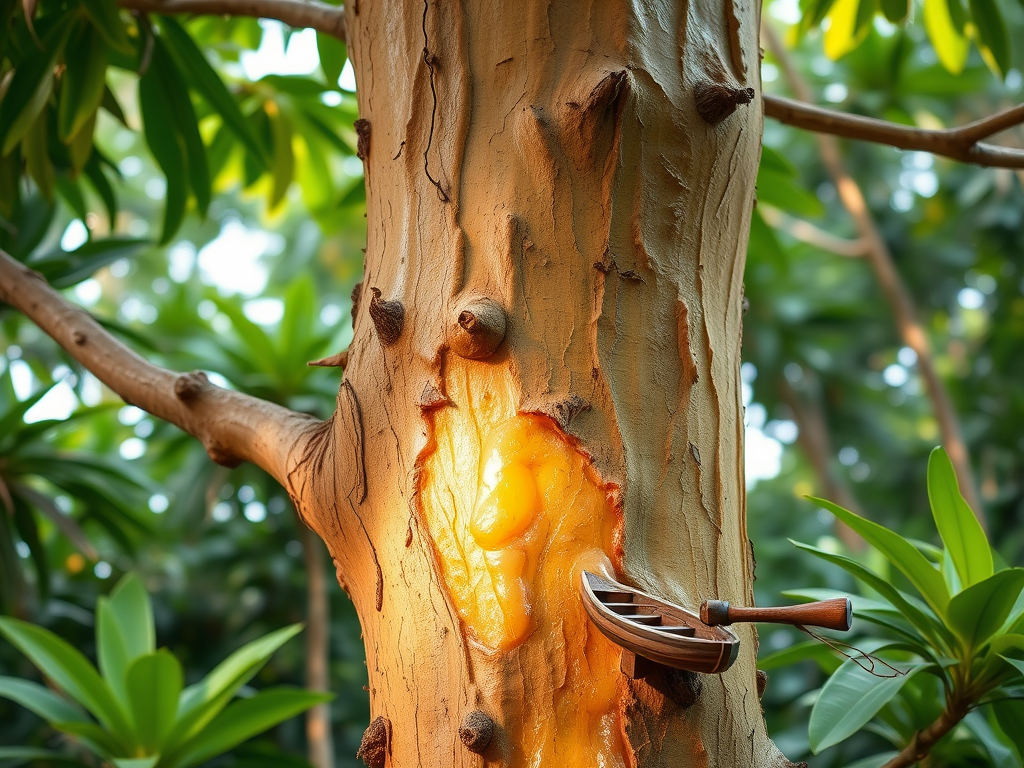
False mastic (Sideroxylon foetidissimum) got its common name in the 18th century as a nod to true mastic (the resin of Pistacia lentiscus), to which its wood-gum bore a passing resemblance—but grew in the New World instead of the Mediterranean.
Botanical naming: – Carl Linnaeus the Younger first described it (as Mastichodendron foetidissimum) in 1782, shortly after specimens from the Caribbean made their way to European herbaria. – In 1890, Ludwig Radlkofer moved it into the genus Sideroxylon (“iron-wood,” from Greek sideros + xylon) as Sideroxylon foetidissimum.
Why “false mastic”? – Early colonists and merchants noticed that when incised, its bark exuded a gummy resin vaguely like Mediterranean mastic. They tried burning it as a fumigant, chewing it, and even using it as a varnish or sealant—hence “false” mastic.
First uses: – Wood: prized in the Caribbean and Florida for boat-building, interior carpentry and heavy construction since the 1700s. Its density and rot-resistance made it a go-to “ironwood.” – Resin: though never as popular as true mastic, it was chewed as a “gum” by locals and sometimes melted down into makeshift varnishes and fumigants.
Here’s how a grab-bag of botanically unrelated gums all ended up wearing the “mastic” label
Cape mastic (Euryops multifidus) • Native to South Africa, this aster-family shrub exudes a clear, chewable resin not unlike the tear‐shaped droplets of true mastic from Chios. Traders and settlers in the 18th–19th centuries simply called it “mastic” to tap into the Mediterranean resin’s established reputation.
Dammar (“Borneo” or “East Indian” mastic) • Dammar comes from Dipterocarpaceae trees across Malaysia, Sumatra and Borneo. When it reached Europe as a pale-yellow varnish or picture‐varnish, suppliers marketed it as a cheaper “mastic.” Painters of the Victorian era routinely referred to “dammar mastic” even though chemically it’s distinct.
West Indian mastic (Bursera gummifera) • In the Caribbean, the gum-lug or “West Indian mastic tree” oozes a resin prized locally for chewing and fumigation. Colonial merchants shipped it north under the familiar “mastic” name to appeal to consumers who associated that term with aromatic chewing gums and sealants.
Why did the name stick?
Why the one-name marketing stuck
Trade and branding: European buyers knew “mastic” as a versatile resin for chewing, incense, varnish and sealant. Any exotic gum that seemed to behave the same way was instantly rebadged “mastic” in catalogs and shop windows.
Scientific sorting came late: only by the mid- to late-1800s did Linnaean taxonomy and chemical analyses pry each “mastic” back into its proper genus—and consign the “false” mastics to footnotes of varnish and commerce history.
Here’s why botanically unrelated resins all ended up tagged “mastic”:
Cape mastic (Euryops multifidus): Native to South Africa’s Cape region, this aster-family shrub exudes a clear, tear-shaped gum remarkably like true mastic. Eighteenth- and nineteenth-century traders simply called it “Cape mastic” to tap into the established reputation of Mediterranean mastic.
Dammar (“Borneo” or “East Indian” mastic): Harvested from Dipterocarpaceae trees across Malaysia, Sumatra and Borneo, dammar resin reached Europe chiefly as a pale-yellow picture-varnish. Sellers marketed it as a cheaper “mastic,” and Victorian painters routinely referred to “dammar mastic” despite its very different chemical makeup.
West Indian mastic (Bursera gummifera): In the Caribbean, Bursera gummifera oozes an aromatic gum used locally as chewing-gum and fumigant. Colonial merchants shipped it north under the familiar “mastic” name to appeal to consumers who associated that term with aromatic sealants and varnishes.
Why the one-name marketing stuck
Trade and branding: European buyers knew “mastic” as a versatile resin for chewing, incense, varnish and sealant. Any exotic gum that seemed to behave the same way was instantly rebadged “mastic” in catalogs and shop windows.
Scientific sorting came late: only by the mid- to late-1800s did Linnaean taxonomy and chemical analyses pry each “mastic” back into its proper genus—and consign the “false” mastics to footnotes of varnish and commerce history.
Modern conservation challenges for Florida’s native ironwoods—and how their trade history still shapes coastal ecosystems.
True mastic (Pistacia lentiscus)
Clinical studies show its gum has anti-Helicobacter pylori, anti-inflammatory and antioxidant effects and can help heal peptic ulcers and promote oral health.
Cape mastic (Euryops multifidus) & Dammar (“Borneo”/“East Indian” mastic)
Neither has a history of internal use—both were prized as varnishes and sealants, not food-grade gums. No reliable data support health benefits.
West Indian mastic (Bursera gummifera resin)
In Caribbean folk medicine the resin is chewed for mild throat irritation, inhaled as a fumigant to ease coughs and even used topically for joint aches. These uses remain anecdotal; there’s no modern clinical research validating them.
Here’s a side-by-side look at how the chemistry of these “mastics” diverges—and why only true mastic wound up in the herbal-medicine cabinet:
| Resin | Major volatiles & terpenes | Polymerization / UV stability | Herbal-therapeutic profile |
|---|---|---|---|
| True mastic (Pistacia lentiscus) | Rich in monoterpenes—α-pinene, β-myrcene, limonene, camphene—which give it a clean, citrusy aroma and bioactivity. | Forms a moderately cross-linked polymer under UV/air but resists deep yellowing; that balance of stability + flexibility makes it a classic picture-varnish. | Clinically studied for anti-H. pylori, anti-inflammatory, antioxidant and oral-health benefits; status as an edible, safe gum drove its leap into herbal therapeutics. |
| Cape mastic (Euryops multifidus) | Anecdotally said to yield clear, tear-like droplets similar in feel to true mastic. Detailed GC-MS studies are lacking. | Presumed to polymerize faster than true mastic (no varnish tradition), likely more prone to yellowing. | No record of internal use—always a trade-gum/varnish; thus no clinical data. |
| Dammar (“Borneo”/“East Indian” mastic) | Dominated by high-molecular triterpenoid esters and resin acids rather than simple monoterpenes. | Highly photosensitive: dammar varnish yellows and embrittles within decades from rapid oxidation/polymerization. | Purely industrial (picture-varnish); never food-grade—no herbal applications. |
| West Indian mastic (Bursera gummifera) | A mix of monoterpenes and sesquiterpenes (e.g., α-pinene, sabinene, p-cymene), though exact ratios vary by island source. | Moderately unstable: local varnish makers noted it darkens under strong sun but holds up in shaded use. | Folk-chewed for throat soothing and inhaled as incense; folk-anecdotes only, no modern trials. |
Here’s why only true mastic conquered herbal medicine:
Among all the so-called “mastics,” only true mastic (Pistacia lentiscus) carries solid, clinically validated health effects.
True Mastic Is the Outlier
Anti-H. pylori & ulcer-healer: Multiple human trials show that chewing or taking encapsulated mastic oil reduces gastric inflammation and helps clear Helicobacter pylori.
Oral-health champ:
Is volatile terpenes (α-pinene, β-myrcene) inhibit Streptococcus mutans, cutting cavities and gum-disease risk.
Systemic antioxidant/anti-inflammatory: Animal and cell studies back its use in easing inflammatory bowel markers and oxidative stress.
The Others Remain Anecdote-Bound
West Indian mastic (Bursera gummifera) offers a terpene mix similar to true mastic, but there are zero controlled trials. Folk-chewing for sore throats or burning as incense tells us it feels “soothing,” not that it actually is. • Cape mastic and dammar have never been eaten or dosed in humans; they lack edible-grade safety testing, so no GI, oral-health or systemic studies exist.
So Where Could the Hidden Benefits Hide?
Anti-inflammatory terpenes: Many tropical gums pack α-pinene or limonene in smaller amounts. In theory, if you could safely deliver and dose them, you might coax out mild anti-microbial or anti-inflammatory effects—but that’s pure hypothesis without safety/toxicity data.
Microbiome modulation
True mastic’s gut-healing effects may owe something to prebiotic actions on our gut bugs. Could West Indian mastic have a similar effect? We don’t know—it’s never been tested in vitro or in vivo.
Bioassay roadmap:
design simple lab tests (DPPH antioxidant assay, disk-diffusion antibiotic screen) on each resin to flag any “worth pursuing.” – Safety screens: before any human trial, you’d need acute-toxicity and mutagenicity data—no small task for an under-studied gum. – Formulation strategies: think nano-emulsions or mucoadhesive gels to boost resin-compound delivery and test throat-soothing claims.
Even if false mastics don’t clear the bar right now, they’re a chemical trove waiting for modern phytochemical exploration
Food safety & flavor: Its clean, non-harsh aroma plus centuries of safe chewing made it a dietary staple in the Mediterranean.
Bioactive terpenes: α-Pinene and myrcene aren’t just fragrant—they modulate inflammation and microbial growth, so they earned real lab interest. Resin consistency:
It’s the sweet spot between too-liquid (dammar) and too-brittle (most tropical gums), making it easy to chew, burn or dissolve into tinctures.
Here’s who you’ll generally want to steer clear of chewing or dosing any “mastic” resin (true or false):
Pregnant or nursing moms: No safety studies exist for mastic gums during pregnancy or lactation. To play it safe, avoid internal use of true mastic (Pistacia lentiscus) and never ingest false mastics (e.g., Bursera or Sideroxylon gums).
Kids under 12: True mastic’s safety profile is established in adults—children’s dosing hasn’t been studied. And none of the “false” mastics are food-grade, so keep them out of little hands and mouths.
People with tree-nut or resin allergies: If you react to pistachios, cashews, frankincense, myrrh or related plant gums, mastic may trigger the same immune response.
Anyone on blood-sugar-lowering or anticoagulant drugs : True mastic can modestly reduce blood glucose and may interfere with drugs that thin your blood—so avoid big doses around mealtimes or before surgery.
Those with GI obstruction, kidney stones or gallbladder issues: High-fiber, gummy resins can worsen blockages, aggravate stones or, by increasing bile flow, exacerbate gallbladder colic.
Anyone seeking a “natural” remedy from false mastics: Cape, Borneo and West Indian mastics carry no proven health benefits—and their safety in people is untested. Ingesting them risks unknown GI upset, allergic reactions or worse.
*Always check in with your doctor before adding any botanical resin to your routine especially if you fall into one of the categories above.*
Summary:
False mastic (Sideroxylon foetidissimum) got its name because its gummy resin resembled true mastic from the Mediterranean, though it grew in the New World.
Botanical history: Originally described by Carl Linnaeus the Younger in 1782 as Mastichodendron foetidissimum, it was reclassified in 1890 by Ludwig Radlkofer into the genus Sideroxylon.
Naming reason: Early colonists tried using its resin like Mediterranean mastic—for fumigants, chewing gum, and varnishes—leading to the “false” moniker.
Traditional uses: Its dense, rot-resistant wood was valuable for shipbuilding and carpentry in the Caribbean and Florida; its resin saw limited use as gum or sealant.
Suggested further reading includes info on other “mastic” resins globally, historical plant collecting for European markets, and conservation concerns tied to Florida’s ironwoods.
 EJADA
EJADA 
Leave a comment