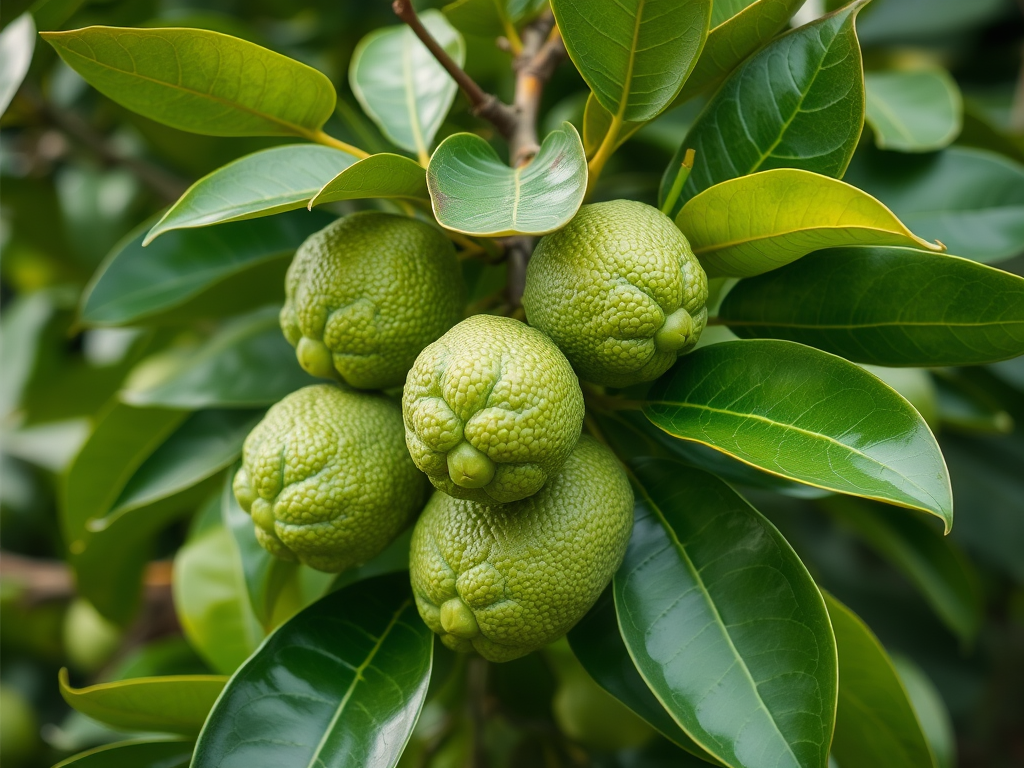
The “Kaffir lime,” is a small, rough-skinned citrus tree in the rue family (Rutaceae) native to tropical Southeast Asia. Its bumpy green fruits average about 4 cm in diameter, and both the fruit’s aromatic rind and the distinctly double-lobed leaves are prized ingredients in Thai, Cambodian, Lao, and Malay cooking.
The botanical Citrus hystrix DC. goes by several common names:
• Makrut lime – the name increasingly preferred by chefs and botanists • Thai lime – reflecting its central role in Thai cuisine • Kaffir lime – the historical term (now discouraged due to its offensive connotations)1 • Leech lime – from its traditional use as a leech repellent in Sri Lanka • Combava – in Réunion and parts of Europe • Mauritius papeda, Kieffer lime – less common regional names.
In culinary use, the leaves are added whole or thinly sliced to curries, soups (e.g., tom yum), and stir-fries, while the rind is zested or pounded into spice pastes to impart an intense, bright citrus aroma. Beyond the kitchen, its essential oil is employed in perfumery and traditional medicine, and in some parts of Sri Lanka, the juice was once rubbed on the skin to ward off leeches.
Because “kaffir” has become recognized as an offensive term in other contexts, many cooks and botanists now favor the names “makrut lime” or “Thai lime.” In its native region, it’s also called limau purut (Malay/Indonesian), mak khii huat (Lao), chanh Thái (Vietnamese), kabuyaw (Tagalog), and combava (Réunion), among others
Makrut (Kaffir) lime offers a fascinating array of health benefits, many of which align with your interest in natural remedies and cultural traditions. Here’s a breakdown of its most notable properties:
🌿 Top Health Benefits of Makrut (Kaffir) Lime
| Benefit | How It Works |
|---|---|
| Digestive Aid | The essential oils and compounds in the leaves and rind stimulate digestion and help relieve bloating and indigestion. |
| Oral Health | Traditionally, the leaves were rubbed on gums to eliminate harmful bacteria. The rind contains antibacterial properties that support oral hygiene. |
| Skin Care | The oil has antimicrobial and anti-inflammatory properties that help treat acne and promote glowing skin. |
| Stress Relief | The citrusy aroma of the leaves and oil is used in aromatherapy to reduce anxiety, fatigue, and stress. |
| Immune Support | Rich in vitamin C and antioxidants like limonene and citronellal, it helps boost immunity and fight free radicals. |
| Anti-Cancer Potential | Compounds like limonene and flavonoids in the peel have shown promise in inhibiting the growth of certain cancer cells in lab studies. |
| Cardiovascular Health | Limonene may help reduce cholesterol and inflammation, supporting heart health. |
| Antibacterial & Antifungal | Effective against pathogens like Staphylococcus aureus and Propionibacterium acnes, making it useful in natural antiseptics and deodorants. |
Here are a handful of fresh, 21st-century ways to enjoy Makrut (Kaffir) lime—beyond curries and rice bowls—that tap into today’s health-and-wellness, foodie and beverage trends:
Well-Being & Culinary Crossover • Adaptogenic latte addition: whisk a pinch of lime-leaf powder into your mushroom- or ashwagandha latte for an uplifting twist. • Pre-meal “digestive spritzer”: fizz filtered water with a dash of lime-leaf tincture, a drop of bitters, and a sprig of mint to prime your gut
Functional Tea & “Health Shots” • Makrut-leaf kombucha or green-tea blends: add torn leaves to your home-brew secondary ferment for an extra hit of aromatics and antioxidants. • Concentrated “lime-shot” elixirs: simmer zest plus leaves with ginger, turmeric, and a touch of honey; bottle in 2-oz. vials as morning immunity boosts.
Cocktail & Mocktail Innovation • Makrut-infused simple syrup: steep rind in hot sugar water, then strain. Use in spritzes, margaritas, gin & tonics, or non-alcoholic sodas. • Leaf-smoked glassware: torch a fresh leaf inside your cocktail glass for a quick burst of citrus smoke before pouring.
Plant-Based “Meat” Marinades • Blend rind + leaves with coconut aminos, sesame oil, and chili for tofu, seitan, or jackfruit marinades—they penetrate fibers more deeply than plain lime juice.
Fermented & Pickle-Style Condiments • Quick-pickled Makrut leaves: pack leaves + julienned lime zest in rice vinegar + salt + sugar—use as a zingy relish on grain bowls or sandwiches. • Leaf kimchi: Swap out some napa cabbage for finely sliced Makrut leaves in your next batch for a bright, citrusy tang.
Bakery & Confectionery • Lime-leaf shortbread: grind dried leaves into the sugar before creaming with butter; bake into tea-time biscuits. • White-chocolate Makrut fudge: infuse cream with leaves + zest, strain, then fold into melted chocolate.
Snack & Pantry Staples • Citrus-salt finishing sprinkle: dry-toast zest + salt + a little sugar, then crush into a flake you can dust onto avocado toast, popcorn, or fries. • Freeze-dried powder: blitz dried rind + leaves into ultra-fine powder—stir into smoothies, oatmeal, yogurt, or energy-bar mixes.
You can get makrut (“kaffir”) lime in the U.S. in several forms:
- Live Trees and Saplings • USDA/CDFA-certified nurseries like TreeSource Citrus Nursery ship grafted makrut lime trees to most states. • Murphy Citrus Nursery offers container-ready trees (USDA Zones 9–11) but won’t ship to FL, AZ, AL, CA, HI, LA, or TX due to agricultural restrictions. • Online plant shops (Amazon, Etsy, Home Depot’s nursery section) list grafted or seed-grown makrut lime trees—always check state quarantine rules before ordering.
- Fresh Fruit & Leaves • Asian markets (H-Mart, 99 Ranch, local Thai or Vietnamese grocery stores) commonly stock fresh makrut lime leaves and occasionally the fruit itself. • During the growing season (late summer–fall), some farmers’ markets in warm-climate states carry fresh fruit.
- Dried Leaves & Powders • Numerous spice retailers (Amazon, Penzeys, The Spice House) sell pre-dried or freeze-dried makrut lime leaves, powders, and zests year-round, perfect for curry pastes and teas.
- Essential Oil & Extracts • Aromatherapy suppliers and health-food stores offer distilled makrut lime leaf and rind oils—look for “Citrus hystrix essential oil.”
Before you buy live plants, review the USDA’s citrus import and interstate movement guidelines to avoid quarantine issues. Otherwise, all these forms of makrut lime are readily available across the U.S., both online and in specialty stores
If you’re thinking about incorporating it into your routine or product ideas, it could be a compelling addition to a natural skincare line, herbal tea blend, or even a stress-relief aromatherapy kit.
Here are the key precautions to keep in mind when using Makrut (formerly “kaffir”) lime:
🛑 Makrut (Kaffir) Lime Safety Infographic
⚠️ Hazards & Precautions
| Hazard | 🛡️ Precaution |
|---|---|
| Citrus Allergy 😷 | Avoid all Citrus hystrix products; do a skin patch test first. |
| Skin Irritation 🔥 | Dilute essential oil to ≤2% in a carrier oil before topical use. |
| Photosensitivity 🌞 | Skip sun/tanning beds for 24 hrs after applying any citrus oil. |
| Digestive Upset 🤢 | Use culinary portions; limit concentrated extracts and oils. |
| Pregnancy & Nursing 🤰 | Consult a healthcare provider before using extracts or oils. |
Storage & Quality
- Source leaves, zests & oils from reputable, organic suppliers.
- Rinse fresh produce thoroughly; store leaves airtight fridge or freeze.
- Store essential oils in dark glass bottles, away from heat and light.
Stay safe, a detailed look at precautions
- Citrus Allergies & Gastrointestinal Upset • People with known citrus or Rutaceae‐family allergies should avoid both the fruit and its essential oil—reactions can include skin rash, itching, stomach cramps, diarrhea, and nausea. Start with a small taste or a patch test before wider use.
- Topical Use & Essential Oil Handling • Makrut lime essential oil is highly concentrated. Never apply it undiluted to skin—always mix to ≤2% in a carrier oil. Undiluted contact can cause irritation or chemical burns. In case of skin contact, wash thoroughly with soap and water; if it gets in your eyes, flush for at least 15 minutes and seek medical advice if irritation persists.
- Photosensitivity • Like many citrus oils, Makrut lime oil may increase sensitivity to UV light. After topical application, avoid prolonged sun or tanning‐bed exposure for at least 24 hours to reduce the risk of burns or hyperpigmentation.
- Internal Consumption Limits • Fresh fruit, leaves, and zest are generally safe in culinary amounts. Excessive intake—especially of concentrated extracts—can upset your digestive system (stomach ache, diarrhea) and, rarely, trigger migraines in sensitive individuals.
- Pregnancy, Nursing & Medications • There’s limited research on Makrut lime in pregnancy or breastfeeding. To err on the side of caution, pregnant or nursing people should consult a healthcare provider before using extracts or essential oil. If you’re on medication, check for potential citrus‐derived interactions (e.g., some oils can affect liver enzymes).
- Quality & Storage • Always source high-quality leaves, fruit, or oil from reputable suppliers. Wash fresh produce thoroughly to remove any pesticides. Store leaves in airtight bags (refrigerated or frozen) and keep oil in dark glass bottles away from heat and light.
Disclaimer: As with any dietary or wellness change, consult a qualified healthcare professional to ensure it’s right for your individual needs.
 EJADA
EJADA 
Leave a comment