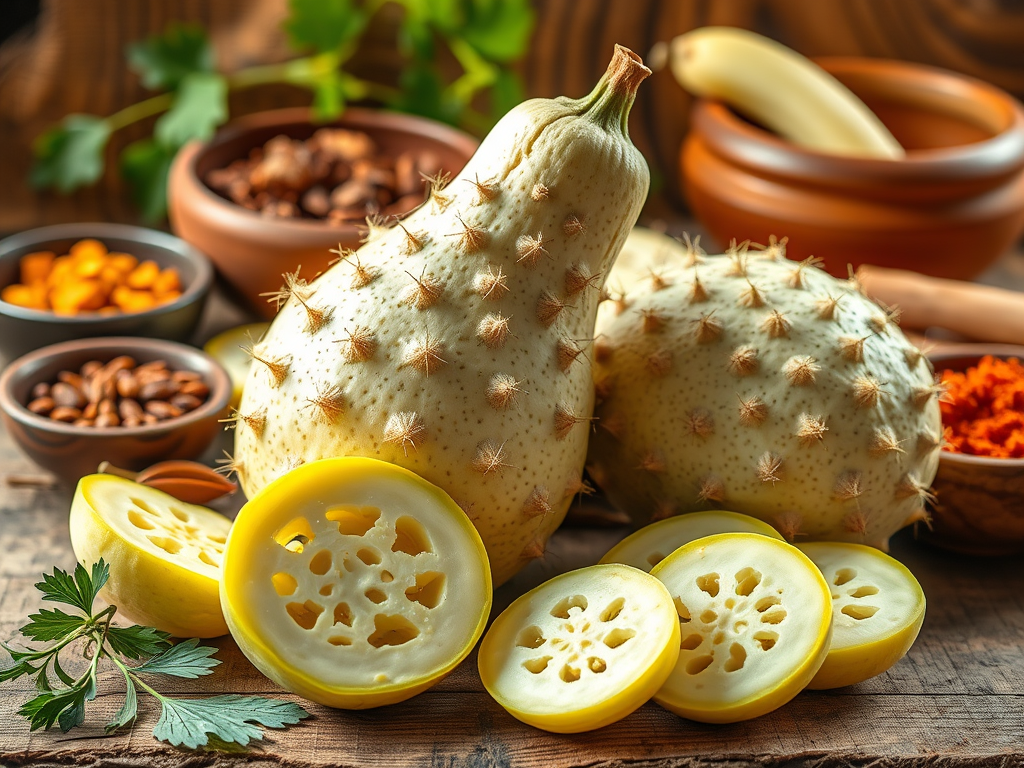
Kantola is the common name in parts of India and South Asia for the spiny or teasel gourd (Momordica dioica)—a small, oval, green vegetable covered in soft spines. It belongs to the cucumber family (Cucurbitaceae) and is prized both as a seasonal culinary vegetable and a traditional medicinal plant.
Historically, Kantola’s first recorded use dates back over 2,000 years in the Ayurvedic system of medicine, where it was prescribed as a digestive aid and general tonic. Classical Ayurvedic compendia such as the Charaka Samhita (c. 1st–2nd century CE) and Sushruta Samhita (c. 3rd century CE) mention “Kantakari” vegetables—interpreted by some scholars as including spiny gourds—for their carminative (gas-relieving), hepatoprotective (liver-protecting), and blood-purifying properties. In these texts, Kantola was recommended to improve appetite, tone the digestive tract, and support overall metabolic health.
Beyond medicine, by medieval times (around the 10th–12th centuries), Kantola had entered regional cookbooks across Bengal, Odisha, and eastern India, where it was used in curries, stir-fries, and pickles—both for its unique texture and its purported ability to balance the body’s “digestive fire” (Agni).
Even though Kantola’s culinary use became common by the late medieval period, it continued to hold a place in folk medicine—decoctions of its leaves and fruits were employed to treat jaundice, rheumatism, and skin diseases well into the 19th century, long after it first appeared in ancient Ayurvedic manuscripts.
Here’s a side-by-side look at how Kantola (spiny or teasel gourd) was used in classical systems versus how it’s valued today:
- Primary Purpose
Classical Ayurvedic Use: (c. 1st–3rd century CE): Prescribed chiefly as a digestive aid and general tonic—carminative (relieves gas), hepatoprotective (liver-protecting) and rāśayani (rejuvenative) to “tone” the digestive tract, boost appetite, purify the blood and balance the body’s digestive fire (Agni).
Modern Use: Treated as both a nutrient-dense vegetable and a functional food. Its fibre, vitamins, and antioxidants support digestive health, weight management, cardiovascular function, glycemic control, and skin vitality.
- Key Bioactive Attributes
Classical View: Efficacy attributed to its rasāyana (rejuvenating) properties and ability to clear toxins (āmadoṣa) from the liver and blood.
Modern View: Rich in Vitamin C, A, and E, iron, potassium, and dietary fibre. High levels of flavonoids and other polyphenols confer potent antioxidant and anti-inflammatory effects.
- Therapeutic Applications
Traditional Folk Remedies up to the 19th century. Leaf and fruit decoctions for jaundice, rheumatism, and skin diseases.
Contemporary Nutraceutical Uses:
Digestive Health—promotes regularity and prebiotic gut flora support via its fibre content.
Weight Management—low calorie, high-fibre “filler” that prolongs satiety.
Heart Health—potassium-mediated blood-pressure regulation and antioxidant-driven reduction of oxidative stress in cardiovascular tissues.
Glycemic Control—emerging evidence for blood-sugar-modulating activity.
Skin Care—Antioxidants combat free radicals, aiding in acne control, delaying signs of ageing, and supporting overall skin vitality.
4. Culinary Roles
Medieval Cookery (c. 10th–12th centuries): Featured in regional curries, stir-fries, and pickles—valued for its texture and “Agni-balancing” effects.
Modern Cuisine: Health-driven menus integrate Kantola into salads, soups, stews, and smoothies. • Pickled or stuffed preparations marketed as gourmet “functional” snacks. • Value-added products like dried chips and powders aimed at the nutraceutical market.
5. Research & Commercialization
Traditional Knowledge: Passed down via Ayurvedic treatises and local healers.
Today’s Science & Industry: Ongoing phytochemical and clinical studies probing its anti-diabetic, anti-cancer, and neuroprotective potentials, with startups exploring Kantola extracts in dietary supplements and cosmeceuticals.
Here are the main ways you’ll encounter Kantola (spine gourd) in the U.S.
Fresh Whole Fruit • Often sold in Indian, Bangladeshi, or Southeast Asian grocery stores and farmers’ markets. • Look for dark-green, firm, oval fruits about 2–4 cm long, still bearing their soft spines.
Frozen • Some specialty importers blanch and flash-freeze peeled or sliced Kantola. • Sold in 8–16 oz bags—convenient when fresh isn’t in season.
Pickled (Achar) • Glass jars of spicy, tangy Kantola achar turn up online and at ethnic markets. • Commonly packed in mustard oil or vinegar with chilies and spices.
Canned/Ready-to-Eat Curries • Pre-seasoned Kantola curries (in tomato or mustard-seed gravies) appear in the Indian-foods aisle. • Heat-and-serve option for a quick side dish.
Dried/Dehydrated • Thinly sliced and dried as “chips”—snack packs marketed as healthy alternatives. • Whole fruits are sometimes dehydrated and then powdered.
Powdered or Extracts • Dehydrated, milled Kantola powder for smoothies, soups, or spice blends. • Standardized extracts in capsule or tincture form are sold through online supplement retailers.
Live Planting Material • Tubers or seedlings available by mail order for home gardeners wanting to grow Kantola vines in warm-season beds or greenhouses.
Tips for Sourcing & Storage
Fresh fruits: store unwashed in the fridge up to a week; wrap loosely in plastic to retain moisture. – Frozen: transfer unopened bags into the freezer; once thawed, use promptly in cooked dishes. – Pickles and curries: shelf-stable until opened—refrigerate after breaking the seal. – Powders/extracts: keep in a cool, dry place away from direct sunlight.
In summary:
Kantola has evolved from a narrowly prescribed Ayurvedic tonic to a broadly appreciated super-vegetable and potential nutraceutical ingredient—its ancient digestive and liver-toning virtues now augmented by modern insights into its antioxidant, metabolic, and cardiovascular benefits.
Kantola is botanically a fruit—being the seed‐bearing structure that develops from the flower’s ovary—yet in the kitchen it’s treated as a vegetable, thanks to its savory flavor and culinary uses in curries, stir-fries, and pickles.
Beyond Kantola, many “vegetables” (like tomatoes, cucumbers, and pumpkins) are fruits in botanical terms. If you’re curious, we can dive into:
How different cultures blur the fruit/vegetable divide
The nutritional and culinary traits that make gourds so versatile
Seed-dispersal strategies of spiny gourds and related species
Here Are Amazing Health Benefits Of Lesser-Known Vegetable Kantola
Kantola, spine gourd, is rich in antioxidants, which help in combating and preventing several diseases. Read the article to learn more benefits.
Read more: Written by: Manali Momaya, Updated at: Mar 05, 2024. More at Onlymyhealth.com
This may interest you: Kantola Nu Shaak is a stir-fry dish made with Kantola (Teasel gourd or spiny gourd) along with onions, and spices. It is a dry veg dish and goes well with Dal, Rice, and Roti. It also goes well with thepla, bhakri, or rotla. It is vegan. Skip adding asafoetida to make it gluten-free.
35 min · 157 cals · 4 servings
Ingredients
•300 grams Kantola
•3 tablespoons Oil
•1 teaspoon Mustard Seeds
•2 teaspoons Pickle Masala
•0.5 teaspoon Turmeric Powder
•0.25 teaspoon Asafoetida
•1 Onion
•1 teaspoon Coriander Cumin Powder
•1 teaspoon Red Chili Powder
•Salt
•2 tablespoons Coriander
Instructions: https://pepkitchen.com
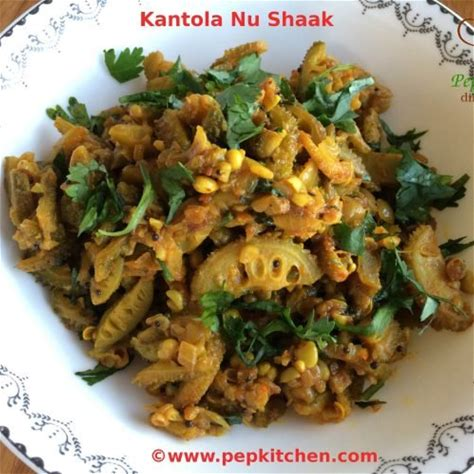
Kantola Nu Shaak
Here are the main groups who should avoid or use extra caution with Kantola (Momordica dioica):
People with known cucurbitaceae allergies. If you’ve ever reacted (itching, rash, swelling) to cucumbers, melons, or squash, Kantola may trigger the same response—avoid it or do a supervised skin test first.
Those prone to digestive upset, consuming large amounts—especially raw juice—can cause cramps, diarrhea, or stomach pain. Anyone with IBS, sensitive bowels, or recent GI flare-ups should steer clear or start with very small, well-cooked servings.
Diabetics on glucose-lowering drugs, Kantola’s blood-sugar–reducing compounds can amplify insulin or oral hypoglycemics, risking hypoglycemia. If you have diabetes, monitor levels closely and adjust meds only under medical supervision.
Pregnant or breastfeeding women: High doses of cucurbitacins and other bioactives haven’t been fully tested for long-term safety in pregnancy or lactation. Until more data exists, stick to modest culinary amounts and avoid concentrated extracts.
Kidney-stone susceptible individuals, Kantola contains oxalates that, in excess, may contribute to calcium-oxalate stones. If you’ve had stones, consult a nephrologist before making Kantola a regular part of your diet.
People with iron-deficiency anemia, Phytates and tannins in Kantola can bind dietary iron, lowering its absorption. If you’re iron-deficient, pair it with vitamin-C–rich foods or limit intake to prevent exacerbating anemia.
Anyone on multiple medications beyond blood sugar drugs, Kantola’s phytochemicals may interact with anticoagulants or other prescriptions. Always run new supplements or high-dose preparations by your pharmacist or physician.
Safe-use tips: – Start with 50–100 g of cooked fruit per meal, see how you tolerate it. – Blanch or boil first to lessen bitterness and potential toxins.
Avoid raw juice megadoses—stick to culinary servings. Pregnant, nursing, or stone-formers: get the green light from your healthcare provider before adding Kantola to your regimen.
Disclaimer
The information provided in this article is for educational and informational purposes only and is not intended as a substitute for professional medical advice, diagnosis, or treatment.
While Kantola (Momordica dioica) has a long history of traditional use and emerging scientific interest, individual responses may vary.
Always consult your physician or a qualified healthcare provider before making changes to your diet, especially if you are pregnant, nursing, taking medications, or have a medical condition. EJADA and its contributors do not assume liability for any adverse effects resulting from the use or misuse of the information presented.
 EJADA
EJADA 
Leave a comment