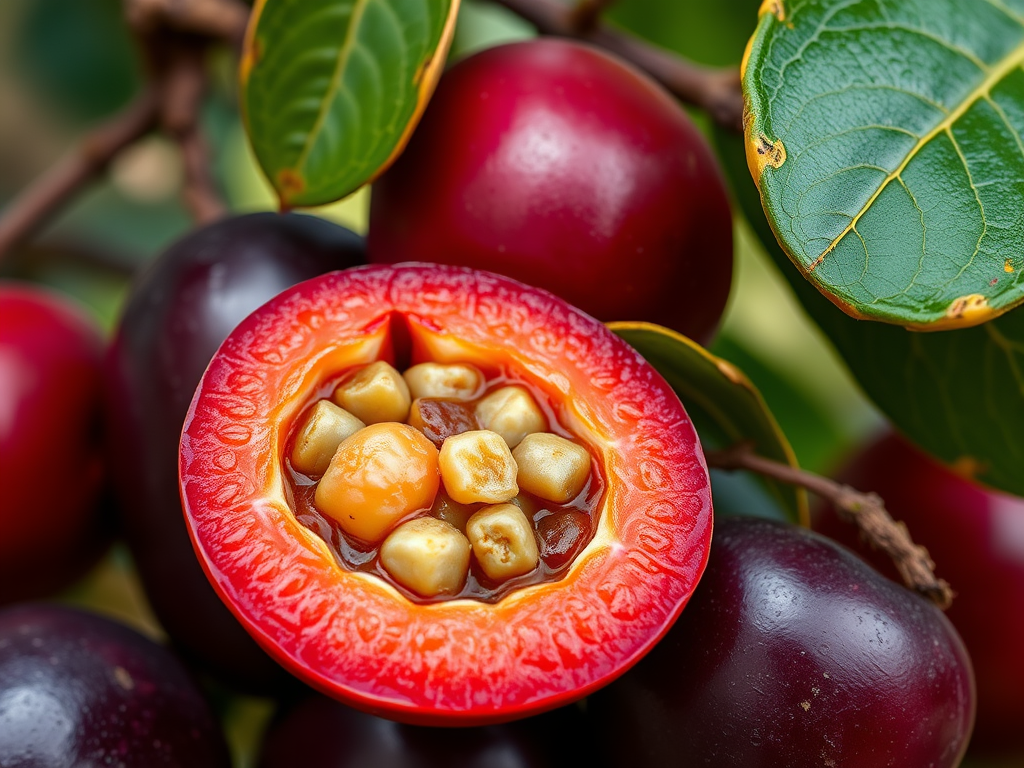
The Kakadu Plum—also known as gubinge, billygoat plum, or Terminalia ferdinandiana—was recognized for its health benefits long before modern science caught on. Indigenous Australians have utilized this remarkable fruit for thousands of years as a traditional medicine to treat colds, flu, headaches, and infections, as well as an antiseptic for wounds.
What’s fascinating is that modern research has validated these traditional uses. The Kakadu Plum is now celebrated as the world’s richest natural source of vitamin C, containing over 3,000% of the daily value in just 100 grams. It’s also packed with antioxidants, dietary fiber, copper, and iron, making it a true superfood.
While it might seem like a recent discovery in the wellness world, Indigenous knowledge had already unlocked its potential centuries ago.
The Kakadu Plum is not only a cultural treasure but also a medicinal powerhouse, both in traditional and modern contexts.
Medicinal Uses of Kakadu Plum
Traditional Uses: Indigenous Australians have long used Kakadu Plum as a natural remedy for:
Colds and flu – thanks to its immune-boosting properties.
Headaches and infections – are often applied topically or consumed.
Wound healing – used as an antiseptic due to its antimicrobial qualities.
Modern Scientific Validation: Contemporary research has confirmed and expanded on these uses:
Richest natural source of Vitamin C – over 3,000% of the daily value per 100g, which supports immune health, collagen production, and iron absorption.
Antioxidant powerhouse – contains gallic acid, ellagic acid, and flavonoids that combat oxidative stress and inflammation.
Antimicrobial properties – effective against bacterial, fungal, and viral infections.
Skin health – used in cosmetics for brightening, anti-aging, and hydration due to its high vitamin C and polyphenol content.
Wound healing – seed oil is rich in omega-6 and saturated fatty acids that promote tissue repair.
This convergence of Indigenous knowledge and modern science makes Kakadu Plum a compelling case study.
Highly nutritious from Healthline
Kakadu plums are low in calories and rich in nutrients, providing a quality source of fiber, vitamins, and minerals.
Here is the nutritional breakdown of 3.5 ounces (100 grams) of the edible part of the fruit:
- Calories: 59
- Protein: 0.8 grams
- Carbs: 17.2 grams
- Dietary fiber: 7.1 grams
- Fat: 0.5 grams
- Sodium: 13 mg
- Vitamin C: 3,230% of the Daily Value (DV)
- Copper: 100% of the DV
- Iron: 13.3% of the DV
It’s especially high in vitamin C, a potent antioxidant that protects your body from damage caused by reactive molecules known as free radicals, Trusted Source.
In the United States, Kakadu Plum is available in a variety of forms to suit different health, culinary, and cosmetic needs:
🌿 Common Forms of Kakadu Plum in the U.S.
Powdered Extract
Often freeze-dried and ground into a fine powder. Used in smoothies, juices, supplements, and skincare products.Rich in vitamin C and antioxidants.
Capsules or Tablets
Convenient for daily supplementation.
Typically standardized for vitamin C content.
Liquid Extracts or Tinctures
Used in herbal medicine and wellness routines.
It can be added to water or taken directly.
Skincare Products
Found in serums, creams, and masks.
Promotes collagen production, brightens skin, and reduces inflammation.
Whole Dried Fruit or Puree (less common)
Occasionally available through specialty or Indigenous-focused retailers. Used in gourmet cooking or artisanal products.
🛒 Where to Buy It
Online Retailers:
Amazon, Vitacost, Thrive Market, and Kakadu Plum USA offer a range of products from $10 to $50 per pound, depending on the form and brand.
In-Store Options:
Whole Foods Market, Sprouts Farmers Market, and Natural Grocers may carry Kakadu Plum products in select locations.
Specialty stores focused on Australian or Indigenous goods in cities like New York, Los Angeles, and San Francisco also stock it.
⚠️ Potential Health Risks of Kakadu Plum
High Oxalic Acid Content
Kakadu Plum contains oxalic acid, which in large amounts can interfere with calcium absorption and may contribute to the formation of kidney stones, especially in individuals predisposed to them.
Excessive Vitamin C Intake
While its vitamin C content is a major benefit, overconsumption (especially through supplements or concentrated powders) can lead to:
Digestive discomfort (nausea, diarrhea)
Increased risk of kidney stones in sensitive individuals.
Skin Sensitivity
In skincare products, high concentrations of Kakadu Plum extract—especially in vitamin C serums—may cause dryness, redness, or irritation, particularly for those with sensitive skin.
Digestive Upset from Overconsumption
Eating large quantities of the fruit or extract may cause mild gastrointestinal issues, bloating, or an upset stomach.
✅ Safe Usage Tips
Stick to recommended dosages of supplements or powders.
Patch test skincare products before full application.
Consult a healthcare provider if you have kidney issues or are on calcium supplements.
Summary: Benefits & Precautions of Kakadu Plum
Kakadu Plum is a powerful superfruit revered by Indigenous Australians for its medicinal uses and now backed by modern science. It’s the richest natural source of vitamin C, loaded with antioxidants, and supports immune health, skin vitality, and wound healing. Available in powders, capsules, and skincare products across the U.S., it’s a versatile wellness ally.
However, due to its high oxalic acid and vitamin C content, overuse may cause digestive discomfort or increase the risk of kidney stones in sensitive individuals. Always follow recommended dosages and consult a healthcare provider if needed.
 EJADA
EJADA 
Leave a comment