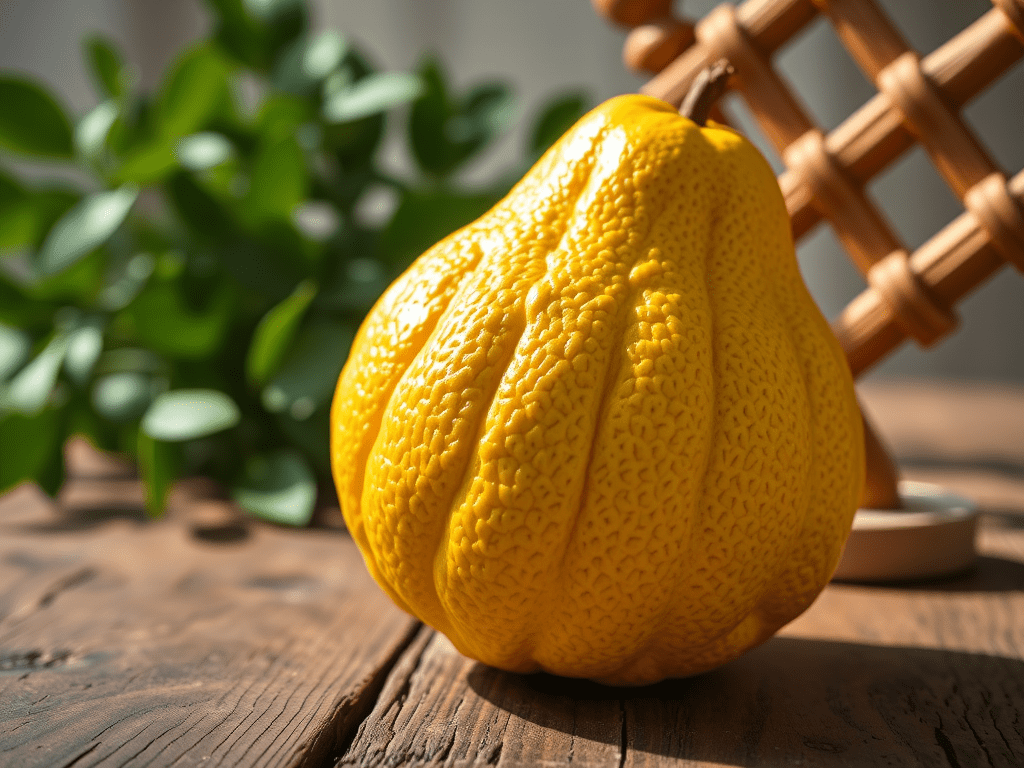
The etrog is a cultivated variety of the citron (Citrus medica), a large, fragrant citrus fruit distinguished by its thick, bumpy rind and minimal pulp.
Its first recorded use comes from biblical times (6th–5th century BCE), where Leviticus 23:40 names the etrog as one of the “Four Species” waved during the festival of Sukkot to symbolize gratitude, unity and the natural bounty of the land.
Did you know
Biblical & Rabbinic Roots – The word etrog appears in Mishnah (ca. 200 CE) and Talmudic texts describing the Sukkot ritual. It reflects a long tradition of using the fruit as both a symbol of harvest gratitude and a fragrant offering. •
Linguistic Lineage – Scholars trace etrog back through Aramaic (something like etirga) and even to the Greek sidra (the ancestor of our “citron”). Over centuries it’s stamped Jewish liturgy, poetry and legal texts.
Cultural Ripples – The Hebrew “etrog” gave rise to variants in Ladino, Yiddish and other Jewish dialects—and even inspired botanical Latin names when European botanists catalogued the citrus
Long before and after its ritual role, citron found a place in ancient pharmacopeias—Ayurvedic texts in India and Chinese Materia medica detail its use for soothing digestive discomfort, easing respiratory congestion and promoting overall vitality.
Modern analyses show citron (and thus etrog) packs: • Vitamin C (immune support, antioxidant action) • Dietary fiber (aids digestion, satiety) • Flavonoids & volatile oils (anti-inflammatory, antimicrobial)
These constituents support digestive health, bolster immune defenses, reduce oxidative stress and even serve in topical applications for their astringent and antiseptic properties.
Here’s a deeper look at etrog’s most rigorously documented health perks
Immune Support Etrog is exceptionally rich in vitamin C, supplying upwards of 50 mg per 100 g of fruit. That dose boosts white-blood-cell function and shortens the duration of colds and minor infections.
Digestive Health With about 2–3 g of dietary fiber per 100 g, etrog helps regulate bowel movements, feeds beneficial gut bacteria and promotes feelings of fullness—key factors in healthy digestion and weight management.
Cardiovascular Benefits The flavonoids and polyphenols in etrog have been shown to lower LDL (“bad”) cholesterol and blunt oxidative stress on blood vessels. Early clinical data suggest regular intake may improve overall lipid profiles and vascular function.
Blood Pressure Regulation Etrog’s potassium content, combined with its antioxidants, helps relax arterial walls and balance electrolytes—an effect linked to modest reductions in systolic and diastolic blood pressure in preliminary trials.
Anti-Inflammatory & Antioxidant Action Compounds like limonene and hesperidin scavenge free radicals, reducing markers of inflammation (e.g., C-reactive protein) and protecting cells from oxidative damage.
Topical & Mucosal Benefits Traditional and lab studies confirm etrog’s astringent oils can soothe minor skin irritations, tighten pores and act as a mild antiseptic—properties now exploited in natural skincare formulations.
Whether you’re curious about how etrog stacks up against other ritual botanicals or want creative culinary uses for its zest and peel, there’s plenty more to uncoverwhile.
While etrog (citron) is most famous for Sukkot, you can absolutely buy it in the U.S.
Imported Supply Israel produces about a million Etrog each year and exports roughly one-third of its crop to the U.S., where it’s sold through wholesale distributors and religious-goods suppliers.
Domestic Specialty Growers Small California citrus farms (e.g., Pearson Ranch) cultivate etrog trees and ship fresh fruit anywhere in the U.S. Their season typically runs from late October through April, so you can order directly online or by phone.
Retail & Delivery Options Closer to you, grocery-delivery services like Instacart list etrog under “fresh citrus” during the fall–winter window. They offer contactless, on-demand delivery or pickup from local Judaica stores and specialty-produce markets.
READ MORE: Health-benefits (“Etrog” is the Hebrew name for the citron, a citrus fruit similar to the lemon in flavor and appearance. The fruit originated from Southwest Asia, but it also grows in places like Crete, Sicily, Morocco, Puerto Rico and Corsica. It is used in many marmalades, jams, and fruit preserves, but what makes it so unique is the many health benefits this superfood can provide!)
(For most Jews, the etrog, a thick-rinded citrus, is relegated to a fleeting, supporting role. Held beside the lulav (palm frond) once a year during the upcoming festival of Sukkot, the etrog (citron) is then left to dry out or, if its lucky, turned into jelly. Read More: Judaism’s-best-kept-wellness-secret)
Just a little about Sukkot which is one of Judaism’s three pilgrimage festivals (Shalosh Regalim), commonly called the Feast of Booths or Feast of Tabernacles. It begins on the 15th day of Tishrei (usually September/October) and lasts seven days in Israel (eight in the diaspora).
Its two biblical names—Chag ha-Asif (“Festival of Ingathering” or harvest festival) and Chag ha-Sukkot (“Festival of Booths”)—capture its dual significance. Agriculturally, it marks the late-year harvest and invites gratitude for the land’s bounty. Historically, it commemorates the Israelites’ 40 years dwelling under divine protection in the wilderness, recalling the temporary “booths” or clouds of glory that shielded them.
Central to Sukkot is the sukkah: a temporary hut with at least three walls and a roof (schach) of unprocessed plant material (palm fronds, bamboo, etc.). For the holiday’s duration, Jewish households eat—and ideally sleep—in the sukkah, symbolizing trust in God’s providence and embracing humility and hospitality. Traditional texts even prescribe “ushpizin,” the ritual invitation of seven ancestral “guests” (Abraham through David), one per night, to sanctify the structure.
Another hallmark is the arba minim (Four Species): the etrog (citron), lulav (date-palm frond), hadass (myrtle), and aravah (willow). Each day (except Shabbat) worshippers bind the lulav bundle, hold it together with the etrog, and wave them in six directions to express God’s sovereignty over all creation. The festival climax—Hoshana Rabbah (“Great Hosanna”) on day 7—involves circling the synagogue bimah seven times while holding the Four Species, culminating in a symbolic “beating” of willow branches to sweep away remnant sin. The holiday formally closes with Shemini Atzeret (and, outside Israel, Simchat Torah), a separate day of assembly and Torah rejoicing.
Though etrog’s prized more for ritual than regular snacking, it’s still a citrus fruit—and like any concentrated citrus, there are a few groups who should be cautious or avoid it altogether:
Anyone with a citrus allergy • True citrus allergies (rash, hives, anaphylaxis) aren’t common, but if you break out in hives after lemon or orange, steer clear of etrog too.
People prone to acid reflux or GERD • The high citric-acid content can exacerbate heartburn or irritate an inflamed esophagus.
Kidney-disease patients on potassium-restricted diets • Like most citrus, etrog contains potassium. In advanced chronic kidney disease, excess potassium can build up to dangerous levels.
Those with a history of calcium-oxalate kidney stones • Vitamin C can metabolize into oxalate; mega-doses of ascorbic acid may increase stone risk in susceptible folks.
Anyone on medications with known “citrus interactions” • While etrog isn’t grapefruit, certain citrus-derived compounds can alter drug-metabolizing enzymes. If you’re on blood thinners (warfarin) or statins, double-check with your pharmacist.
Pregnant or nursing individuals worried about pesticide residue • Etrog grown for ritual use often receive heavier pesticide applications to keep the peel blemish-free. Always wash thoroughly or opt for certified organic.
Bottom line: if you’re healthy with no citrus sensitivities, etrog is safe in culinary amounts—just treat it like any other tart, high-acid fruit. But if you fall into one of those high-risk categories, run it by your doctor before adding etrog tea, marmalade or supplements to your routine.
 EJADA
EJADA 
Leave a comment