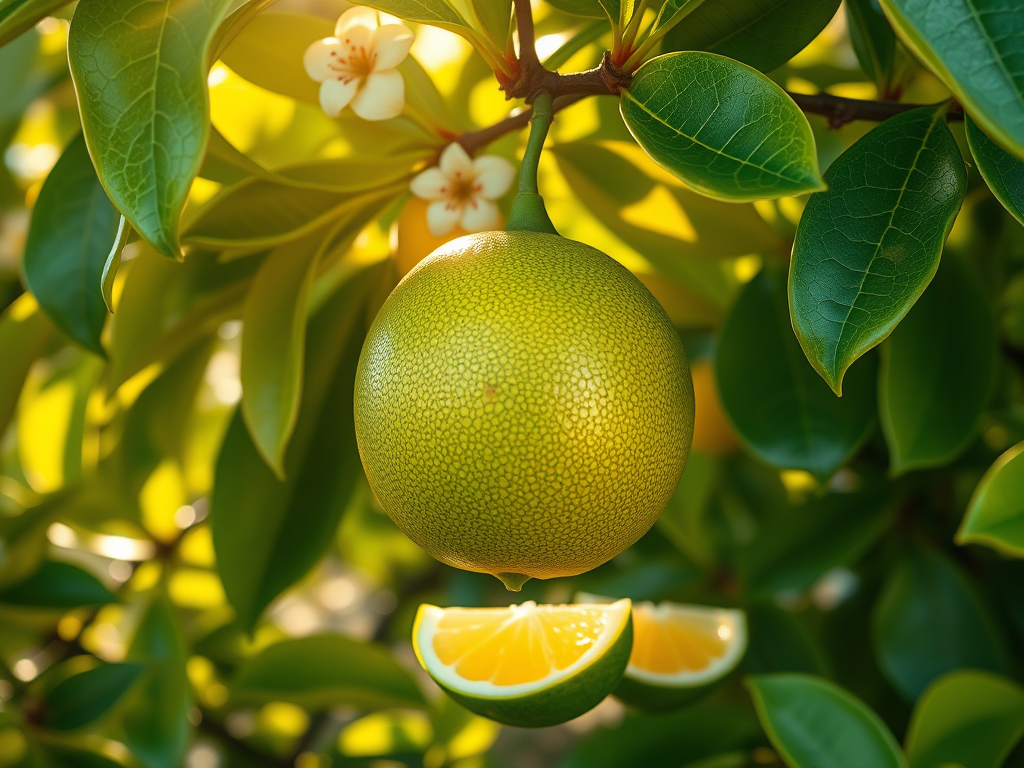
History & First Uses: Kabosu was introduced from China into Kyushu and, by the Edo period (mid-1600s), was already being cultivated in Ōita Prefecture, where it earned a reputation both as a seasoning for grilled fish and sashimi and as a folk remedy for fatigue, inflammation, and liver sluggishness. Its juice doubled as a vinegar substitute, while locals also dried or burned the peel for mosquito repellent and mild air-freshening.
Kabosu is a citrus fruit closely related to yuzu. Its juice has the sharpness of lemon, and it is used instead of vinegar in some Japanese dishes. It grows on a flowering tree with sharp thorns. The fruit is harvested when still green, but if left to ripen, it turns yellow. It is often confused with similar citrus, such as sudachi, but can easily be distinguished by the apex of the fruit, where the pistil has fallen off, which is a slightly raised torus shape
Kabosu was traditionally used right from its early days in Ōita Prefecture:
Culinary seasoning: Fresh kabosu juice was squeezed over grilled fish (ayu, sanma) and sashimi to brighten flavors and cut through oiliness. It also flavored rice dishes and pickles, serving as a natural vinegar substitute in local recipes.
Prototype ponzu: Mixing kabosu juice with soy sauce created a simple citrus-based dipping sauce—an ancestor of today’s ponzu—that accompanied everything from boiled vegetables to tofu.
Folk tonic: Diluted kabosu juice became a “fatigue‐busting” drink, believed to stimulate appetite, aid digestion, and support liver health in agrarian communities. • Bath infusions: Slices of kabosu were tossed into hot baths to invigorate circulation, soothe sore muscles, and impart a subtle citrus aroma for relaxation.
Insect repellent and air freshener: After juicing, locals dried or gently burned the peels indoors; the fragrant smoke kept mosquitoes at bay and neutralized musty odors in homes.
Kabosu: It’s more than just a tart Japanese citrus—its juice and peel deliver a range of health-supporting compounds:
Scientific studies on Kabosu itself are still emerging, but its proposed benefits rest on well-characterized nutrients and lab assays:
- Antioxidant capacity. In vitro tests of Kabosu juice and peel extracts demonstrate strong free-radical scavenging activity, comparable to other citrus fruits—an effect attributed to its polyphenol content.
- Immune support via vitamin C Kabosu contains roughly 18.5 mg of vitamin C per 100 g of juice, a level shown in countless clinical trials to enhance white-blood-cell function and reduce infection risk.
- Anti-inflammatory potential. While direct trials on Kabosu are scarce, its flavonoids (common to citrus) have been repeatedly shown in animal and cell studies to downregulate inflammatory markers like TNF-α and IL-6. Kabosu’s similar profile suggests it shares these effects.
- Cardiovascular and metabolic effects. The citric acid and potassium in Kabosu mirror those in lemons and limes, which human studies link to improved endothelial function and modest blood-pressure reductions. Again, Kabosu-specific trials are pending, but nutrient parallels support the hypothesis.
Kabosu fruit contains a unique combination of flavonoids and limonoids, which have been shown to have anti-inflammatory properties. These compounds help to reduce inflammation in the body, alleviating symptoms associated with conditions such as arthritis, asthma, and allergies. Additionally, the anti-inflammatory properties of kabosu fruit may also help to reduce the risk of chronic diseases such as cardiovascular disease and neurodegenerative disorders.
Bottom line: the health claims for Kabosu are grounded in its nutrient and antioxidant composition—both thoroughly validated by science—yet direct clinical research on Kabosu juice or peel in humans remains limited.
READ MORE: (2025 health-benefits
Kabosu fruit contains a unique combination of flavonoids and limonoids, which have been shown to have anti-inflammatory properties. These compounds help to reduce inflammation in the body, alleviating symptoms associated with conditions such as arthritis, asthma, and allergies. Additionally, the anti-inflammatory properties of kabosu fruit may also help to reduce the risk of chronic diseases such as cardiovascular disease and neurodegenerative disorders.
Fresh kabosu fruit is essentially unseen in mainstream U.S. markets—your best bet for kabosu in America is bottled juice rather than the fresh citrus itself.
• Bottled kabosu juice: – Yakami Orchards Marugoto Shibori Kabosu Juice ships nationwide from Gourmet Food World. – Ciao Imports also carries a 750 ml pure-juice offering, with refrigerated shipping options across the U.S.2.
• Fresh kabosu: – Rarely imported in its whole form. You might spot it, seasonally, in specialty Japanese grocery stores (usually fall) or via small importers—but don’t count on it in regular supermarkets.
Overall Summary: Here’s a concise wrap-up of everything we’ve covered on kabosu:
Origins & Traditional Uses • Brought from China into Kyushu by the Edo period (mid-1600s) and perfected in Ōita Prefecture. • Folk uses ranged from seasoning grilled fish and sashimi to a “fatigue-busting” tonic, bath infusions for sore muscles, and dried-peel mosquito repellent/air freshener.
Nutritional & Health Highlights • Rich in vitamin C (≈20–60 mg per 100 g juice) plus flavonoids (hesperidin, naringenin) and other polyphenols. • Antioxidant and anti-inflammatory potential—scavenges free radicals, supports immune cells, may help modulate markers like TNF-α and IL-6. • Citrate and potassium mirror those in lemons/limes, suggesting similar cardiovascular and blood-pressure benefits. • Organic acids (citric, malic) and modest fiber support digestion, gut health, and liver detox pathways.
Science Status • No large clinical trials on kabosu itself—but its nutrient profile and in vitro assays line up with well-documented citrus benefits. • Direct human studies are still pending, so much of the promise is inferred from related citrus research.
Information Resources • No dedicated kabosu pages on WebMD, Healthline, or Mayo Clinic. • For detailed nutrition data and traditional lore, look to FruitsInfo or Gardenia, or dive into PubMed/Google Scholar under “Citrus sphaerocarpa.”
U.S. Availability • Fresh kabosu is virtually nonexistent in mainstream markets—your best source is bottled juice (e.g., Yakami Orchards, Ciao Imports). • Specialty Japanese grocers may import fresh kabosu seasonally, but the supply is spotty.
Kabosu offers a rich blend of history, flavor, and health potential.
 EJADA
EJADA 
Leave a comment