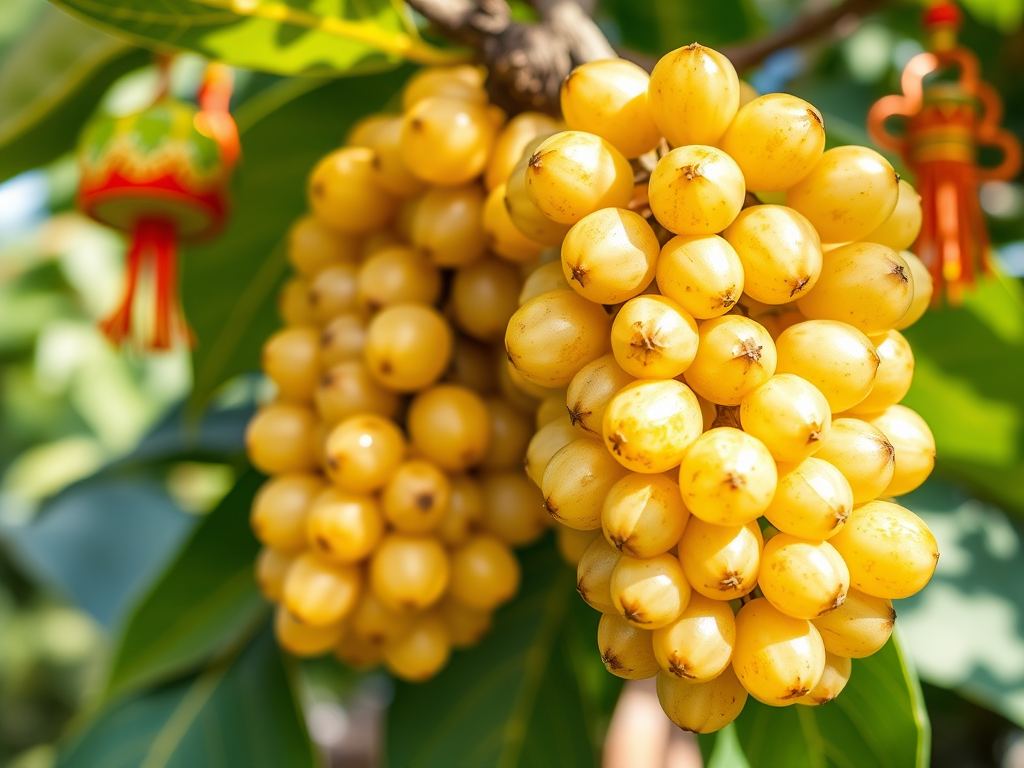
Duku
Duku is a tropical fruit native to Southeast Asia, often confused with its close cousin, langsat. It grows in grape-like clusters and has a round to oval shape with a leathery yellow-brown skin. Inside, you’ll find translucent white segments that are juicy, sweet-tart, and slightly citrusy—some say it tastes like a mix between grapefruit and grapes
Unlike langsat, it doesn’t release sticky latex when peeled, making it easier to enjoy. It’s also packed with vitamin C, antioxidants, and fiber, which support immunity, digestion, and skin health.
You can eat it fresh, toss it into fruit salads, or even cook it into jams and desserts. Ever tried one, Brinder? It might be a fun addition to your exploration of unique fruits like pluots and dewberries.
(Lansium parasiticum, commonly known in English as Duku Fruit, langsat, or lanzones, is a species of tree in the Mahogany family with commercially cultivated edible fruits. The species is mainly grown in Southeast Asia, throughout the Malay Archipelago from Peninsular Thailand, Malaysia, and Malaysia. It is extensively cultivated in southern Peninsular Malaysia, READ MORE @ healthbenefitstimesIndonesia)
The Duku fruit plays a surprisingly rich role in Southeast Asian cultural traditions, especially in Indonesia, Malaysia, and the Philippines.
Philippines: Camiguin Lanzones Festival
In Camiguin, the Lanzones Festival is a vibrant four-day celebration held every October to honor the harvest of duku (locally called lanzones). The island transforms with:
- Street dancing in fruit-themed costumes
- Agricultural fairs and fruit tastings
- Beauty pageants and parades. This festival isn’t just about the fruit—it’s a celebration of community pride, prosperity, and gratitude for a bountiful harvest.
Indonesia & Malaysia: Symbol of Goodwill
In parts of Indonesia and Malaysia, duku is often given as a gift of goodwill—a gesture of hospitality and friendship. It’s common to offer it to guests during visits or festive gatherings, symbolizing abundance and welcome.
Folklore & Symbolism
Duku also appears in local myths and legends, often representing fertility, prosperity, or transformation. In some tales, the fruit is believed to have mystical origins or protective properties.
It’s fascinating how this humble fruit weaves through both everyday life and ceremonial traditions.
Cultural: In the Philippines, the Camiguin Lanzones Festival
Held every October, the Camiguin Lanzones Festival is a vibrant four-day celebration marking the harvest of lanzones. It’s a blend of gratitude, folklore, and community pride, featuring:
Street dancing in elaborate fruit-inspired costumes
Parades and pageants showcase local beauty and creativity.
Fruit tastings, agricultural fairs, and culinary competitions.
Cultural performances that honor the island’s heritage.
Beyond festivals, duku has been used in ritual healing practices. The bark, seeds, and peels were traditionally used to treat ailments like fever and diarrhea, and burning the dried peel was believed to ward off evil spirits or insects. Dried peels were burned as mosquito repellent, and the resin was applied to scorpion stings.
This festival not only boosts tourism but also reinforces the fruit’s role in local identity and economy.
Woodcraft: The tree’s wood was used for house posts, tool handles, and small utensils. Its wood has traditionally been used in Southeast Asia for small-scale woodcraft and practical construction. Though not a major timber source, the tree’s wood is valued for being dense, durable, and fine-grained, making it suitable for:
House posts and rafters: In rural architecture areas of Java and Malaysia, duku trees that no longer bear fruit are repurposed for structural elements in homes. The wood’s toughness and elasticity help it withstand tropical humidity and shifting foundations. The wood is also resilient to pests and has a density of around 840 kg/m³, giving it enough heft for load-bearing uses without being too heavy to work with.
Tool handles, Duku wood has long been valued in Southeast Asia for crafting tool handles, especially in rural and agricultural communities. Durability: Duku wood is dense and moderately hard, making it resistant to splitting or cracking under pressure, ideal for tools that take a beating. Workability: It’s fine-grained and smooth, which allows for comfortable shaping and sanding. This makes it a favorite for hand tools like chisels, hoes, and kitchen implements. Grip Comfort: When polished, duku wood offers a natural, non-slip grip. It absorbs sweat and shock well, which is especially useful for machetes, pestles, or farming tools.
In fact, the tradition of using duku wood for handles is part of a broader ethos of zero-waste agriculture, where even non-fruiting or aging trees are repurposed into practical items.
Because duku trees are primarily cultivated for their fruit, the wood is typically harvested from older or non-fruiting trees. In some regions, it’s also used in folk carpentry, where local artisans craft everyday items from available hardwoods.
Today, Duku is still beloved for its flavor and versatility:
Culinary: Eaten fresh, added to fruit salads, blended into juices, or made into jams and syrups. It even appears in savory dishes in some cultures.
The most common way to enjoy duku is simply peeling and eating it fresh. Its juicy, translucent segments are refreshing on their own or paired with other tropical fruits like mango, pineapple, or lychee.
Fruit Salads & Bowls: Duku adds a citrusy brightness to fruit salads. It pairs well with mint, basil, or even a drizzle of lime-honey dressing for a vibrant twist.
Juices & Smoothies: Blended into juices or smoothies, duku offers a tangy-sweet base. It’s often combined with banana, coconut water, or yogurt for a creamy tropical drink.
Jams, Jellies & Syrups: The fruit’s natural pectin content makes it ideal for preserves. Duku jam or syrup can be used on toast, in pastries, or as a glaze for grilled meats.
Savory Dishes: In some Filipino and Indonesian recipes, duku is used as a souring agent, similar to tamarind or calamansi. It adds a subtle acidity to dishes like sinigang or stews.
Desserts: Duku segments can be candied, caramelized, or folded into tarts, ice cream, and puddings. Some chefs even use it as a topping for panna cotta or pavlova.
Health & Wellness: Valued for its high vitamin C, fiber, and antioxidants, it supports immunity, digestion, and skin health.
Eco & Agrotourism: Duku farms and festivals now attract tourists, blending agriculture with cultural heritage.
It’s fascinating how this humble fruit has evolved from folk remedy to superfruit status. Duku fruit is a powerhouse of nutrients wrapped in a sweet-tart package. Here’s a breakdown of its health benefits, both traditional and modern:
1. Immune System Support
Rich in vitamin C—about 46 mg per 100 g—duku helps strengthen your immune defenses and fight off infections.
2. Digestive Health
Its high dietary fiber content promotes smooth digestion, prevents constipation, and supports gut health.
3. Bone & Dental Strength
Duku contains calcium, phosphorus, and vitamin A, which contribute to stronger bones and teeth, especially important as we age.
4. Antioxidant Protection
Loaded with polyphenols and flavonoids, duku helps neutralize free radicals, reducing the risk of chronic diseases and premature aging.
5. Weight Management
Low in calories (about 34 kcal per 100 g) and high in water content, it’s a great snack for hydration and satiety without the guilt.
6. Skin Health
Vitamin C and antioxidants promote collagen production and protect skin from environmental damage, keeping it radiant and youthful.
7. Traditional Medicinal Uses
Historically, duku has been used to:
- Treat fever, diarrhea, and dysentery
- Repel mosquitoes by burning dried peel
- Relieve scorpion stings with its resin
8. Anti-Malarial Potential
Compounds in the peel have shown promise in disrupting the life cycle of Plasmodium falciparum, the parasite that causes malaria.
If you are curious, duku fruit is available in the United States, but it’s a bit of a hidden gem. You’re most likely to find it in:
- Specialty Asian or Filipino grocery stores, especially in areas with large Southeast Asian communities (like Los Angeles, San Francisco, New York, or Chicago).
- Hawaiian markets, where duku has been cultivated since the 1930s.
- Online tropical fruit retailers sometimes offer fresh or frozen duku during its peak season (fall through early winter).
- Nurseries that sell grafted duku trees for home growers in warmer climates like Florida, southern California, or Hawaii.
It’s still considered a niche fruit in the U.S., so availability can be seasonal and limited. If you’d like, I can help you track down a few online sources or nurseries that ship nationwide. Want to give that a go?
MORE: specialtyproduce.com The thick rind is hard, leathery, and tan to pale yellow, developing brown spots and blemishes as the fruit matures. The rind is also covered in fine hairs, giving the fruit a fuzzy appearance. Underneath the surface, there is a white, spongy, and very bitter layer that is easily separated and peeled, and the flesh is thick, translucent-white, and is typically divided into 1-5 segments.
Duku fruit is generally safe and nutritious for most people, but there are a few groups who should approach it with caution:
1. People with Latex or Tropical Fruit Allergies
Some individuals may be allergic to duku or its latex-like sap. Symptoms can include itching, swelling, or even respiratory issues. If you’ve reacted to fruits like rambutan, longan, or mangosteen, it’s wise to test duku in small amounts first.
2. Individuals with Diabetes
Duku has natural sugars and a moderate glycemic index. While it can be part of a diabetic diet in moderation, large portions may spike blood sugar levels. Diabetics should monitor their intake and ideally pair it with protein or fiber-rich foods to slow absorption.
3. People with Digestive Sensitivities
The seeds are bitter and mildly toxic if chewed, and the peel contains tannins that can be astringent. Swallowing seeds or consuming unripe fruit may cause stomach discomfort.
4. Those on Low-FODMAP or Specialized Diets
Because duku contains fermentable sugars and fiber, it might trigger bloating or gas in people with IBS or those following a low-FODMAP plan.
 EJADA
EJADA 
Leave a comment