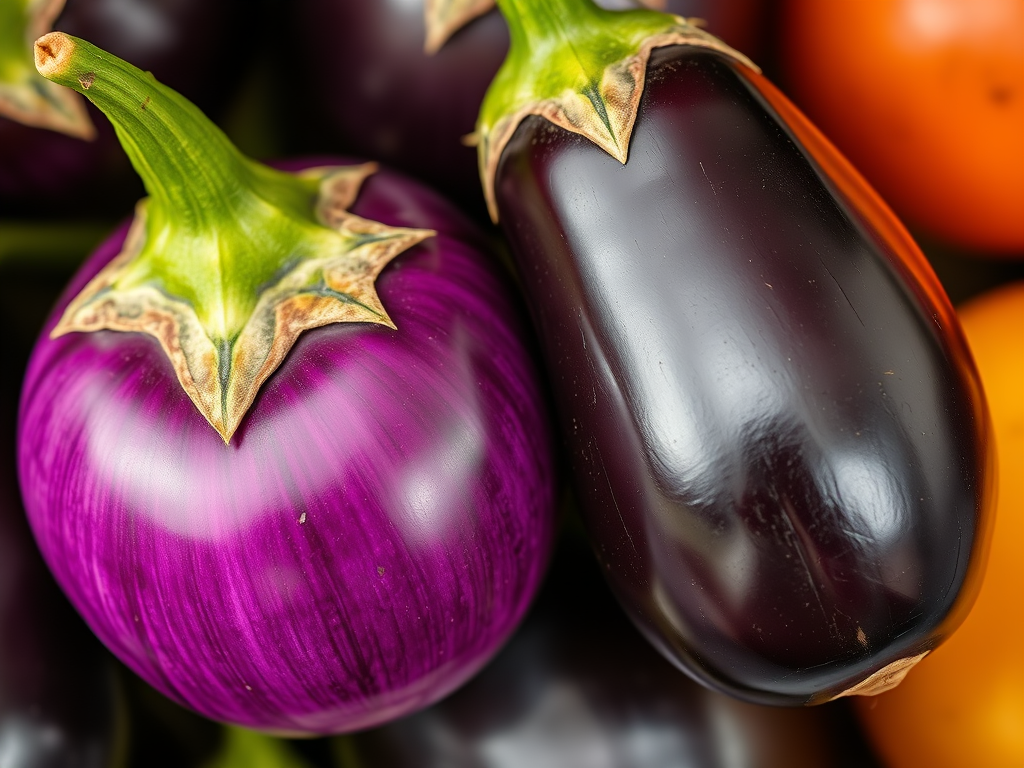
Did you know that Eggplant might play the part of a veggie on your plate, but botanically speaking, it’s a fruit, specifically a berry. That’s because it develops from the flower of the eggplant plant and contains seeds.
Nature’s got a way of blurring those culinary lines. Same goes for tomatoes, cucumbers, and even bell peppers—they’re all fruits masquerading as vegetables in the kitchen. Makes you wonder what else in the produce aisle has a secret identity, doesn’t it?
Origins and Early Use
Eggplants (Solanum melongena) are believed to have originated in Africa, with wild ancestors like Solanum linnaeanum playing a key role in their evolution. African eggplant—often called garden egg or Solanum aethiopicum—has a long-standing role in traditional African medicine, Brinder. Its uses span across regions and ailments, blending botanical wisdom with cultural practice. Here’s a look at how it’s been used medicinally:
Traditional Medicinal Uses in Africa
1. Digestive and gastrointestinal relief:
- Crushed fruits were used to treat constipation.
- Leaves and roots were boiled to make teas for stomach ailments, including gas and indigestion.
- In Kenya, juice from boiled roots was consumed to expel hookworms.
2. Sedative and calming effects:
- Leaf juice was used as a sedative for urinary tract discomfort.
- Extracts mixed with alcohol were used as an antiemetic (to prevent vomiting), anxiolytic (to ease anxiety), and even to treat tetanus after abortion-related complications.
3. Cardiovascular and metabolic support:
- The fruit and roots were used to help manage high blood pressure.
- Some communities used it to support blood sugar regulation, especially in type 2 diabetes, thanks to its fiber and antioxidant content.
4. Topical and oral remedies:
- Crushed leaves were applied to the skin for infections and gastric issues.
- Powdered or ashed parts of the plant were used to treat toothaches, bronchitis, and even cholera.
What’s fascinating is how different parts of the plant—leaves, roots, fruits, even ash—were used for specific ailments. It’s a great example of how indigenous knowledge systems tapped into the full potential of a plant long before modern pharmacology caught up.
(How Does An African Eggplant Look?Healthline.com/nutrition African eggplants can grow up to two meters (6.6 feet). They have alternating, leafy blades that can grow up to 30 centimeters in length and 21 centimeters wide and have smooth or lobed margins. The African eggplant produces 12 white flowers that develop into egg-shaped berries. Berries may be smooth or grooved and red or orange in color, depending on the variety of plant.)
From there, they spread eastward and were domesticated independently in both India and China, likely over 2,000 years ago.
The earliest written records of eggplant use appear in Chinese texts from around 59 BC, where they were already being cultivated and selectively bred for better flavor and appearance. In traditional Chinese medicine (TCM), eggplant (Solanum melongena) has been used medicinally for centuries—its earliest documented use dates back to around 100 BC, where it was valued not just as food but as a healing agent.
Medicinal Uses in Ancient China
1. Treating fever and inflammation: Eggplant was believed to help reduce internal heat. Its “cooling” nature made it ideal for treating fevers, especially those accompanied by chills, and for soothing inflammation.
2. Promoting blood circulation and relieving pain: Texts like the Compendium of Materia Medica from the Ming Dynasty describe eggplant as a remedy to disperse blood stagnation, relieve swelling, and ease pain, particularly in cases of bruises or abscesses.
3. Supporting digestive health: Eggplant was used to broaden the intestines—a poetic way of saying it helped relieve constipation and promote smoother digestion.
4. Healing wounds and skin conditions: The roots, leaves, and fruit were applied topically or consumed to treat sores, abscesses, and toothaches, and to reduce swelling from injuries.
5. Balancing internal energy (Qi): In TCM philosophy, eggplant’s cooling essence was thought to clear heat from the digestive system, helping the body maintain balance, especially during hot seasons.
It’s fascinating how these ancient insights align with modern findings on eggplant’s antioxidant and anti-inflammatory properties.
In India, Ayurvedic texts from around 100 BC—particularly the Charaka Samhita and Sushruta Samhita—offer some of the earliest documented insights into the medicinal use of plants like eggplant (Vartaku in Sanskrit), Brinder. These texts don’t just list ingredients—they weave them into a holistic framework of body, mind, and environment.
Eggplant in Classical Ayurveda
1. Digestive aid: Eggplant was used to stimulate agni (digestive fire) and relieve constipation. Its light, slightly bitter nature made it suitable for balancing kapha and vata doshas when prepared properly.
2. Blood purification and detoxification: It was believed to help cleanse the blood and support liver function, especially when cooked with spices like turmeric and cumin.
3. Skin and wound care: Topical applications of roasted or mashed eggplant were used to soothe boils, abscesses, and minor wounds, aligning with its anti-inflammatory properties.
4. Reproductive and urinary health: Some formulations used eggplant to support reproductive vitality and ease urinary discomfort, often in combination with other herbs.
What’s remarkable is how these ancient uses echo what modern science is now validating, like its antioxidant and anti-inflammatory effects.
Cultural Spread
By the 6th century AD, eggplants had made their way to the Middle East via trade routes like the Silk Road. From there, Arab traders introduced them to Europe, where they were met with suspicion—Europeans once believed eggplants could cause madness, hence the nickname “mad apple”.
So while eggplants may seem like a humble kitchen staple today, their journey spans continents, cultures, and centuries.
Eggplant in the United States
1. Where they grow best: Eggplants thrive in warm climates, so they’re primarily cultivated in New Jersey, California, Florida, and Georgia. Among these, New Jersey leads the nation, producing around 16 million pounds annually, especially in the southern part of the state.
2. Varieties and diversity: U.S. farms grow a wide range—Italian, Sicilian, Indian, Japanese, striped, white, and even fairy tale eggplants. This diversity supports both ethnic cuisines and creative culinary trends.
3. Seasonality: Eggplants are typically grown from May through October, with peak harvests in July and August. They’re annuals here, sensitive to frost, and need warm soil to thrive.
4. Market and consumption: About 98% of U.S.-grown eggplants are sold fresh, with the rest going into frozen meals and dips. On average, Americans consume about 1 pound per person per year, which is modest compared to global trends.
5. Cultural evolution: Initially grown more for ornament than food, eggplants gained popularity as hybrid varieties were developed to resist bruising and ship better. Their acceptance grew alongside America’s expanding culinary palate.
Health Benefits of Eggplant
1. Rich in antioxidants: Especially nasunin, found in the purple skin, which helps protect cells from damage and supports brain health.
2. Supports heart health: Eggplant contains fiber, potassium, and vitamin B6, all of which contribute to cardiovascular wellness. Its antioxidants also help reduce LDL (bad) cholesterol.
3. Blood sugar management: The fiber and polyphenols in eggplant may help regulate blood sugar levels by improving insulin sensitivity and slowing sugar absorption.
4. Weight-friendly: Low in calories and high in fiber, eggplant can help with satiety and support healthy weight management.
5. Gut-friendly fiber: The skin and flesh promote digestive health by feeding good gut bacteria and preventing constipation.
6. Cancer-fighting compounds: Some lab studies suggest that solasodine rhamnosyl glycosides (SRGs) in eggplant may help fight certain cancers, but more research is needed.
Eggplants are a nutrient-rich food that contains fiber, vitamins, and minerals. They may benefit your overall health, including your heart.
Learn More: Eggplants, also known as aubergines, belong to the nightshade family of plants and are used in many different dishes around the world.Healthline.com
Recipe found on WebMDBelow is a recipe to prepare African eggplant with Okra for six people. It only takes around 30 minutes.
Ingredients
- Two big tomatoes
- Two eggs
- Two carrots
- ¼ kg okra
- ½ kg African eggplant
- 2 cups water
- Two onions
- Eight tablespoons of cooking oil
- Salt
Preparation
- Wash, peel, and chop the tomatoes.
- Wash and chop the onions.
- Wash, peel, and cut the carrots lengthwise.
- Wash the okra and remove the ends.
- Wash the eggplant and remove the stems.
- Fry the onions lightly in oil until they start to change color. Add tomatoes and salt, then stir until they soften to form a thick syrup.
- Add the African eggplant, okra, and carrots. Stir well.
- Add water, cover the pan for 10 to 15 minutes, and simmer until the vegetables are soft.
- Whisk the eggs until they bubble, then add in the vegetables while stirring slowly for 5 minutes.
- Season to taste. Serve hot.
What Causes Bitterness in African Eggplants?
Alkaloids in African eggplants give it its bitter taste, and researchers have insisted that it should be eaten in small quantities. This is because some species contain poisonous alkaloids that may cause diarrhea and excess calcium deposition in body tissues.
 EJADA
EJADA 
Leave a comment