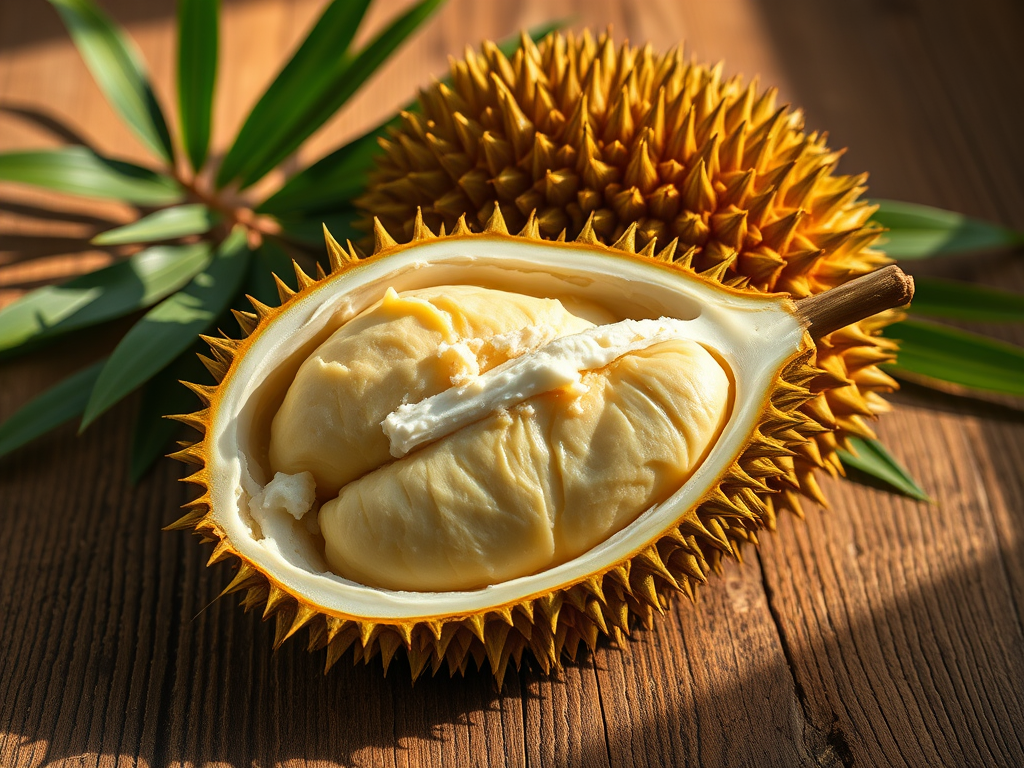
Durian—the infamous “king of fruits”! It’s a tropical powerhouse native to Southeast Asia, known for its spiky shell, custard-like flesh, and a smell so intense it’s banned on public transport in places like Singapore.
Durian is native to Southeast Asia, where indigenous peoples had been enjoying and cultivating it for millennia before its “discovery” by Western explorers. Early local communities gathered the fruit fresh from wild trees, valuing its rich, custard-like pulp not only as a source of energy and nutrition but also as an ingredient in traditional recipes and remedies.
The first documented account in Western literature dates back to the 15th century. Explorer Niccolò de’ Conti recorded encountering a large, green fruit with a spiky exterior that the locals called “durian.” Later, in 1563, the Portuguese physician Garcia de Orta described the fruit’s unique flavor and potent aroma in his writings, solidifying durian’s place in early botanical and culinary chronicles.
Ancient Origins and Early Use
Durian is native to the tropical rainforests of Southeast Asia. For centuries, local communities not only savored the fruit fresh but also incorporated it into traditional remedies and culinary practices. Indigenous peoples recognized its nutritional value and unique flavor long before it attracted outside attention. Its long-standing role in local diets helped cement its status as both a nourishing food and a culturally significant delicacy.
Early Western Encounters and Documentation
The first recorded encounters with durian in Western literature trace back to travelers and explorers navigating Southeast Asia. Early accounts mention figures like Niccolò de’ Conti—a 15th-century traveler who described the fruit’s curious blend of creamy texture and pungent aroma.
Later, in the late 16th century, translations of works such as Juan Gonzales de Mendoza’s treatises further introduced durian to European readers. These early descriptions, although sometimes astonished by its intense odor (leading to comparisons with cheese or even less flattering aromas), laid the groundwork for durian’s enduring reputation as the “king of fruits”.
Evolving Use Through the Centuries
Over time, durian’s use has expanded far beyond simply being eaten fresh. In Southeast Asia, it became a culinary staple, appearing in both sweet and savory dishes—from traditional desserts and ice creams to curries and condiments. As global interest grew, modern food innovators began experimenting with value-added products, such as durian-flavored pastries, beverages, and even health supplements. These innovations not only cater to the fruit’s passionate local fans but also to a broader international market, which now appreciates its complex blend of sweet, savory, and intense aroma.
From a Local Delicacy to a Global Commodity
Modern agricultural advances and changing consumer tastes have played significant roles in transforming the durian’s market presence. Traditional cultivation methods have gradually given way to more refined techniques, ensuring consistency and quality that appeal to both domestic and export markets. The rise of premium cultivars—such as the famed Musang King—has boosted durian’s profile worldwide. Today, it stands as a symbol of culinary innovation, merging centuries-old traditions with modern scientific research into nutrition, flavor profiling, and sustainable farming practices.
Durian’s journey from a wild tropical fruit enjoyed by indigenous cultures to an international delicacy illustrates a vibrant evolution influenced by exploration, cultural exchange, and continuous innovation
Over time, durian transitioned from a wild, indigenous delicacy to a culturally significant fruit—often dubbed the “king of fruits,”—earning a reputation that both celebrates its rich taste and critiques its famously pungent smell.
Its use spans from straightforward fresh consumption to being an ingredient in a variety of local dishes and medicinal practices, reflecting the deep-seated value placed on durian in Southeast Asian cultures.
Lesser-known medicinal
1. Natural Sleep Aid
Durian contains tryptophan, an amino acid that the body converts into serotonin and melatonin—neurochemicals that help regulate mood and sleep cycles. In traditional Southeast Asian remedies, durian is sometimes consumed in the evening to promote restful sleep.
2. Mood and Mental Health Support
Thanks to its high vitamin B6 content, durian may help boost serotonin production, which can alleviate symptoms of depression and anxiety. Some holistic practitioners even refer to it as a “natural antidepressant”2.
3. Aphrodisiac Properties
Durian has long been considered a natural aphrodisiac in traditional medicine. Its combination of potassium and vitamin B6 is thought to improve blood circulation and hormonal balance, potentially enhancing libido and sexual wellness2.
4. Anti-Anemia Effects
Durian is rich in iron, folate, and copper, all of which are essential for red blood cell production. This makes it a helpful dietary addition for those managing or preventing anemia.
5. Antibacterial and Antifungal Potential
The outer husk and sap of the durian fruit contain compounds with antimicrobial properties. Some studies suggest these parts may help fight infections, though they’re not commonly used in Western herbalism
Nutritional Benefits
Caloric and Macronutrient Profile: A typical serving of durian (about one cup or roughly 243 grams) provides around 357 calories. This includes approximately 66 grams of carbohydrates, 13 grams of fat, and around 3.6 to 4 grams of protein. It’s also rich in dietary fiber (about 9 grams per serving), which contributes to a feeling of fullness and aids in digestive health.
Vitamins and Minerals: Durian is an excellent source of vitamins and minerals. It offers a significant dose of vitamin C, important for immune function and skin health, as well as a spectrum of B vitamins (such as vitamin B6 and thiamine) that support energy metabolism and brain function. Notably, it is very high in potassium (with one serving sometimes providing close to 1060 mg), which can help manage blood pressure and support cardiovascular health. Other minerals—such as phosphorus, magnesium, and manganese—contribute to its overall nutritious profile.
Antioxidants and Phytochemicals: Beyond standard nutrients, durian contains a variety of antioxidants (including polyphenols and flavonoids). These compounds help neutralize free radicals, potentially reducing inflammation and lowering the risk of chronic diseases. In traditional medicine, various parts of the durian plant have even been used to treat ailments, highlighting its longstanding cultural significance.
Potential Risks
Caloric Density and Fat Content: Due to its relatively high calorie and fat content compared to most fruits, overeating durian can contribute to weight gain if you’re not balancing it within your overall diet. This makes portion control particularly important for those monitoring their caloric intake.
Digestive Concerns: While fiber is beneficial for digestive health, consuming large amounts of durian may lead to gastrointestinal discomfort such as bloating, gas, or even diarrhea. This is especially the case if you’re not drinking enough water; the fiber in durian can absorb extra water in your intestines and, in excess, disrupt normal digestion [11].
Alcohol Interaction: One of the more unique risks involves durian’s interaction with alcohol. Durian contains sulfur-like compounds that can inhibit the enzyme aldehyde dehydrogenase, which is crucial for metabolizing alcohol. Consuming durian alongside alcohol may cause elevated blood alcohol levels and lead to symptoms like nausea, vomiting, or heart palpitations. This interaction is the reason why, in some places, durian is not served together with alcoholic beverages.
Allergic Reactions and Other Sensitivities: As with any food, some individuals may be allergic or sensitive to durian, potentially experiencing reactions such as skin rashes, hives, or respiratory difficulties. It’s wise to introduce it slowly into your diet if you’ve never tried it before or if you have a history of food allergies.
Read seniorfitness.org. This unique tropical fruit is not just known for its distinct aroma and flavor; it’s also a powerhouse of nutrients that can significantly enhance overall well-being. Packed with vitamins like C, B6, and essential minerals such as potassium and magnesium, durian supports immune function, improves digestion, and promotes heart health
In summary, durian’s rich nutritional profile—with its blend of fibers, healthy fats, vitamins, and minerals—can offer real health benefits, particularly for energy metabolism, immune support, and cardiovascular health. However, mindful consumption is key, especially because of its high caloric density and potential interactions (such as with alcohol). Enjoying durian in moderation ensures that you can savor its unique taste and benefits while avoiding its possible downsides.
Incorporating durian into a balanced meal plan is all about mindful portion control and pairing it with complementary ingredients to create meals that are both exciting and nutritionally complete.
1. Breakfast Boosts
- Durian Smoothie Bowl: Blend a modest amount of durian flesh with a banana, a handful of spinach, and a cup of unsweetened almond (or your preferred) milk. Pour into a bowl and top with granola, chia seeds, or fresh berries. This mix not only adds antioxidants, fiber, and vitamins but also gives your morning a creamy and tropical twist.
- Durian Pancakes or Waffles: Incorporate a small amount of mashed durian into your pancake or waffle batter. Keep the serving moderate to avoid excessive calories, then top with a sprinkle of nuts and a drizzle of natural sweetener (like a dash of honey or maple syrup) for extra flavor and crunch.
2. Smart Snacks and Light Desserts
- Durian Parfait: Layer a small serving of durian with low‐fat Greek yogurt and a few slices of fresh fruit. Adding a sprinkle of nuts or a dusting of granola can balance the fruit’s natural sweetness with some healthy fats and protein.
- Durian Chia Pudding: Mix durian puree with chia seeds and a splash of coconut or almond milk, then let it set in the refrigerator overnight. Top with berries in the morning for an energizing, fiber-rich treat that offers a unique texture and flavor.
- Fruit Salad Accent: Use durian as one element in a vibrant fruit salad. Pair it with milder fruits like mango, pineapple, or papaya, and finish with a squeeze of lime juice and some mint leaves. This not only softens durian’s bold taste but also adds a refreshing tang to the mix.
3. Balancing Macronutrients
- Complement with Protein and Healthy Fats: Since durian is relatively calorie-dense and high in natural sugars and fats, serve it alongside lean proteins (like Greek yogurt, cottage cheese, or even a handful of almonds) and fiber-rich foods (like whole grains or leafy greens). These additions help balance out the natural sugars and keep your energy levels even throughout the day.
- Portion Control Matters: A moderate serving goes a long way. Incorporate durian as a side or accent rather than the main carbohydrate source. This way, you enjoy its nutritional benefits—such as high levels of vitamin C, potassium, and antioxidants—without overloading on calories.
4. Integrating Durian into Meal Prep
- Pre-Portioned Treats: Due to its strong aroma and limited shelf-life when fresh, consider preparing small, single-serving durian recipes (like parfaits or smoothie packs) that can be assembled quickly during the week. This method makes it easier to stick to portion sizes while still enjoying its rich flavor.
- Variety in Meal Plans: Rotate your durian dishes throughout the week so that it appears in a mix of sweet and savory contexts. For example, you might have a durian smoothie bowl on Monday, a durian-infused dessert on Wednesday, and a small durian salad element on Friday. This variety keeps your meal plans exciting and ensures you get other essential nutrients from a range of foods.
By thoughtfully integrating durian in these ways, you add a creative, tropical twist to your balanced meal plan while capitalizing on its nutritional benefits, such as fiber, healthy fats, and vital vitamins and minerals. The key is to treat durian as an exciting accent that enhances both flavor and nutrition while always pairing it with other nutrient-dense foods.
Durian is primarily imported from Southeast Asia, especially Thailand and Malaysia. While a few trees exist in places like South Florida and Hawaii, they rarely fruit, so nearly all durian in the U.S. is brought in frozen or processed.
Common Forms Available
Frozen Whole Fruit – Often the Monthong variety, sold in Asian supermarkets or online. It’s typically flash-frozen and shipped with the shell intact.
Frozen Pulp or Pods – Pre-separated flesh, sometimes vacuum-sealed for convenience. Great for smoothies or desserts.
Freeze-Dried Durian – Crunchy and shelf-stable, this is a popular snack form with a milder aroma.
Durian-Based Products – You’ll find durian in ice cream, pastries, candies, and even mooncakes.
Fresh (Rare) – Specialty grocers in cities like Los Angeles, New York, or San Francisco occasionally carry fresh durian, especially during peak import seasons.
(Durian trees are growing in South Florida, but none of them have fruited so far.
Although monthong (a commercially grown variety) is available in most largest populated cities, eating a seedling durian is an experience that one would have had to travel all the way to Southeast Asia for until now.
Meet Kampong, also known as “natural village durian” because it is grown from seed and not grafted like other named varieties.)
 EJADA
EJADA 
Leave a comment