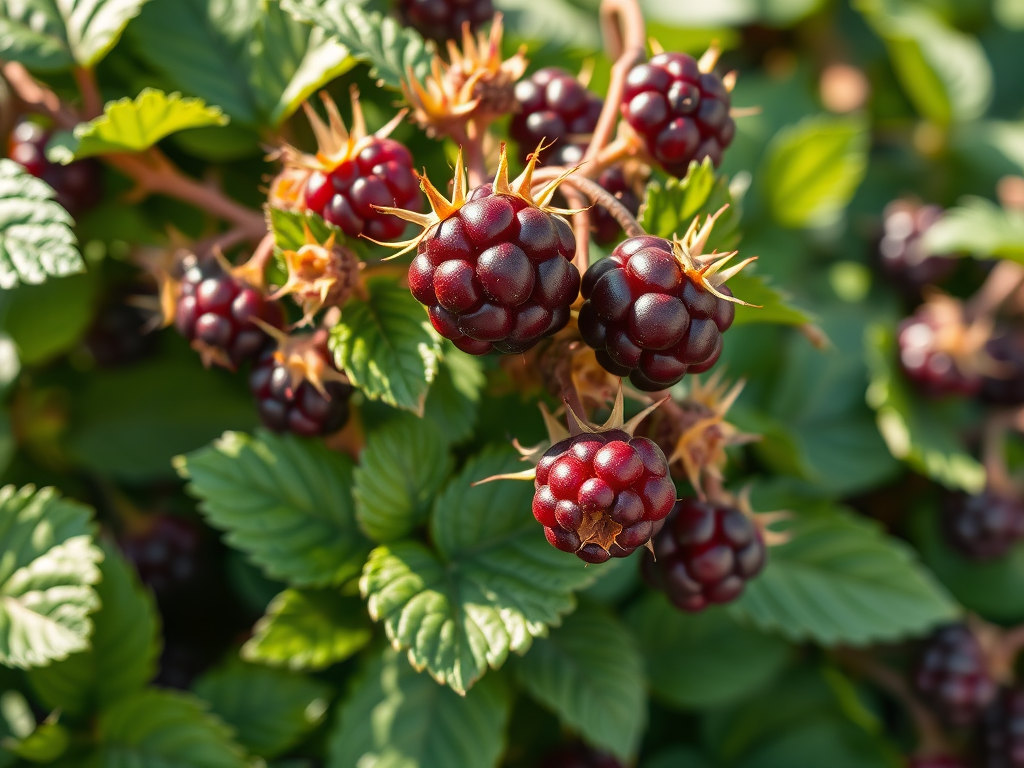
Don’t get bored, we are continuing our known and little-known fruits that begin with the letter D, and what health benefits they offer today. I offer information on Dewberry fruit.
When was it first cultivated?
As a tended garden plant: mid-1500s herb gardens in Europe. As a genuine commercial field crop: the 1880s dewberry plantations of the American South.
A VERY SHORT HISTORY OF “TAMING” THE TRAILING DEWBERRY
| Era | Milestone | What “cultivation” looked like |
|---|---|---|
| 16th-century Europe | 1542: Leonhart Fuchs lists dowberies among brambles that “may be removed from the wild into gardens.” 1597: John Gerard notes they “take readily if set in a moist bed.” | Gardeners simply dug wild plants and transplanted them into physic or kitchen gardens. No selection, no breeding—just convenience. |
| 18th-century Britain | Early 1700s: Scottish horticulturalist James Justice describes training “trailing dew-berry” along low hurdles in his walled fruit garden. | First written instructions for staking/trellising and for pruning canes after fruiting. Still a niche curiosity, not a crop. |
| Late-19th-century United States | 1880s–1910s “dewberry boom” centred on Cameron, North Carolina, and parts of east-central Texas. Named varieties—‘Mayes’, ‘Austin’, ‘Lucretia’, ‘Premo’—are advertised in nursery catalogues; railcars of fruit shipped to Baltimore, New York, and Chicago each May. | True field culture begins: rows on wire trellises, spring cane tipping, winter mulch, sulphur fungicide sprays. Acreage peaks around WW I, then declines as improved erect blackberries arrive. |
| 20th-century breeding offshoots | 1920s–40s: Luther Burbank’s protégés cross southern dewberry (Rubus trivialis) with loganberry & blackberry, giving us ‘Youngberry’ and, later, the boysenberry family. | Dewberry contributes its early ripening, intense aromatics, and trailing habit to modern berry hybrids. |
| Today | 1880s–1910s “dewberry boom” centred on Cameron, North Carolina, and parts of east-central Texas. Named varieties—‘Mayes’, ‘Austin’, ‘Lucretia’, ‘Premo’—are advertised in nursery catalogues; railcars of fruit are shipped to Baltimore, New York, and Chicago each May. | “Cultivation” is essentially semi-wild management—mowing lanes, tacking canes to a low trellis, and throwing bird netting over the lot in April. |
1. Proven and persistent folk remedies
Leaves: Gargle or tea for sore throat, mouth ulcers, diarrhea (recorded in European herbals and by the Cherokee, Salish, and other Native nations).
| Plant part | Traditional use | Likely active compounds | Quick home prep |
|---|---|---|---|
| Leaves | Gargle or tea for sore throat, mouth ulcers, diarrhoea (recorded in European herbals and by the Cherokee, Salish, and other Native nations) | 5–7 % condensed & hydrolysable tannins (ellagitannins) tighten and dry inflamed tissue | 1 Tbsp dried leaf, 250 mL near-boiling water, 10 min; sip or use as rinse up to 3× day[5] |
| Roots / inner bark | Stronger astringent for acute gut upsets, haemorrhoids (U.S. Civil War field handbooks) | Higher tannin load than leaves | 30 g chopped root in 500 mL cold water; steep 8–12 h, strain, drink 60 mL every 3 h |
| Ripe berries | Vitamin-C and anthocyanin tonic; poultice for minor burns (Scandinavian folk use) | ~28 mg vit C / 100 g, ≈190 mg anthocyanins | Eat fresh, mash on skin, or cook into oxymel (equal parts berry, honey, cider vinegar) |
| Young shoots | Spring “blood-cleanser,” mild diuretic (19th-century British herbalists) | Flavonols (kaempferol, quercetin) | Peel tender tips, steam 3 min, or dry and add to tea blends |
Modern lab work backs up the old claims: dewberry extracts inhibit common gut pathogens (Staphylococcus, E. coli) and downregulate NF-κB-linked inflammatory pathways, acting much like green-tea catechins.
2. How far back does medicinal use go?
| Date | Evidence | What it tells us |
|---|---|---|
| c. 1st century CE | Greek physician Dioscorides (De Materia Medica) recommends a decoction of “trailing bramble” leaves for “fluxes of the belly” and bleeding gums (Rubus species that creep rather than stand – the dewberry habit) | First clear written prescription for a dewberry-type plant as medicine |
| Early Middle Ages (700 CE) | Irish medical text Auraicept na n-Éces lists “dair-súileach” (dewberry) poultices for burns | Shows the remedy persisted after Rome |
| 16th–17th-century Europe | Herbals by Fuchs (1542) and Gerard (1597) specify “dowberie” leaf tea to “stay laskes (dysentery)” | Tannin-rich astringent use is firmly embedded in Renaissance medicine |
| 18th–19th-century North America | Cherokee infusion of root/leaf for diarrhoea and piles; Civil War surgeons carried “dewberry cordial” on the march. | Indigenous practice converged with frontier military medicine |
| 20th–21st century | Pharmacological screens (USDA 2004; Korean study 2019) confirm high ellagitannins and anti-inflammatory activity | Scientific validation of the age-old uses. |
In short, dewberry has been documented as a health remedy for nearly two millennia, and archaeological hints suggest the astringent leaves and vitamin-rich fruit were probably exploited even earlier.
3. Safety snapshot
• Culinary doses are GRAS; occasional cups of leaf tea are fine. • Heavy, long-term tannin intake can interfere with iron absorption—cycle off if you’re anaemic. • Historical texts flag the tea as a mild uterine tonic; pregnant users should stick to food amounts.
4. If you want to experiment today
- Fast GI-soothing syrup: simmer 1 cup berries, ½ cup honey, ½ cup water 5 min; take 1 Tbsp warm.
- Camping mouthwash: toss a handful of fresh leaves into your boiling coffee water, steep while it cools, swish.
- Anti-inflammatory throat spray: 50 mL strong leaf tea + 10 mL glycerine in a pump bottle, refrigerate 1 week.
Curious tangent: dewberry tannins also fix natural dyes beautifully—want a quick guide to making purple-grey fabric ink while you brew that medicinal tea? Just say the word!
In other words, humans have nudged Dewberries along the path from wild treat to garden oddity for roughly 450 years, but they’ve only been grown as a bona-fide crop for about 140 years, and even that phase was brief compared with the still-dominant tradition of simply finding them where they sprawl.
In the kitchen
Flavor profile: blackberry × wild strawberry with a whisper of plum skin.
High natural pectin: 1:1 fruit-to-sugar stove-top jam sets in < 10 min.
Pairs with: lemon peel, thyme, dark chocolate, soft cheeses, lamb marinades.
Fun twist: dewberry-infused balsamic (fill a jar ⅔ with berries, top with white balsamic, steep two weeks).
The Victorian kitchen-garden manuals advised interplanting dewberry rows with dwarf thyme to discourage cane borer beetles.
Because dewberries root at the cane tips, 19th-century growers made extra income digging and selling those rooted tips as nursery stock every winter—an early side-hustle!
If you’re ever trying to tell a Dewberry from an upright Blackberry, bend the cane. Dewberry canes trail and root at the tips, and the three-leaflet pattern stays constant along most of the stem. However, Blackberries usually show five leaflets on first-year canes and three on second-year fruiting shoots.
Look-alike caution
- Poison ivy sometimes weaves through dewberry mats. Check leaves (PI = three shiny leaflets with a petiolule on the center leaflet).
- Purple dewberry stems can resemble young raspberries, but raspberries have hollow cores when snapped.
Who might want to pause before downing a mug of dewberry-leaf tea or eating it by the fistful?
Culinary amounts are fine for almost everyone, but megadoses of leaf/root “medicine” or daily bucketfuls of berries can be an issue for a few specific groups.
People with iron-deficiency anemia, the 5–7 % tannins in the leaves chelate (bind) dietary iron; long-term heavy tea use can nudge ferritin downward. Stick to berries (low tannin) or limit leaf infusions to a few days, then cycle off.
Anyone on blood-thinners (warfarin, apixaban, etc.)Berries contain a moderate slug of vitamin K; sudden binges can antagonize your INR target. Enjoy a steady, modest intake or clear big berry kicks with your prescriber.
Pregnant individuals: Old herbalists class dewberry leaves as a mild uterine tonic; safety data are thin. Food doses are almost certainly safe; skip medicinal-strength leaf/root brews until postpartum.
Kidney-stone formers (oxalate type) : Blackberries and their cousins carry notable oxalate; dewberries likely mirror that profile. Pair the fruit with calcium-rich foods (yogurt) and stay hydrated.
People with a history of severe Rosaceae allergies: Dewberry, blackberry, raspberry—all Rubus sp.—share allergenic proteins; cross-reactivity happens. Do a cautious, single-berry skin-contact test first; keep antihistamines handy if you’re highly sensitive.
Kids under 4 slurping leaf tea daily: Heavy tannins can irritate immature guts and curb iron/zinc uptake. Let them enjoy the berries; reserve astringent teas for short bouts of stomach upset only.
Minor but real nuisances
- Digestive grumbles from munching leaves – raw foliage is fibrous and tannic; it’s the berry that’s edible out of hand[3].
- Medication timing – tannins can bind to certain drugs (e.g., tetracycline antibiotics) and blunt absorption; take dewberry tea at least two hours apart.
- Topical stains – the anthocyanins are gorgeous but ruthless on white enamel and linen; rinse your mug and pre-treat fabrics fast.
Bottom line
• Berries = generally safe food: munch away unless you’re on a tightly controlled vitamin K regimen or have a proven bramble allergy. Leaves/root = short-term herbal tool: fine for a 3–5-day stint when you need that astringent punch; not a daily wellness tonic for months on end.
If any of the red-flag situations above fit you, either keep portions modest, cycle on/off, or clear things with a clinician who knows your meds and labs.
“Dewberry is a fascinating wild berry belonging to the Rubus genus, renowned for its luscious, dark-hued fruits and a long history of use in traditional medicine. Often found in woodlands, hedgerows, and meadows across various regions, dewberry has captured the attention of herbalists and nutrition enthusiasts alike. Enhances antioxidant defense and combats oxidative stress. Supports healthy digestion and gut function, Promotes cardiovascular health and improves blood circulation, Possesses anti-inflammatory and antimicrobial properties, Aids in wound healing and supports skin health. Provides essential vitamins and minerals for overall wellness, may contribute to weight management and metabolic balance, and offers natural diuretic benefits and detoxification support.” Read More: Vitalibrary.com/dewberry
Eco-bonus
The low tangle gives ground-nesting birds cover, supports native bee larvae, and stabilizes sandy soils on dunes. Leave a patch feral and you’ll notice a bump in yard biodiversity.
If you ever want a truly thorn-free dewberry, the only modern cultivar is ‘Baby Cakes®’, a dwarf selection of Rubus caesius released in 2017; it fruits well in 5-gallon pots on a patio.
 EJADA
EJADA 
Leave a comment