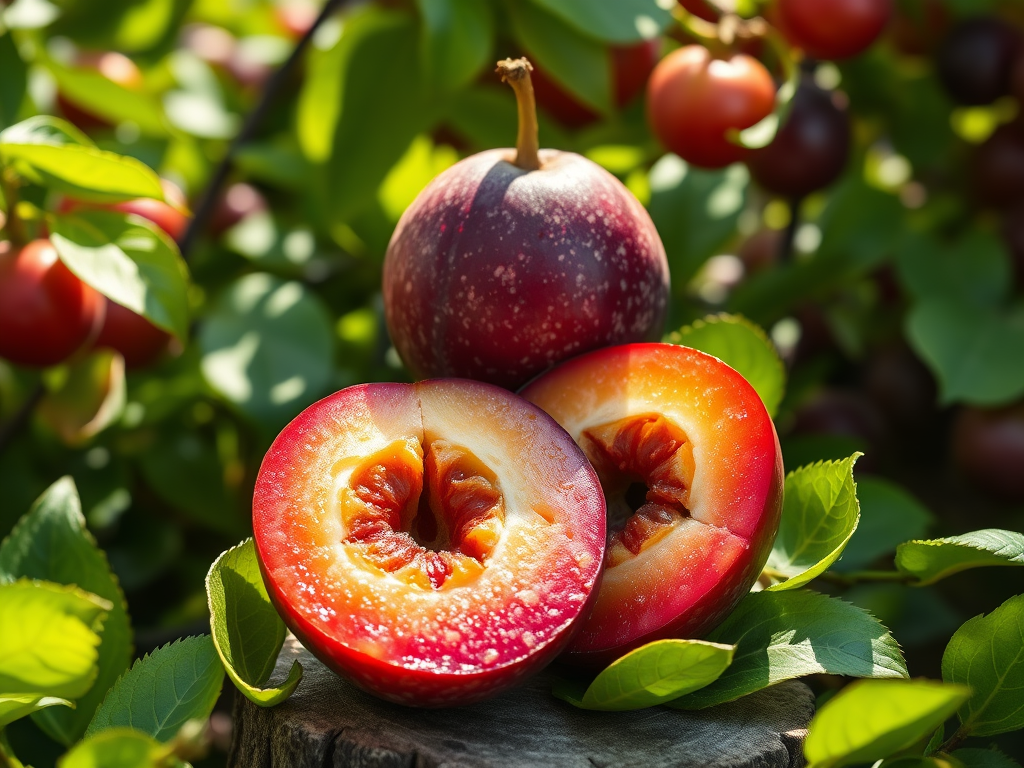
Let’s dive into the fruity side of the “Dinosaur Egg”. While the Dinosaur Egg
One of the most popular varieties is the Dapple Dandy pluot, nicknamed the Dinosaur Egg because of its speckled, mottled skin that resembles a dinosaur egg. It has a sweet, juicy interior with a flavor that blends the tartness of plums and the smoothness of apricots. These fruits are typically available in summer and are a hit at farmers’ markets and specialty grocers.
“Dinosaur Egg” isn’t just a treat for the eyes and taste buds — it’s a surprisingly nutritious snack, too. Here’s what makes it a standout:
Nutritional Highlights
- Low in calories: Great for guilt-free snacking — most pluots clock in at around 70–90 calories per fruit.
- Rich in vitamins: Especially vitamin C, which supports immune health and skin vitality, and vitamin A, important for vision and cell growth.
- High in antioxidants: Thanks to its plum heritage, it contains polyphenols that help combat oxidative stress.
- Good source of fiber: Helps with digestion and can support heart health.
- Heart-friendly: Low in sodium and high in potassium, which supports healthy blood pressure
- Hydrating: With a high water content, it’s a refreshing way to stay hydrated in the summer heat.
It’s also naturally sweet, so it can satisfy sugar cravings without the crash. Whether you eat it fresh, toss it into a salad, or roast it with a drizzle of honey, it’s a fruit that blends indulgence with wellness.
Including fruits in your daily diet is like giving your body a natural multivitamin — but tastier and juicier.
1. Nutrient Powerhouses
Fruits are rich in essential vitamins (like C, A, and K), minerals (like potassium and magnesium), and antioxidants that support everything from immune function to skin health.
2. Digestive Support
Thanks to their high fiber content, fruits help regulate digestion, prevent constipation, and support a healthy gut microbiome.
3. Heart Health
Many fruits — especially berries, apples, and citrus — are linked to lower blood pressure, reduced cholesterol, and a decreased risk of heart disease due to their fiber and polyphenol content.
4. Weight Management
Fruits are naturally low in calories and high in water and fiber, which helps you feel full and satisfied without overdoing it on calories.
5. Blood Sugar Control
Despite their natural sugars, fruits have a low glycemic index and are packed with fiber, which helps regulate blood sugar levels, especially when eaten whole.
6. Disease Prevention
Regular fruit consumption is associated with a lower risk of chronic diseases like type 2 diabetes, certain cancers, and even cognitive decline.
7. Skin and Hair Benefits
The vitamins and antioxidants in fruits like mangoes, oranges, and berries can promote radiant skin and healthy hair from the inside out.
So while the cactus might look like it belongs in a Jurassic terrarium, the real “dinosaur egg” you can bite into is this luscious stone fruit.
Dinosaur Egg is widely available in the United States, especially during the summer months:
Fresh fruit: Sold at farmers markets, specialty grocers, and some larger supermarkets (like Whole Foods or Sprouts) from late July through August. Look for its signature speckled skin and juicy interior.
Fruit trees: If you’re into growing your own, nurseries like Dave Wilson Nursery, Ison’s Nursery, and Raintree Nursery offer Dapple Dandy pluot trees for home orchards. These trees thrive in USDA zones 5–10 and need a compatible pollinator like a Santa Rosa plum.
Online produce boxes: Some seasonal fruit delivery services include plums in their summer assortments — a great option if you want them shipped straight to your door.
Dapple Dandy pluot is generally a delight. There are a few potential drawbacks worth noting, especially if you’re thinking of growing or consuming them regularly:
For Consumers:
- Short seasonal window: These pluots are typically only available fresh in late summer, so they’re a bit of a limited-time treat.
- High natural sugar: While healthier than processed sweets, they’re still high in natural sugars — something to watch if you’re managing blood sugar levels.
- Allergy potential: Like other stone fruits, they can trigger reactions in people with sensitivities to plums, apricots, or birch pollen (oral allergy syndrome).
For Growers:
- Pollination challenges: Dapple Dandy trees need a compatible pollinator (like a Santa Rosa plum or another pluot) to bear fruit. Without one, you might end up with a beautiful tree and zero harvest.
- Climate sensitivity: They thrive in warm, sunny climates. In cooler or overly wet regions, fruit set and flavor can suffer.
- Pest and disease risks: Like most stone fruits, they can be susceptible to aphids, brown rot, and leaf curl if not properly managed.
That said, most of these issues are manageable with a little planning.
According to Dr. Nandi, Pluots are a hybrid between different Prunus species. They are also called interspecific plums. They were first “created” by Floyd Zaiger, who spent years experimenting with the two fruits before finally settling on this hybrid. The very first pluot was sold in 1989. Pluots have a plum’s sweet flavor and texture, but their exterior has the fuzzy, soft feeling of an apricot.
Little-known properties
The Dapple Dandy pluot has a few lesser-known quirks and qualities that make it even more intriguing beyond its sweet flavor and dino-spotted skin:
1. Flavor Evolution Post-Harvest
Unlike many fruits, Dapple Dandy pluots can continue to develop flavor after picking. If harvested slightly underripe, they’ll sweeten and soften over a few days at room temperature — a handy trick for extending their enjoyment.
2. Chill Hour Flexibility
They’re surprisingly cold-hardy for a pluot, needing only about 300–400 chill hours. That makes them more adaptable to cooler climates than many other stone fruit hybrids.
3. Taste-Test Champion
In multiple nursery and grower trials, Dapple Dandy has ranked as a top-tier flavor winner, often beating out more famous varieties like Flavor King or Flavor Supreme. Its balance of tart skin and honey-sweet flesh gives it a complex, almost candy-like profile.
4. Pollinator Powerhouse
It’s not just a fruit bearer — it’s also a strong pollinizer for other pluot varieties. If you’re building a home orchard, this one pulls double duty.
5. Biennial Bearing Tendency
If not thinned properly, the tree can overproduce one year and underproduce the next — a phenomenon called biennial bearing. Thinning the fruit early helps maintain consistent yields
Delicious Ways to Incorporate Dapple Dandy Pluots
1. Morning Boost Slice them into your yogurt or oatmeal for a vibrant splash of vitamin C and antioxidants to kick off your day.
2. Garden-to-Glass: Whip up a pluot smoothie with ginger and citrus—great for digestion and immune support.
3. Elevated Snacking Pair slices with aged cheese and almonds. Their sweet-tart balance complements rich flavors perfectly.
4. Salad Star Toss them into an arugula salad with walnuts and goat cheese—adds visual pop and a tangy sweetness that’s full of fiber.
5. Grilled and Glazed Lightly char halved pluots on the grill, then drizzle with balsamic reduction. The heat caramelizes the sugars and deepens the flavor.
6. Preserved Power: Turn them into jams or chutneys. That preserves not only their flavor but their nutrient content too, especially those helpful antioxidants.
Here are some standout ideas that lean into your creative and entrepreneurial flair.
🌿 1. Pluot and Fennel Slaw with Toasted Caraway
Thin-sliced pluots + shaved fennel + Greek yogurt dressing + caraway seeds = a crunchy, tangy summer slaw with unexpected zing. It pairs beautifully with grilled fish or falafel wraps.
🍕 2. Pluot and Brie Flatbread with Rosemary Honey
Layer sliced pluots over crispy flatbread with melted Brie. Drizzle with a rosemary-infused honey just before serving. Elegant enough for entertaining, simple enough for dinner.
🧊 3. Smoky Pluot Salsa
Dice pluots and mix with charred tomatoes, jalapeños, lime juice, and cilantro. This smoky-sweet salsa is a fresh twist for tacos, grilled shrimp, or even spooned over roasted sweet potatoes.
🌶️ 4. Spiced Pluot Chutney
Simmer chopped pluots with onions, ginger, mustard seeds, and cider vinegar. Jar it up and sell or gift as a gourmet condiment—it’s amazing with cheese boards or savory pastries.
🍰 5. Pluot, Thyme & Mascarpone Galette
Wrap sweet pluots and a touch of fresh thyme in rustic pastry with a mascarpone base. The herbal note elevates the fruit and makes this feel super refined.
🫐 6. Pickled Pluots with Star Anise
Slice pluots and quick-pickle them with rice vinegar, sugar, and star anise. Serve alongside roasted meats, or package in jars for a beautiful artisan product.
More Culinary uses:
Pluots may be a modern hybrid, but they’ve found their way into globally inspired dishes that blend tradition with innovation. Here are some international-style creations where pluots shine:
Pluot Chamoy Salad (Mexico)
Toss sliced pluots with jicama, cucumber, lime juice, Tajín, and a drizzle of chamoy. It’s a sweet-spicy-sour street snack with serious summer vibes.
Pluot Tarte Tatin (France)
A twist on the classic French upside-down tart—caramelize pluots in butter and sugar, then bake with puff pastry. Serve warm with crème fraîche or vanilla bean ice cream.
Thai-Inspired Pluot Som Tum
Swap green papaya for firm pluots in this riff on Thai som tum. Shred them and toss with fish sauce, lime, chili, and roasted peanuts for a tangy, crunchy salad.
Spiced Pluot Chutney (India)
Simmer chopped pluots with mustard seeds, ginger, turmeric, and vinegar. This chutney pairs beautifully with samosas, grilled paneer, or even as a spread on naan.
Pluot Caprese Skewers (Italy)
Alternate pluot wedges with fresh mozzarella and basil on skewers. Drizzle with balsamic glaze for a colorful antipasto that’s both sweet and savory.
Pluot Tagine with Lamb (Morocco)
Add halved pluots to a slow-cooked lamb tagine with cinnamon, cumin, and preserved lemon. The fruit melts into the sauce, adding depth and a gentle sweetness.
Pluots Might Not Be Ideal
Allergy Concerns They’re part of the stone fruit family, so if someone is allergic to plums, apricots, cherries, or peaches, they could react to pluots too. This includes oral allergy syndrome (linked to birch pollen), which can cause itching in the mouth or throat.
Blood Sugar Sensitivity. While healthier than candy, pluots are still naturally high in sugar. People with diabetes or insulin resistance might need to monitor portions or pair them with a source of protein or fat (like nuts or cheese) to slow sugar absorption.
Digestive Sensitivities Because of their fiber content, eating a bunch at once—especially for folks not used to high-fiber foods—might cause bloating or gas. Moderation helps.
Infant Introduction For babies under 12 months, raw stone fruits might be tricky to digest or pose a choking hazard unless properly prepared (peeled, mashed, or cooked).
That said, for most people, they’re a fantastic summer treat, with benefits far beyond their sweet taste.
 EJADA
EJADA 
Leave a comment