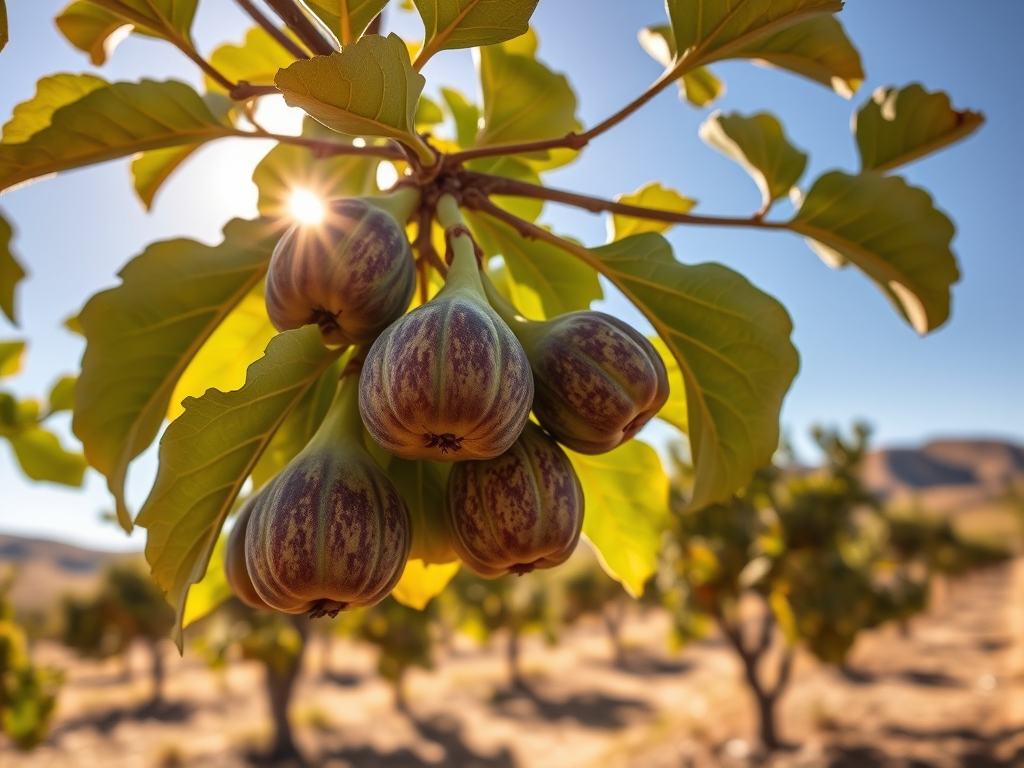
Desert King was first spotted in 1930 as a chance seedling near Madera, California. Local growers recognized its unusually heavy breba (early-season) crop and its tolerance for the Central Valley’s heat swings, so the tree was propagated and circulated under the working name “Madera Seedling” before nurseries rebranded it as Desert King a few years later.
Fun side note you might enjoy on your alphabetical fruit trek: because it’s breba figs form on last year’s wood, Desert King became the darling of Pacific Northwest gardeners who struggle to ripen a main crop, giving it a tiny cult following from California all the way up to British Columbia.
1. Digestive harmony
• Three grams of soluble/insoluble fiber per medium fig keeps stools soft, feeds the microbiome, and helps bind bile acids so less LDL-cholesterol is reabsorbed. • Traditional Persian medicine macerated figs in warm water as a gentle laxative—a practice modern gastroenterologists still recommend for functional constipation.
2. Cardiometabolic protective punch
• Potassium > sodium ratio (>230 mg: 1 mg) supports vasodilation and helps blunt salt-induced hypertension. • Soluble fiber (pectin) traps bile, nudging total- and LDL-cholesterol down, while fig polyphenols inhibit LDL oxidation—atherosclerosis’s spark plug. • Magnesium aids insulin receptor signaling; small observational studies tie habitual fig intake to lower HOMA-IR scores among Mediterranean cohorts (data largely on Smyrna/Brown Turkey cultivars, but the phytochemical profiles are comparable).
3. Antioxidant & anti-inflammatory shield
Desert King’s vivid crimson pulp signals anthocyanins (pelargonidin derivatives) that scavenge free radicals. In vitro work on F. carica shows down-regulation of COX-2 and iNOS pathways—biochemical fire extinguishers behind joint pain, UV damage, even neuro-inflammation.
4. Bone & dental advantages
• Calcium + vitamin K combo supports osteocalcin activation—the protein that locks calcium into the bone lattice. • Flavonoids in the skin exhibit antibacterial action against Streptococcus mutans, the cavity culprit, giving figs a cameo in folk tooth-ache pastes of South India.
5. Respiratory and reproductive folklore (with tentative modern backing)
Ayurvedic texts classify figs as an “expectorant fruit.” The high mucilage content soothes inflamed mucosa, while the vitamin A pool aids in epithelial repair, which is particularly useful during seasonal bronchitis. Meanwhile, zinc, magnesium, and B vitamins underpin hormone synthesis; soaked figs have long been recommended as a libido tonic in Unani medicine. Modern placebo-controlled data are thin, but nutrient logic checks out.
6. Weight-management ally
Fiber + sorbitol increase satiety signals (PYY, GLP-1), curbing snack relapse. A single fresh fig clocks 40–50 kcal, making it a smart sweet fix versus a 200 kcal pastry
Desert King Fig – the health upside at a glance
| Nutrient (per 100 g fresh) | Amount | Why it matters |
|---|---|---|
| Calories | 74 kcal | Low-energy sweet hit |
| Carbo-hydrates | 19.2 g (16.3 g natural sugars) | Quick fuel plus phytonutrients |
| Dietary fiber | 3 g | Gut motility, cholesterol binding |
| Potassium | 232 mg | Blood-pressure modulation, nerve signals |
| Calcium | 35 mg | Bone matrix, muscle contraction |
| Magnesium | 17 mg | Glucose control, mood, sleep |
| Vitamin A | 7 µg + carotenoids | Vision, immunity, skin repair |
| Folate (B-9) | 6 µg | Red-blood-cell & DNA synthesis |
| Vitamin K | 4.7 µg | Blood clotting, bone protein activation |
| Polyphenols | (not quantified) | Antioxidant, anti-inflammatory |
How to fold Desert King into a real-world routine
- Breakfast “Pac-NW PB&J” – toast + almond butter + sliced fresh Desert King + sea salt flake. (Zero added sugar.)
- Antioxidant tapenade – blitz Desert King pulp, kalamata olives, cacao nibs, and orange zest; smear on crostini with chèvre.
- Crimson fruit leather – purée breba crop figs, reduce 10 min, dehydrate at 135°F. Keeps color, travels light.
- Gut-soothing infusion – halve 3 dried figs, steep overnight in 8 oz warm water. Drink liquid, eat figs the next morning.
Precautions & pairings
• Ficin latex in unripe skin can irritate lips—wear gloves if harvesting. • Warfarin users: Vitamin K is modest (4.7 µg/100 g) but still worth tracking for INR consistency. • IBS-FODMAP: fructose + polyol load may trigger bloating in sensitive guts—try a half-fig portion first.
Desert King Fig – smart precautions before you binge, brew, or harvest: searched on Copilot
| Risk zone | What could go wrong? | Practical fix |
|---|---|---|
| Unripe fruit latex | Cutting or picking too early releases a milky sap that’s bitter on the palate and can burn lips/skin. The sap is a clear sign the fig isn’t ready anyway. | Only harvest when the neck droops and no white latex bleeds from the stem – the “soft feel, zero sap” test highlighted by Northwest growers. Wear nitrile gloves if you’ll inevitably handle firm fruit. |
| Phototoxic leaves & sap | On some skin types, fig‐leaf furanocoumarins + sunlight = blistery phytophotodermatitis (think wild parsnip burns). | Long sleeves + gloves when pruning; shower off leaf juice promptly. Keep kids out of leaf forts on sunny days. |
| Mouth & throat allergies | Latex proteins in fig flesh cross-react with birch-pollen and rubber allergies. Typical signs: oral itch, tingling lips, hives. | Trial a single bite the first time; have antihistamines on hand if you’re pollen-sensitive. Peel the skin (most allergenic proteins sit just beneath). |
| IBS-FODMAP distress | Start with half a fruit. Soak dried figs overnight and discard the soaking water to leach out some FODMAPs. | Start with half a fruit. Soak dried figs overnight and discard the soak water to leach out some FODMAPs. |
| Vitamin K & anticoagulants | 100 g fresh Desert King delivers ~5 µg vitamin K—low, but consistency matters for warfarin users. | Note each fig in your food log; keep intake steady rather than sporadic. |
| Kidney-stone predisposition | Like most figs, Desert King is moderately high in oxalate, which can feed calcium-oxalate stones. | Pair with calcium-rich foods (yogurt, chèvre) to trap oxalate in the gut; stay hydrated. |
| Dental sugar load | The breba crop’s 16–18 % natural sugar clings to enamel. | Rinse with water or nibble a cheese cube after fresh or dried figs. |
| Pesticide residue (home-grown) | The lush leaf canopy tempts scale insects; some gardeners spray horticultural oil/copper late season. | Wait the full re-entry interval, then wash fruit under running water. Better: deploy ladybugs and avoid sprays. |
Quick dose guide
• Fresh: 1–2 large figs (≈ 80–100 g) = safe, GI-friendly sweet hit for most adults. • Dried: concentrate multiplies sugars & oxalates fourfold—cap at 30 g unless you’re endurance-fueling. • Leaf tea: stay under 2 cups/day until you rule out phototoxic/photoallergic response.
Harvest hygiene checklist
- Morning pick → cooler pulp, less bruising.
- Glove up, snap the stem, tilt the fig mouth-down so any residual sap drains away from the skin.
- Quick-chill to 40°F within an hour; microbes love that sugary surface.
- Eat or dehydrate within 48 h; flavor nosedives past day 2.
Who should skip or limit Desert King?
• Active stone formers with high urinary oxalate until metabolically stable. • Severe fructose malabsorbers unless under dietitian supervision.
• People on latex-fruit syndrome watch lists who’ve reacted to jackfruit, banana, or papaya. •
Anyone on dabigatran/rivaroxaban → no big issue (they’re not vitamin-K sensitive), but warfarin users mind the K diary.
summary
Desert King Fig in a nutshell
Identity & discovery • Cultivar of common fig (Ficus carica). • Chance seedling found ~1930 near Madera, California and first circulated as “Madera Seedling,” later renamed “King Fig” and finally “Desert King.” • No verifiable record of the same genotype in use before the 1930s; ties to the Italian variety Petrelli are genetic but undocumented in print.
Nutritional plus-points (per 100 g fresh) • ~74 kcal, 3 g fiber, 230 mg potassium, modest calcium & magnesium. • Ruby pulp rich in anthocyanins and other polyphenols.
Evidence-backed health perks • Gentle laxative, microbiome-friendly fiber. • Potassium-fiber combo supports blood-pressure and cholesterol control. • Antioxidant anthocyanins blunt oxidative and inflammatory pathways. • Small amounts of vitamin K aid bone metabolism while remaining warfarin-friendly (≈5 µg/100 g).
Hidden or quirky benefits • Breba crop ripens early without fig-wasp pollination—prized in cool-summer climates. • Skin resists splitting; green exterior camouflages fruit from birds. • Pulp keeps lipstick-red color after drying—great for vivid fruit leather. • Fig leaves, once blanched or dried, lend a coconut-pandan aroma to rice and fish.
Precautions & safe-handling tips • Latex in green fruit and leaves contains furanocoumarins (psoralen, bergapten); UV exposure can cause blistering phytophotodermatitis. Wear gloves, rinse sap quickly, and stay out of direct sun till skin is clean. • Cross-reacts with birch-pollen and latex allergies—test a small bite first. • High fructose + sorbitol may flare IBS; start with half a fig. • Moderate oxalate: Pair with calcium foods if you form stones. • Vitamin K is low, but keep intake consistent if on warfarin.
Italian fig lore (species-wide, not Desert King-specific) • Romans dried figs for military rations and sports fuel. • Calabria and Puglia perfected almond-stuffed dried figs (crocette) as dowry sweets. • Sicily’s Christmas cuccidati cookies center on fig filling. • Fig leaves and latex double as vegetarian rennet for pecorino. • Boiled-down fig syrup (mosto cotto) served as a pre-industrial sweetener.
Earliest documented use timeline • 1932: first experimental tasting by grower Sisto Pedrini. • 1934–35: marketed publicly as “King Fig.” • 1940s: adopted across the Pacific Northwest for its reliable breba crop. No earlier written evidence exists.
 EJADA
EJADA 
Leave a comment