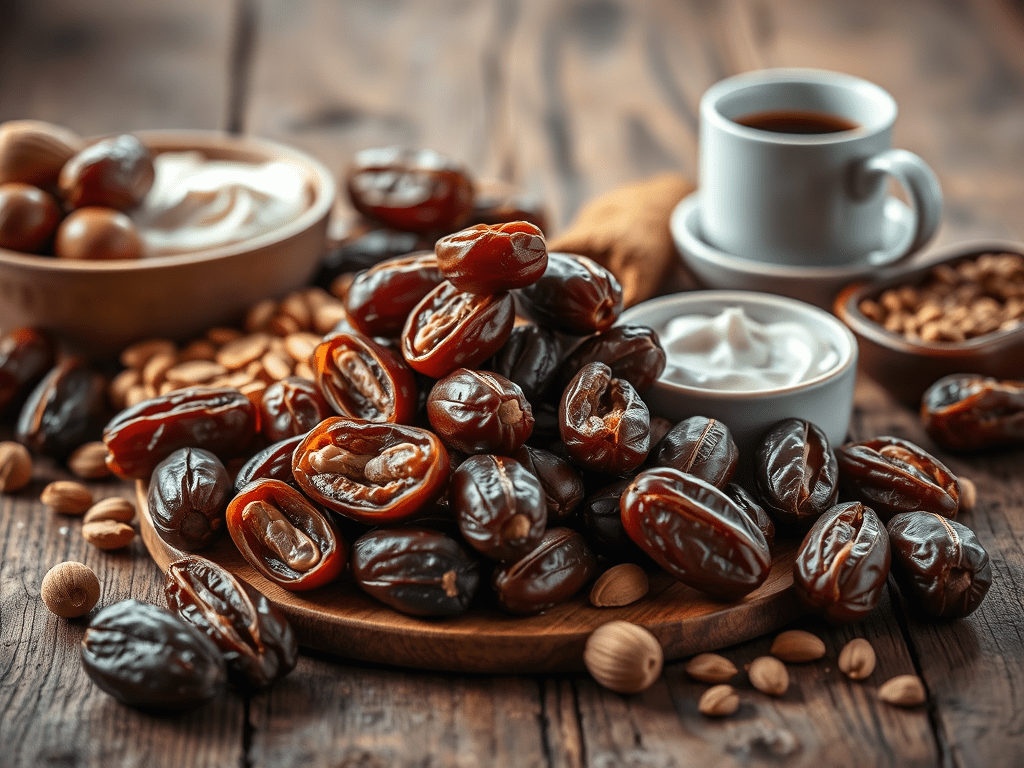
Dates, how much do you know?
Dates have an impressively ancient pedigree—fossil evidence suggests they’ve existed for around 50 million years. As for cultivation, the earliest known records point to Egypt around 2500 BCE, where date palms were grown and revered. However, their true origin is a bit of a mystery. Some scholars believe dates were first domesticated in the Fertile Crescent, near Mesopotamia and Egypt, while others trace their roots to the Persian Gulf or western India.
Dates have been a cornerstone of Middle Eastern life for thousands of years—nutritionally, culturally, and even spiritually. In daily life, they were (and still are) a vital source of energy, especially in arid regions where other fruits were scarce.
People ate them fresh or dried, ground them into pastes, or boiled them into syrups. They were often paired with milk or yogurt, stuffed with nuts, or used to sweeten stews and baked goods long before refined sugar existed.
Culturally, dates hold deep significance. In Islamic tradition, they’re used to break the fast during Ramadan, following the example of the Prophet Muhammad. This ritual isn’t just symbolic—it’s practical too, since dates provide a quick hit of natural sugars and nutrients after a day of fasting.
Medicinally, dates were used to aid digestion, boost energy, and even support childbirth recovery. Some ancient texts describe them being mixed with herbs or oils for healing tonics.
And let’s not forget their role in hospitality: offering dates and coffee to guests is still a cherished custom across the region. It’s a small gesture that speaks volumes about warmth and generosity.
In North America, Dates have carved out a niche that’s both traditional and evolving. While they’re not as deeply embedded in the culture as in the Middle East, their popularity has grown steadily, especially in health-conscious and culinary circles.
Culinary Use: Dates are often used as natural sweeteners in smoothies, energy bars, baked goods, and sauces. Medjool dates, with their rich caramel-like flavor, are especially prized. You’ll find them stuffed with nuts or cheese, wrapped in bacon, or blended into date syrups and pastes for refined sugar alternatives.
Health & Wellness: With rising interest in whole foods and plant-based diets, dates are celebrated for their fiber, potassium, and antioxidant content. They’re a go-to snack for athletes and wellness enthusiasts looking for quick, natural energy.
Cultural & Seasonal Appeal: Dates also make appearances during religious observances like Ramadan and Christmas, often featured in festive dishes or gift boxes. In some communities, especially among Middle Eastern and North African diasporas, traditional uses and rituals around dates are lovingly preserved.
Eating Dates regularly can be a delicious way to support your health. These little powerhouses are packed with nutrients and offer a wide range of benefits:
1. Nutrient-Rich: Dates are loaded with potassium, magnesium, copper, vitamin B6, and fiber. Just a couple of Medjool dates can give you a solid boost of energy and essential minerals.
2. Digestive Health: Thanks to their high fiber content, dates help keep things moving smoothly in your digestive system. They can ease constipation and support gut health.
3. Natural Sweetness with a Low Glycemic Index: Despite being sweet, dates have a low glycemic index, meaning they don’t spike your blood sugar as quickly as refined sugars do.
4. Antioxidant & Anti-Inflammatory Power: Dates are rich in antioxidants like flavonoids and phenolic acids, which help fight inflammation and protect your cells from damage.
5. Heart & Brain Support: Their potassium and magnesium content supports heart health, while vitamin B6 and antioxidants may enhance brain function and reduce the risk of neurodegenerative diseases.
6. Bone Strength: Dates contain minerals like calcium, phosphorus, and magnesium, which are essential for maintaining strong bones.
7. Natural Labor Aid: In some studies, consuming dates in the final weeks of pregnancy has been linked to easier labor and delivery.
Of course, moderation is key—they’re calorie-dense and naturally high in sugar. But as part of a balanced diet, they’re a sweet way to nourish your body.
Read More @ Verywellhealth.com/dates-benefits Date palm fruits or dates (Phoenix dactylifera L.) are part of the palm family Arecaceae or Palmae. They grow in clusters like grapes and range in color from bright red to bright yellow, depending on the variety. Common date varieties include Medjool and Deglet Noor dates.
.healthline.com/nutrition, Dates are the fruit of the date palm tree, which is grown in many tropical regions of the world. Dates have become quite popular in recent years.
Almost all dates sold in Western countries are dried. You can tell whether or not dates are dried based on their appearance. Wrinkled skin indicates they are dry, whereas smooth skin indicates freshness.
https://www.webmd.com From trail mix to pastry centerpieces, dried dates have been a staple ingredient for thousands of years. Believed by some historians to be the oldest cultivated fruit, dates played an important role in several ancient empires and religions.
Regardless of the exact birthplace, dates have been a staple across the Middle East and North Africa for millennia, woven into religious traditions, cultural rituals, and daily diets
Caution: While dates are incredibly nutritious, eating them daily, especially in large amounts, can come with a few things to be cautious about.
1. Blood Sugar Spikes: Despite their low glycemic index, dates are still high in natural sugars like fructose and glucose. Overconsumption can lead to elevated blood sugar levels, particularly for people with diabetes or insulin resistance.
2. Weight Gain: Dates are calorie-dense. Just a handful can pack over 300 calories, so eating too many can contribute to unwanted weight gain if not balanced with physical activity.
3. Digestive Discomfort: Their high fiber content is great in moderation, but too many dates can cause bloating, gas, or even constipation, especially if your body isn’t used to that much fiber.
4. Dental Health: The sticky sugars in dates can cling to teeth, increasing the risk of cavities and tooth decay if oral hygiene isn’t maintained.
5. Allergic Reactions: Though rare, some people may experience allergic responses to dates, especially if they’re sensitive to sulfites used in preserving dried fruits.
6. Medication Interactions: Dates are rich in potassium, which is usually a good thing, but if you’re on potassium-sparing medications or have kidney issues, it’s worth checking with a healthcare provider.
So, moderation is key. A few dates a day—especially when paired with protein or healthy fats—can be a nourishing addition to your routine. Want help crafting a balanced snack or remedy using dates that fits your lifestyle?
While dates are generally safe to pair with many fruits, there are a few combinations that might not sit well with everyone, especially if consumed frequently or in large amounts:
1. Dates + Citrus Fruits (like oranges or grapefruits): This combo can sometimes cause digestive discomfort due to the clash between the high sugar content of dates and the acidity of citrus. It may lead to bloating or acid reflux in sensitive individuals.
2. Dates + Watermelon or Other Melons: Melons digest very quickly and are best eaten alone. When combined with slower-digesting fruits like dates, it can lead to fermentation in the gut, causing gas or bloating.
3. Dates + Bananas (in excess): Both are high in sugar and potassium. While fine in moderation, overdoing this combo might spike blood sugar or overwhelm the digestive system, especially for those with insulin sensitivity.
4. Dates + High-Fiber Fruits (like apples or pears): This pairing can be a fiber overload for some people, potentially leading to bloating or constipation if your gut isn’t used to it.
With that being said, everyone’s digestive system is unique. “One person’s superfruit can be another’s stomach ache,” as no nutritionist ever said, but probably should have.
Listening to your body and easing into new combinations is smart, especially with nutrient-dense fruits like dates.
 EJADA
EJADA 
Leave a comment