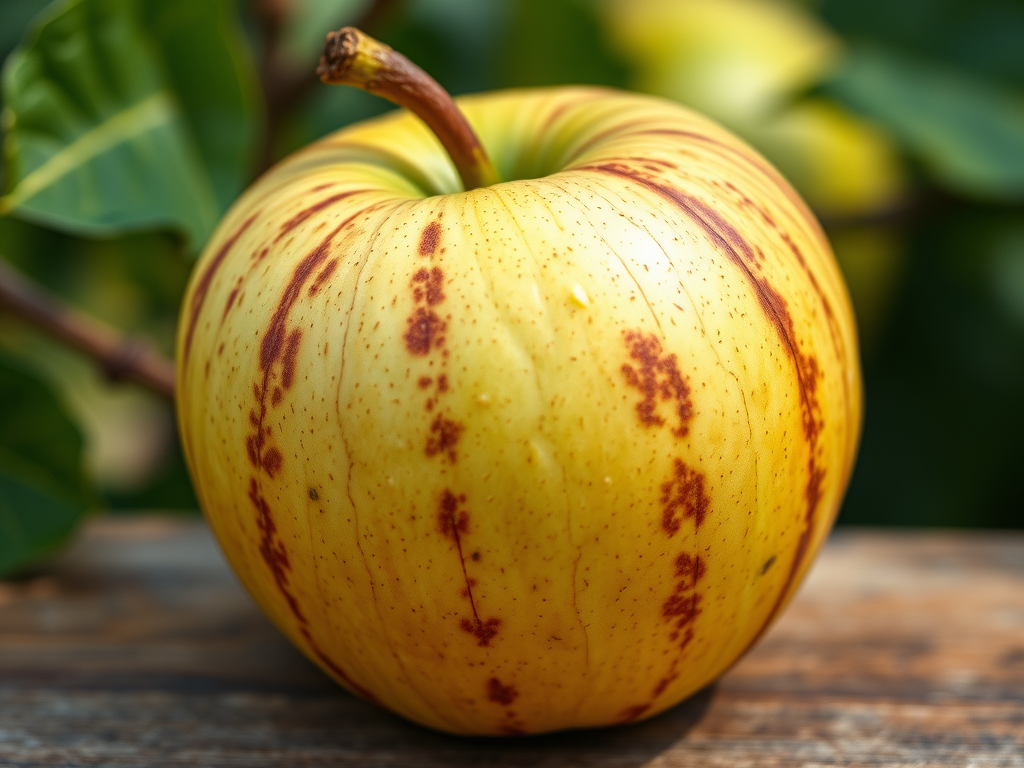
The Dalice apple is a lesser-known variety with a quiet charm. It was developed in the 1930s by A.C. Nash at Scutes Farm in Hastings, Sussex (UK), as an open-pollinated seedling of the famous Cox’s Orange Pippin.
The Cox’s Orange Pippin apple, first cultivated around 1825 by Richard Cox in England, is celebrated more for its exquisite flavor than for any formal medicinal use. Unlike traditional medicinal apples like crabapples or cider-specific varieties used in tonics, Cox’s wasn’t historically documented as a healing fruit in herbal medicine.
That said, apples in general—including Cox’s—have long been associated with health benefits. In the 19th century, when Cox’s Orange Pippin rose to popularity, apples were often recommended for digestion, hydration, and even as a gentle laxative. So while it may not have had a starring role in apothecaries, it likely contributed to the “an apple a day keeps the doctor away” ethos that emerged during that era.
Here’s what makes it stand out:
- Appearance: Medium-sized, round-conic shape with a greenish-yellow base, overlaid with a brownish wash and darker stripes. It’s often russeted, giving it a rustic look.
- Texture & Flavor: The flesh is white, coarse-grained, soft, and a bit dry. It’s sweet but considered somewhat bland—more of a gentle dessert apple than a flavor bomb.
- Harvest & Growth: It’s ready for picking in the early part of the fifth harvest period (typically late autumn), and the tree is moderately vigorous with a spreading habit. It’s diploid and self-sterile, so it needs a pollination partner.
It’s not a supermarket star like Honeycrisp or Fuji, but it has that old-world orchard appeal.
The Dalice apple can be considered healthy; like most apples, it offers a modest but meaningful nutritional profile. While specific lab analyses of the Dalice variety are limited, we can infer its general health benefits based on its lineage and characteristics.
Since it descends from Cox’s Orange Pippin, it likely shares some of the same traits:
- Dietary fiber, especially in the skin, supports digestion and helps regulate blood sugar
- Vitamin C, an antioxidant that supports immune function and skin health
- Polyphenols, plant compounds that may reduce inflammation and support heart health
That said, the Dalice apple is described as soft, slightly dry, and mildly sweet, so it might not be as juicy or nutrient-dense as some modern varieties like Honeycrisp or Fuji. Still, it’s a wholesome snack, especially when eaten with the skin on.
The Dalice Apple shares many core health benefits with other apples—like fiber, vitamin C, and polyphenols—but its unique traits give it a slightly different nutritional and culinary profile.
Here’s how it stands out:
Texture & Water Content
Dalice apples are known for being soft and slightly dry, which suggests they may have lower water content than juicier varieties like Fuji or Honeycrisp. This could mean a slightly higher concentration of sugars and fiber per bite, though the difference is modest.
Flavor & Sugar Profile
Its mild sweetness and lack of tartness suggest lower acidity, which may make it gentler on sensitive stomachs compared to tangier apples like Granny Smith. That makes it a good option for people seeking a softer, less acidic fruit.
Polyphenol Content
While detailed lab data on Dalice is scarce, its russeted skin and Cox’s Orange Pippin lineage hint at a respectable polyphenol profile, especially in the peel. These antioxidants support heart health and reduce inflammation, though likely not at the same levels as darker-skinned apples like Red Delicious.
Digestive Support
Like all apples, Dalice provides soluble fiber (pectin), which supports gut health and helps regulate blood sugar. Its softer texture may make it easier to digest for some people, especially when cooked.
In short, Dalice may not be the flashiest apple nutritionally, but it offers a gentle, heritage-style option that’s easy on the palate and still delivers the classic apple health perks.
Read more @ What-is-the-healthiest-apple
Although the saying “an apple a day keeps the doctor away” may not be medically accurate, there are still plenty of reasons to enjoy apples regularly.
Apples are among the most popular and widely consumed fruits in the world. Besides being easily accessible and boasting a shelf life of up to a year, they’re also highly nutritious.
They’re rich in fiber, vitamins, minerals, and polyphenols. Polyphenols are a group of antioxidants, molecules that fight free radicals in your body. Among their many health benefits, antioxidants may help prevent cancer, inflammation, heart disease, and weight gain.
The Dalice apple is a rare heritage variety from the 1930s in Sussex, England. It’s not commercially available in the U.S., but you might spot it through heritage orchards or specialty fruit growers. Known for its rustic look and mild, sweet flavor, it’s a gentle nod to old-world dessert apples rather than a supermarket staple.
What are good substitutes for Dalice apples?
Egremont Russet
This is probably the closest match. It shares the russeted skin, subtle sweetness, and slightly dry, crumbly texture. It’s also a heritage British variety, so it carries that same orchard nostalgia.
Ashmead’s Kernel
A bit more tangy than Dalice, but it has a complex flavor and firm texture that mellows with storage. It’s a favorite among heirloom apple lovers.
Cox’s Orange Pippin
Since Dalice is a seedling of this variety, going back to the source makes sense. It’s more aromatic and flavorful, but still has that soft, dessert-apple feel.
Golden Russet
If you’re after that dry, sweet bite with a rustic look, this American heirloom is a lovely stand-in. It’s also prized for cider, just like some of the old English varieties.
Liberty or Macoun
These are more widely available in the U.S. and offer a soft texture with balanced sweetness. They’re not russeted, but they work well in recipes or fresh eating where Dalice might be used.
In summary, all the apple varieties we talked about—Egremont Russet, Ashmead’s Kernel, Cox’s Orange Pippin, Golden Russet, Liberty, and Macoun—are available in the United States, though their availability varies by region and season.
 EJADA
EJADA 
Leave a comment