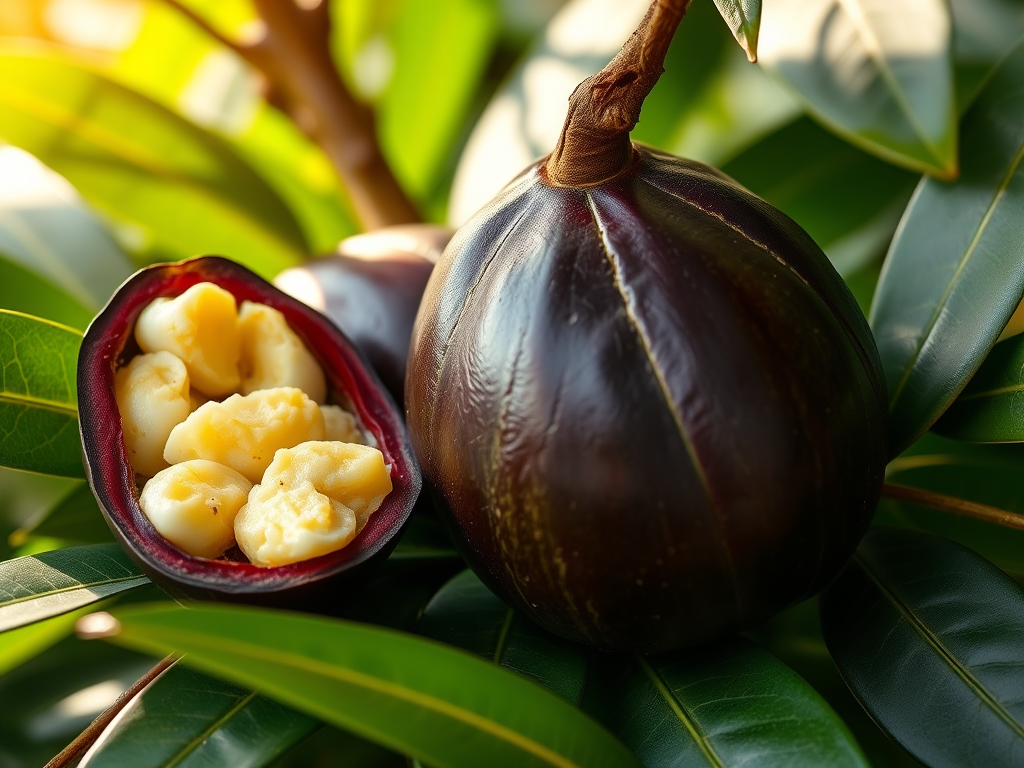
Dabai, also known as Canarium odontophyllum or the “Sarawak olive,” is a nutrient-rich fruit native to Borneo with a surprisingly impressive health profile.
Dabai, or Canarium odontophyllum, is gaining attention not only for its bold flavor and culinary versatility but also for its promising vitamin profile. Although research is still unfolding, here’s what we know about its vitamin content and how it may support health:
Vitamin E: The Antioxidant Champion
One of the most celebrated features of dabai is its high vitamin E content. This isn’t just any vitamin E—it comes largely in the form of tocotrienols and tocopherols. These compounds are potent antioxidants, combatting oxidative stress at the cellular level, supporting skin health, and contributing to cardiovascular well-being. The presence of these antioxidants is one of the reasons why dabai is often likened to the “Sarawak olive,” echoing the beneficial attributes seen in traditional olive fruits.
Vitamin C: Boosting Immunity and Collagen Synthesis
Dabai also offers vitamin C, a water-soluble nutrient known for its immune-boosting properties. Vitamin C plays a crucial role in collagen synthesis, which helps maintain skin integrity and promotes wound healing. Its antioxidant effects further complement the actions of vitamin E, creating a synergistic effect that helps protect cells from damage induced by free radicals.
Contribution to the B Vitamin Complex
Emerging studies suggest that dabai may provide a supportive range of B vitamins—including thiamine (B1), riboflavin (B2), niacin (B3), and folate (B9). These vitamins are crucial for energy metabolism, nervous system functioning, and the synthesis of DNA and red blood cells. Although specific quantitative data vary based on fruit maturity, processing methods (such as the soaking technique used to soften its tough skin), and cultivation conditions, the consistent presence of these micronutrients further enhances dabai’s nutritional appeal.
Variability and Future Research
It’s important to note that the exact vitamin composition in dabai can fluctuate with various factors, such as:
- Maturity of the Fruit: Different stages of ripeness might yield differing vitamin concentrations.
- Processing Techniques: The traditional soaking process used to soften the fruit may influence its vitamin retention.
- Agricultural Practices: Soil quality and cultivation methods could also impact nutrient synthesis in the fruit.
A peer-reviewed study published in a prominent journal discussed dabai’s overall nutritional and antioxidant properties, highlighting its potential in reducing oxidative stress and even suggesting roles in cholesterol management and the prevention of type 2 diabetes [3][4]. While the study provided a broad overview of dabai’s bioactive compounds, detailed vitamin quantification remains an active area of research.
In Summary
Dabai’s promising vitamin profile—marked by its robust vitamin E and supportive vitamin C levels along with a suite of B vitamins—underscores its potential as a natural food source that supports:
- Skin Health: Through antioxidants that combat cellular aging.
- Immune Function: Via vitamin C’s role in immune defense and collagen formation.
- Energy Metabolism: With contributions from B vitamins, essential for energy production.
Integrating dabai into one’s diet might, therefore, serve as a flavorful way to harness natural vitamins known throughout dietary traditions, especially for those interested in holistic nutrition and natural strategies to counteract oxidative stress.
Dabai is a versatile, nutrient-rich fruit that can elevate both savory and sweet dishes. Here are several creative ways you can include it in your diet:
- Soaked Snack or Appetizer: Traditionally, dabai is soaked in warm water (around 60°C) for 10 to 15 minutes, which softens its flesh and transforms its texture. Once softened, enjoy it on its own with a sprinkle of salt, a drizzle of soy sauce, or even a dusting of sugar. This simple preparation lets you appreciate its natural creaminess and flavor.
- Stir-Fries and Fried Rice: Dice the pre-soaked Dabai to incorporate into stir-fries or fried rice. Its soft, creamy consistency pairs well with vegetables, herbs, and proteins, adding a unique, nutty twist. The fruit’s subtle tang makes it an exciting, unexpected ingredient in traditional Asian-inspired dishes.
- Salads and Dressings: Thinly sliced Dabai can serve as an inventive topping to brighten up your salads. For an even more creative approach, blend dabai with a splash of citrus, olive oil, and herbs to develop a rich, creamy dressing or dip that marries well with both leafy greens and mixed veggie salads.
- Desserts and Frozen Treats: Dabai’s rich texture lends itself beautifully to sweet preparations. Consider blending it into a smooth purée for ice cream or sorbet. Its natural balance of creaminess and mild sweetness can add an exotic twist to your dessert repertoire, making for an indulgent yet nutritious treat.
- Fusion Dishes: Experiment further by incorporating dabai into recipes like pizza toppings or even in a light, fruity chutney. Its unique flavor profile can offer a delightful counterbalance to spicier or more pungent ingredients, opening up creative avenues in fusion cuisine.
Each of these methods leverages dabai’s nutritional benefits, such as its antioxidant properties, while allowing for a range of textures and flavors across meals. Its flexibility makes dabai a great addition whether you’re planning a healthy snack, adding depth to a main course, or innovating in dessert recipes.
READ MORE: Dabai To prepare for eating, dabai is steeped in warm water (about 60°C) for 10-15 minutes. This softens the flesh, giving it a smooth avocado-like texture. Dabao can be seasoned with salt, sugar, or soy sauce to enhance the taste.
Dabai is relatively free from pests and diseases, which scientists attribute to its geographical isolation. Therefore, it can easily be produced and marketed as an organic product that commands a higher premium.
Explore More: Exotic-Fruits-Buah-Dabai
In Sarawakian Hokkien Chinese, it is called Or Kanna.
Many tend to get confused by the appearance of Dabai. Some call it a type of vegetation, and some will look at it as a fruit and wonder if it is edible. Some even think that it is a type of avocado. Then again, it is none of the above.
Buah Dabai is a type of exotic fruit that grows in certain parts of the region and consists of 75 types of species.
The fruit tree itself is so large and grows on thick green trees up to 40-50 meters high, with alternate, pinnate leaves.
Its furry leaves are thin, and the twigs are covered with golden brown.
When enjoying dabai, a few precautions can help you make the most of its nutritional benefits while avoiding any potential issues:
- Proper Preparation Is Key: Raw dabai is notably hard and astringent, making it unpalatable and potentially harsh on your digestive system. Traditional preparation involves soaking the fruit in moderately warm water (around 60°C) for 10–15 minutes. This process softens the flesh, reduces bitterness, and brings out its subtle, nutty flavor. Be careful not to overheat the fruit during soaking, as excessive temperature can negatively affect texture and nutrient content.
- Mind the Hard Seed: Dabai comes with an elongated, hard seed encased in a woody shell. If you plan to consume the seed, ensure you crack it carefully to avoid any accidental biting into a tough, unyielding piece, which could be a choking hazard. Although the seed is edible and offers additional nutritional benefits, proper handling is essential.
- Start Small, Especially If New to Dabai: Since dabai is an uncommon fruit outside its native regions, it’s wise to introduce it gradually into your diet. This cautious approach helps you gauge how your body responds, particularly if you have a sensitive digestive system or any known food sensitivities.
- Sourcing and Storage: Opt for reputable sources to ensure the fruit has been handled and stored properly. Like many tropical fruits, dabai is prone to over-ripening or spoilage if not stored in a cool, dry place, so proper storage is another important precaution.
- Dietary Considerations: Although dabai is rich in healthy monounsaturated fats and essential vitamins, moderation is still important, especially if you’re monitoring your fat intake or following a specific dietary regimen. As with any ingredient, balance is key.
These guidelines ensure that you enjoy dabai safely while maximizing its nutritional benefits.
Dabai is quite rare in the United States and not commonly found in mainstream grocery stores or even most specialty markets. It’s native to Borneo and surrounding regions, and its highly perishable nature makes large-scale export challenging.
However, there are a few niche avenues you might explore:
- Specialty importers or online exotic fruit retailers: Some companies that specialize in Southeast Asian produce may occasionally carry frozen or vacuum-packed dabai during its harvest seasons (typically May–June and December–January).
- Cultural festivals or Southeast Asian markets: In areas with a strong Malaysian or Indonesian community, you might stumble upon dabai at cultural events or small ethnic grocery stores, though this is still quite rare.
- Grow-your-own (with caution): A few tropical plant enthusiasts have experimented with growing dabai in greenhouses or controlled environments, but it requires a very specific climate and is not suited to most U.S. growing zones.
If you’re curious to try it, I can help you track down potential sources or even suggest similar fruits with comparable textures and nutritional profiles
In the U.S., dabai is still a rare gem, but it’s beginning to make quiet appearances in a few niche forms:
- Frozen or vacuum-packed fruit: Some specialty importers occasionally offer dabai in frozen or vacuum-sealed form to preserve its delicate texture and flavor. These are typically available during their harvest seasons (May–June and December–January).
- Dried or powdered dabai: In limited cases, dabai pulp is dried and milled into powder, which can be used in smoothies, baked goods, or even savory sauces. This form is more shelf-stable and easier to ship internationally.
- Dabai oil: Though not widely distributed, dabai oil, rich in vitamin E and monounsaturated fats, has been explored for culinary and cosmetic uses. It may occasionally be found through online Southeast Asian wellness retailers.
- Seed snacks: The edible seed inside the hard shell is sometimes roasted and consumed like a nut. While extremely rare in the U.S., some tropical food enthusiasts or online marketplaces may carry small batches.
 EJADA
EJADA 
Leave a comment