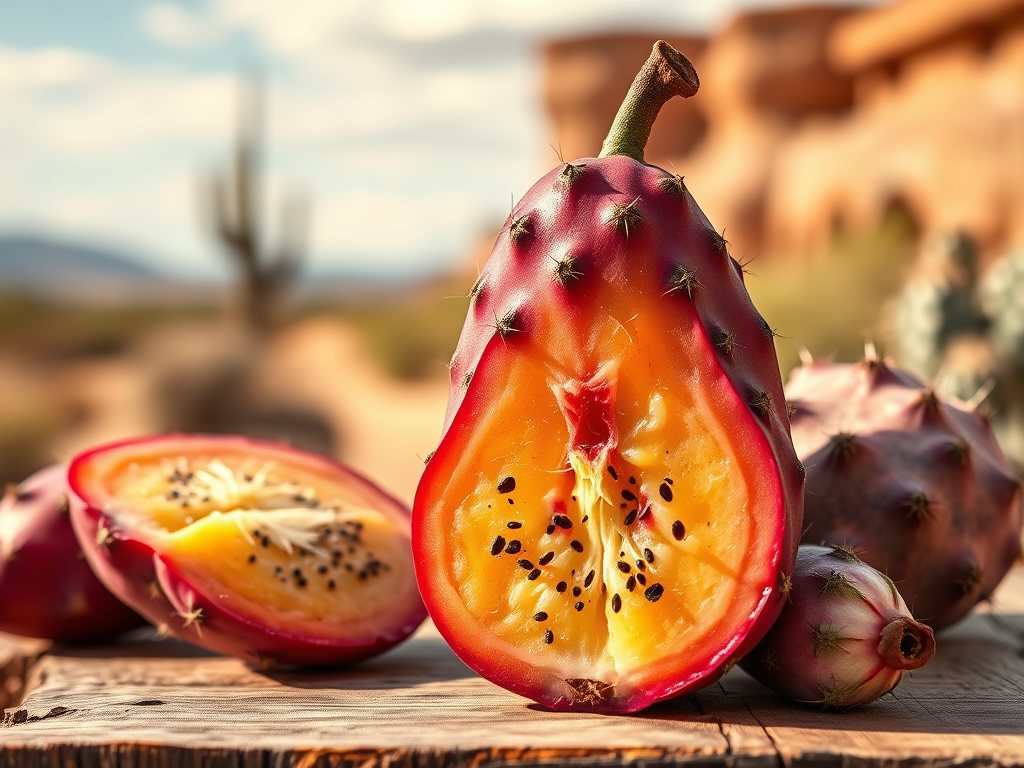
The cactus pear (often called the prickly pear) is the edible fruit of several species of cacti, primarily those belonging to the genus Opuntia, such as Opuntia ficus-indica. Characterized by its thick, spiny outer skin that needs proper handling before the fruit can be enjoyed, the inner flesh is typically juicy, sweet-tart, and colorful, ranging from vibrant red and purple to green and yellow. This unique appearance and flavor profile have made the cactus pear a celebrated ingredient in many culinary traditions, particularly in Mexican and Southwestern U.S. cuisine.
Beyond its culinary appeal, the cactus pear is known for its impressive nutritional benefits. It’s rich in fiber, vitamin C, and antioxidants, which contribute to supporting digestive health and may help moderate blood sugar levels.
Moreover, various parts of the prickly pear cactus—such as the pads known as nopales—are also consumed as a vegetable. Nopales add a distinctive texture and a slightly tangy flavor to dishes, while offering their own set of nutritional advantages. These combined qualities have also spurred interest in its potential medicinal properties, including anti-inflammatory effects and improved metabolic health.
Texasbeyondhistory read more on the specific archaeological findings or learn more about how different indigenous tribes traditionally used the cactus pear in their daily lives? The long, sharp spines (the prickly part of the name) are actually modified leaves that harden as they age. Technically, the plant’s “branches,” known as pads or nopales, are succulent, evergreen stem segments. The fruit begins to ripen in midsummer to a deep red color and produces a very sweet purple-red juice.
MORE:The WebMD page on prickly pear cactus provides a comprehensive overview of this versatile plant as both a food and a herbal supplement. Here’s a breakdown based on their content and perspective:
- Overview and Common Uses: WebMD explains that prickly pear cactus (often referred to simply as “prickly pear”) is native to regions like Mexico and has a long history of culinary and medicinal use. The plant is consumed in various forms—the fruit, the pads (commonly known as nopales), and even juice—and it’s celebrated for its potential benefits in managing blood sugar levels, cholesterol, and even hangover symptoms. In short, it’s utilized both in traditional diets and for its role in supporting metabolic health.
- Potential Health Benefits: According to WebMD, some studies and anecdotal evidence suggest that prickly pear may help in reducing post-meal blood sugar spikes, making it of interest to people with type 2 diabetes. It’s also noted for its fiber content and antioxidants, which are thought to contribute to heart health and anti-inflammatory effects. However, while these benefits promise something intriguing, WebMD advises that evidence is preliminary. They often use phrases like “possibly effective,” indicating that while the benefits are promising, more rigorous research may be needed before the claims are fully endorsed.
- Side Effects and Precautions: The WebMD resource doesn’t just focus on the positive; it outlines several potential side effects. Some people may experience gastrointestinal discomfort—like diarrhea, nausea, and bloating—especially when consuming the cactus in medicinal doses rather than as food. Additionally, because the plant may lower blood sugar levels, caution is advised for individuals who are already on diabetes medications. This balanced view is intended to help readers understand that while prickly pear has benefits, it should be used carefully and knowledgeably.
- Practical Guidance on Use: The page also touches on interactions with medications and provides dosing information for those considering its use as a supplement. WebMD recommends that anyone interested in trying prickly pear for its health benefits should consult with a healthcare provider, especially if they fall into a sensitive category (like pregnant women or those taking other medications). This helps ensure that its use is both safe and effective in the context of an individual’s overall health plan.
Overall, WebMD uses a cautious yet informative tone. It acknowledges prickly pear’s role in traditional medicine and its potential for modern nutritional applications, but it also stresses the importance of being aware of side effects and the current limits of scientific evidence. This balanced approach helps readers make informed decisions about whether and how to include prickly pear in their diets or health regimens.
Special Precautions and Warnings
When taken by mouth: Prickly pear cactus is likely safe when the fruit and cactus pads are eaten as food. The pads and fruit are possibly safe when taken as medicine for a short period of time. Prickly pear cactus can cause minor side effects in some people, including diarrhea, nausea, bloating, and heartburn.
 EJADA
EJADA 
Leave a comment