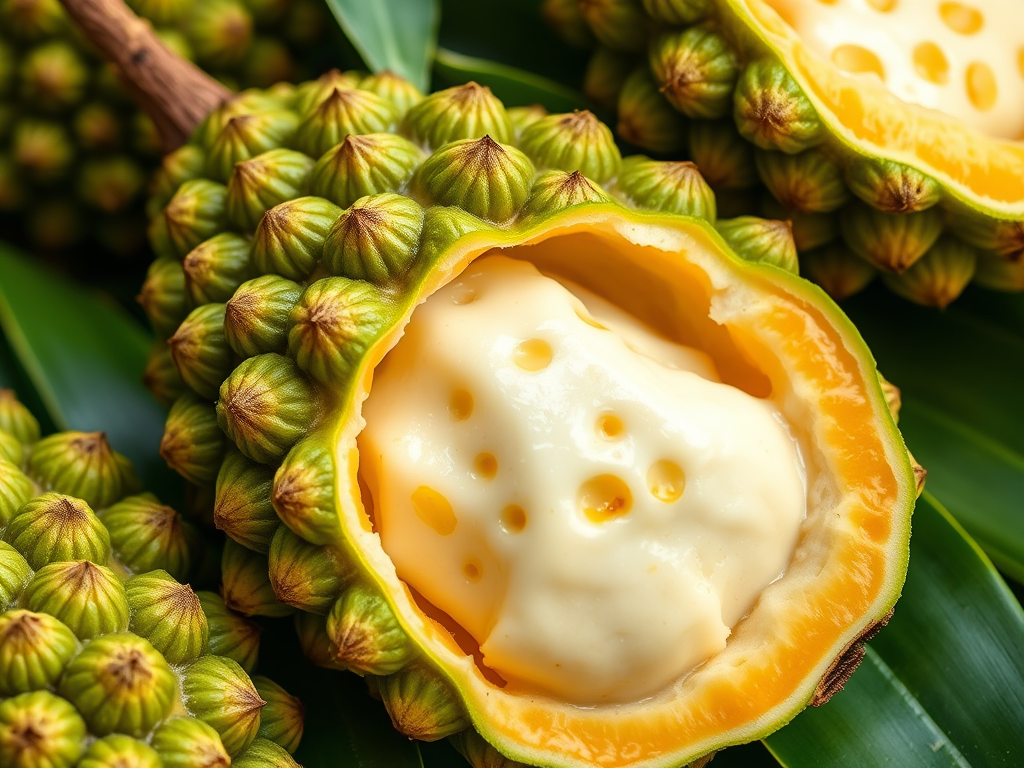
Atemoya, a tropical fruit that’s a hybrid of sugar apple (Annona squamosa) and cherimoya (Annona cherimola). Atemoya is a green, cone-shaped fruit with a bumpy exterior and creamy, custard-like flesh. Its flavor is often described as a delightful mix of banana, pineapple, and strawberry.
Nutritional Highlights:
- Calories: About 94 per 100 grams.
- Vitamins: Rich in Vitamin C and Vitamin B6, which support immunity and mood regulation.
- Minerals: Contains potassium, magnesium, and calcium, promoting heart and bone health.
- Fiber: Aids digestion and helps maintain a healthy gut.
Health Benefits:
- Boosts Mood: High in Vitamin B6, which helps produce serotonin and dopamine, enhancing happiness and focus.
- Supports Digestion: Its fiber content promotes healthy bowel movements.
- Strengthens Immunity: Packed with Vitamin C to help fight infections.
- Antioxidant Properties: Contains compounds that combat free radicals, reducing oxidative stress.
Atemoya is often enjoyed fresh, in smoothies, or as a dessert ingredient.
Atemoya is generally safe to eat, but there are a few considerations to keep in mind:
- Seeds: Atemoya seeds are not edible and can be toxic if ingested. Always remove them before consuming the fruit.
- Allergic Reactions: Some individuals may experience allergic reactions to Atemoya, especially if they have sensitivities to other fruits in the Annonaceae family.
- Overconsumption: Eating excessive amounts of Atemoya may lead to digestive discomfort due to its high sugar content.
- Pesticides: Like many fruits, Atemoya may be exposed to pesticides during cultivation. Washing the fruit thoroughly is recommended.
If you have specific health concerns or dietary restrictions, it’s always a good idea to consult a healthcare professional before adding new foods to your diet. Have you tried Atemoya before?
Symptoms of an allergic reaction to Atemoya can vary depending on the individual’s sensitivity. Common signs include:
- Mild Symptoms: Itching or tingling in the mouth, hives, or localized swelling.
- Moderate Symptoms: Nausea, vomiting, widespread rash, or difficulty breathing.
- Severe Symptoms (Anaphylaxis): Swelling of the throat, constriction of airways, rapid pulse, or dizziness. Anaphylaxis is life-threatening and requires immediate medical attention.
If you suspect an allergic reaction, it’s crucial to seek medical advice promptly. Have you experienced any food allergies before?
Read More @ Healthbenefitstimes
Annona atemoya originated as a cross of Annona squamosa and Annona cherimola in Florida. P.J. Wester made the first cross at the United States Department of Agriculture’s subtropical laboratory, Miami in 1908. In 1910, seedlings were planted. Other crosses were made in 1910 and fruited in 1911. Then seeds were taken to the Philippines and other by Wester
 EJADA
EJADA 
Leave a comment