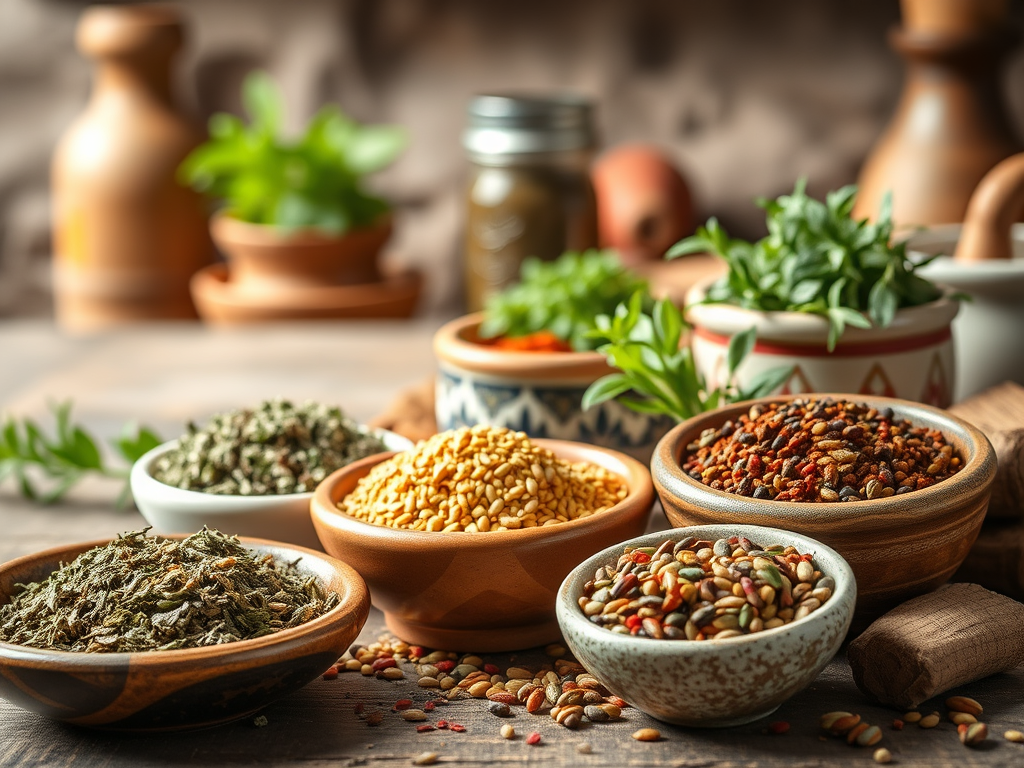
Za’atar: While it’s actually a mix of herbs (like thyme, oregano, and sumac), it’s a popular and healthy blend often used in Middle Eastern cuisine for its flavor and potential health benefits.The first known use of za’atar was in 1917
While many people now associate the word za‘atar with the spice mix, it is the Arabic word for a wild, mint-related herb that is a pillar of Levantine cooking and similar to oregano and marjoram. Since the herb can be difficult to find, za‘atar is commonly made from dried thyme, oregano, sumac, and sesame seeds.
Borrowed from Arabic zaʻtar, saʻtar, ṣaʻtar “any of various herbs (as Origanum syriacum or Thymus serpyllum), a mixture of these herbs with sumac and sesame seeds” Za’atar is a Levantine culinary herb or family of herbs. It is also the name of a spice mixture that includes the herb along with toasted sesame seeds, dried sumac, often salt, and other spices. As a family of related Levantine herbs, it contains plants from the genera Origanum (oregano), Calamintha (basil thyme), Thymus (typically Thymus vulgaris, i.e., thyme), and Satureja (savory) plants
Za’atar is one of my most favorite Middle Eastern spice blends. Another top competitor is Dukkah, which is very different but equally amazing. Whether you’ve never had za’atar before or your only experience has been with store-bought blends, I urge to try your hand at making your own – there is no comparison! This fabulous seasoning blend relies on quality herbs and spices to create a truly unforgettable combination of flavors that will transform your food.
 EJADA
EJADA 
Leave a comment