Bloodroot plants, Sanguinaria canadensis, get their name from the dark red sap found in the stems and roots, which resembles blood. The colored juice from the stems of bloodroot plants can also be used to make red, pink, and orange dyes. You should wear gloves when working with bloodroot plants and practice bloodroot plant care as leaves and other plant parts are skin irritants to some.
Read more at Gardening Know How: Bloodroot Plant Care: Learn How To Grow Bloodroot (Sanguinaria Canadensis) Bloodroot Flower
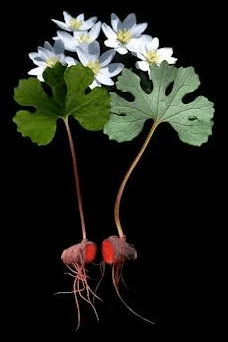
Bloodroot is a perennial, herbaceous flowering plant native to eastern North America. It is the only species in the genus Sanguinaria, included in the poppy family.
Bloodroot is poisonous to both livestock and humans in large doses. Alkaloids are found throughout the plant that affects the nervous system. Ingestion causes vomiting and potentially a fatal coma in those that overdose. The roots also served medicinal purposes as an emetic, gastrointestinal aid, tuberculosis remedy, and dermatological treatment for cuts, sores, and poison ivy.
Bloodroot contains a bright red sap with antiseptic properties. For many years it was used in commercially produced toothpaste. Bloodroot ( Cornell) click here for more information.
Bloodroot has several concerning side effects and may interact with some drugs. It’s best to avoid bloodroot if you’re pregnant or breastfeeding. Uses and Precautions
Informational Purposes Only
Bought to you by EJADA BJ GRAHAMS
 EJADA
EJADA 
Leave a comment