
Black henbane (Hyoscyamus niger) has a long history as a notorious toxic as well as a beneficial medicinal plant. The pale yellow, bell-shaped flowers with purple veins are a diagnostic feature of this species. The plants grow up to 36 inches tall and have hairy leaves that are sticky to the touch. The history of henbane, similar to other highly poisonous and notorious members of this family such as mandrakes and daturas, can be traced back to at least 4,000 B.C.
Can cause loss of muscular control, dilation of the pupils, heart palpitation, hallucinations, delirium (“madness”), and in large doses, coma, and death. The most commonly used magical and medicinal species in Europe were Hyoscyamus niger (black henbane) and H. albus (yellow or white henbane).
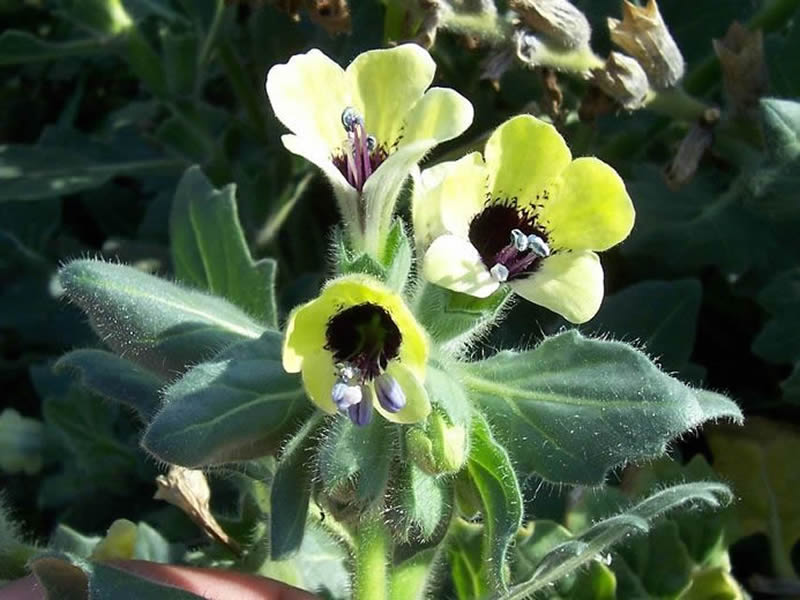
During the Middle Ages, henbane was known as “Witches Herb,” one of the major ingredients used in an ointment that gave the hallucinatory sensation of flying. This gave rise to the witch on a broomstick archetype that lasts to this day. Henbane induced a sense of body suspension and flight, but on the next day, the person would remember nothing of what had happened.
The Greeks and Gauls poisoned their arrows and javelins with a decoction of henbane. Henbane was used to treat earaches, rheumatism, sciatica, and insomnia until relatively recently. This information was provided by USDA Henbane
Now the good news is that we are now on Shopify BJ GRAHAMS take a look we will be adding more content so shop often to find something special.
BJ GRAHAMS Shopify a new location with new items added this week go now and review.
 EJADA
EJADA 
Leave a comment