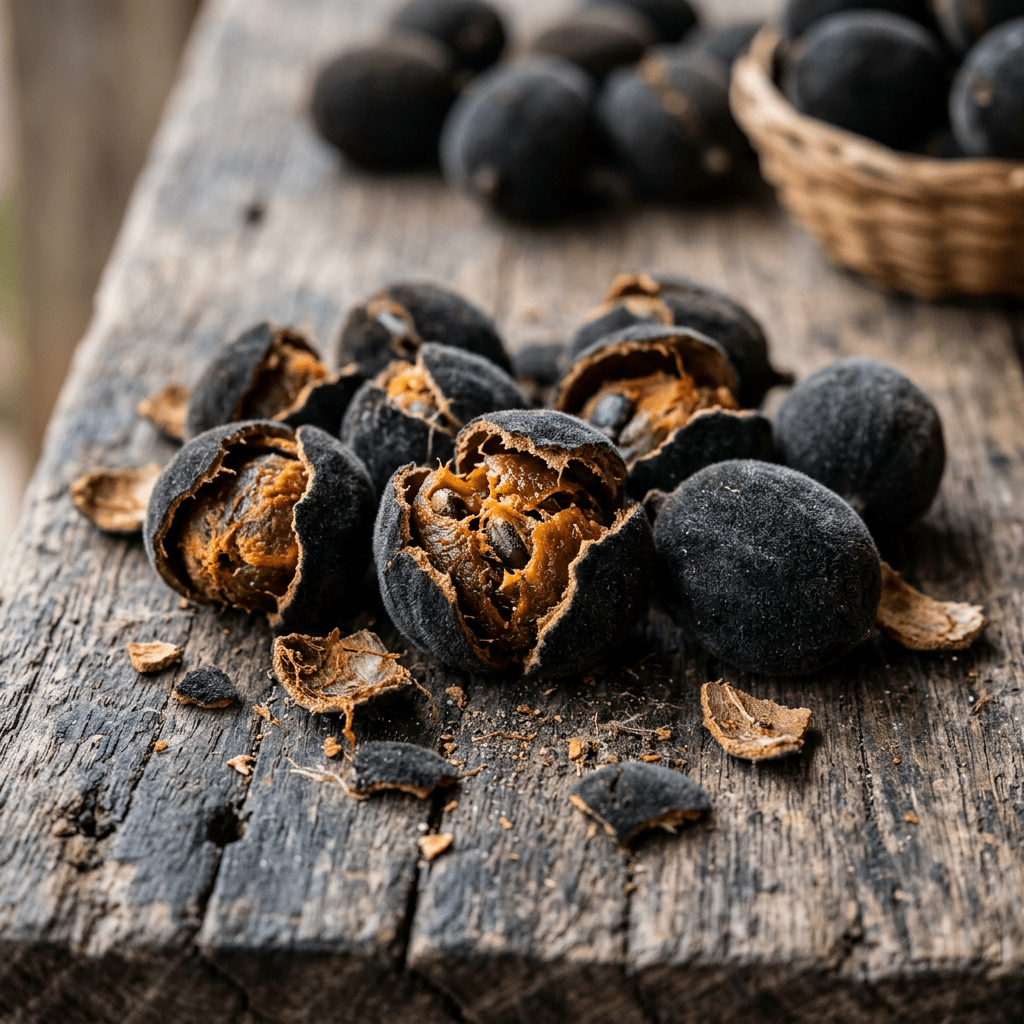
🌑 Velvet Tamarind (Dialium indum): The Sweet‑Tangy “Black Velvet” Fruit With Deep Cultural Roots & Wellness Benefits
Velvet Tamarind — known across the tropics as icheku, tsamiyar kurm, luk yee, buah keranji, or simply “black tamarind” — is one of the most captivating V‑fruits in the botanical world. With its velvety charcoal‑black shell and bright orange pulp, this tiny fruit delivers a surprising burst of sweet‑tangy flavor that feels like tamarind, citrus, and brown sugar all at once.
Though small, Velvet Tamarind carries centuries of cultural heritage, traditional healing practices, and nutritional value. It’s a fruit that bridges continents — from West African villages to Southeast Asian forests — and continues to be cherished for its taste, versatility, and wellness potential.
🌱 What Exactly Is Velvet Tamarind?
Velvet Tamarind (Dialium indum) is a tropical legume fruit that grows on tall, hardwood trees reaching up to 25–40 meters. Each fruit is:
- Small and round, about the size of a marble
- Covered in a thin, velvety black shell
- Filled with bright orange, powdery pulp
- Surrounding a single hard seed
The pulp is the edible part — naturally sweet, tangy, and energizing.
Despite its name, Velvet Tamarind is not closely related to the common brown tamarind (Tamarindus indica). They share a similar flavor profile, but they come from different botanical families.
🌍 Origins, Habitat & Cultural Significance
Where It Grows
Velvet Tamarind thrives in tropical climates and is native to:
- West Africa — Nigeria, Ghana, Sierra Leone, Benin
- Southeast Asia — Thailand, Malaysia, Indonesia
- India — especially coastal and forested regions
The trees grow wild in forests but are also cultivated in rural communities for food, shade, and traditional medicine.
Cultural Importance Across Regions
West Africa
In Nigeria and Ghana, Velvet Tamarind is a beloved childhood snack. Kids crack open the shells after school, enjoying the sweet‑tart pulp like natural candy.
It’s also used in:
- Herbal teas for digestion
- Postpartum tonics
- Traditional remedies for malaria and fever
- Refreshing drinks sold by street vendors
The fruit is so culturally embedded that it appears in folklore, seasonal celebrations, and local markets.
Southeast Asia
In Thailand and Malaysia, Velvet Tamarind (called luk yee or buah keranji) is used in:
- Herbal tonics
- Candies
- Cooling drinks
- Traditional digestive remedies
The fruit is often sold dried or processed into sweet‑sour snacks.
India
In parts of India, the fruit is used in:
- Ayurvedic digestive blends
- Cooling summer drinks
- Folk remedies for cough and sore throat
Its tangy pulp is sometimes mixed with jaggery, chili, or salt.
🍊 Flavor Profile: Tiny Fruit, Big Personality
Velvet Tamarind has a flavor that surprises almost everyone who tries it:
- Sweet like brown sugar
- Tangy like mild tamarind
- Citrusy and bright
- Soft, powdery texture that melts on the tongue
It’s the kind of fruit you snack on mindlessly — one pod becomes ten before you realize it.
💊 Nutritional Breakdown
Velvet Tamarind is small but nutritionally dense. The pulp contains:
- Vitamin C — immune support
- Iron — supports healthy blood
- Potassium — electrolyte balance
- Magnesium
- Polyphenols & antioxidants
- Dietary fiber
- Natural sugars for quick energy
It’s low‑calorie, plant‑based, and rich in micronutrients.
🧠 Science‑Backed Health Benefits
1. Supports Digestive Health
The fiber and natural acids in Velvet Tamarind help:
- Relieve constipation
- Improve gut motility
- Support healthy digestion
In West Africa, it’s commonly used as a natural digestive aid.
2. Boosts Immunity
Its vitamin C and antioxidant content help:
- Strengthen immune function
- Reduce oxidative stress
- Support overall wellness
The fruit is often used in herbal teas during cold and flu season.
3. Helps Maintain Healthy Blood Sugar
Some studies suggest Velvet Tamarind may:
- Slow carbohydrate absorption
- Support balanced glucose levels
- Reduce sugar spikes after meals
This is due to its fiber and polyphenol content.
4. Supports Iron Levels & Reduces Fatigue
Velvet Tamarind contains natural iron, which helps:
- Support red blood cell production
- Reduce tiredness
- Improve oxygen circulation
It’s often recommended in traditional medicine for anemia‑related fatigue.
5. Anti‑Inflammatory & Antimicrobial Properties
Research shows the pulp and leaves contain compounds that may:
- Reduce inflammation
- Fight certain bacteria
- Support oral and digestive health
This is why it’s used in folk remedies for sore throat and cough.
6. Natural Energy Booster
The fruit’s natural sugars provide:
- Quick, clean energy
- No caffeine
- No crash
Perfect as a pre‑workout snack or mid‑day pick‑me‑up.
🍽️ Culinary Uses: How Velvet Tamarind Is Enjoyed
Velvet Tamarind is incredibly versatile. It can be:
Eaten Fresh
Crack the shell and enjoy the pulp as a snack.
Made Into Drinks
Soak the pulp in water to create:
- A refreshing sweet‑tart drink
- A natural electrolyte beverage
- A vitamin‑rich tonic
Add ginger, honey, or lime for extra flavor.
Turned Into Candy
Popular in Thailand and Nigeria:
- Rolled with sugar
- Mixed with chili
- Coated in salt
- Made into chewy tamarind‑style sweets
Used in Sauces & Chutneys
The pulp adds depth to:
- Chutneys
- Marinades
- Dipping sauces
- Glazes for fish or chicken
Used in Herbal Remedies
Traditionally used for:
- Cough syrups
- Digestive tonics
- Cooling teas
⚠️ Who Should Avoid Velvet Tamarind?
While generally safe, certain individuals should be cautious:
- Those with acid reflux (its acidity may trigger symptoms)
- People with ulcers
- Individuals sensitive to high‑fiber fruits
- Anyone with legume allergies (Velvet Tamarind is a legume fruit)
- People with diabetes should consume in moderation due to natural sugars
As always, moderation is key.
🛒 Availability in the U.S.
Velvet Tamarind is not common in mainstream grocery stores, but you can find it:
- In African markets
- In Thai, Malaysian, or Indonesian grocery stores
- Through online tropical fruit sellers
- As dried pulp, powder, or candy
Fresh fruit is most available from December to April.
🧪 Scientific Research Highlights
Modern studies have explored Velvet Tamarind for:
- Antioxidant activity
- Anti‑inflammatory effects
- Antimicrobial properties
- Blood sugar regulation
- Digestive support
- Iron bioavailability
Its polyphenol‑rich pulp is the primary driver of these benefits.
🌟 Final Takeaway
Velvet Tamarind is a tiny fruit with a huge story — visually striking, culturally rich, and nutritionally powerful. Its sweet‑tangy flavor makes it irresistible, while its antioxidant and digestive benefits make it a natural fit for wellness‑focused lifestyles.
📚 Sources & Further Reading
1. Velvet Tamarind Nutrition Facts – Dialium indum
Detailed nutritional breakdown including vitamin C, iron, potassium, antioxidants, glycemic index, and traditional uses across Asia and Africa. fruitspedia.com
2. Dialium indum – Wikipedia
Botanical classification, distribution, fruit morphology, flavor profile, seed structure, and regional varieties. Wikipedia
3. Velvet Tamarind – Specialty Produce
In‑depth description of appearance, taste, varieties, seasonal availability, global distribution, and culinary uses. Specialty Produce
4. Velvet Tamarind: The Tangy Superfood You Need to Try
Expanded overview of origins, cultivation, nutritional profile, health benefits, and culinary applications. saveorganiclovers.blogspot.com
5. Velvet Tamarind Benefits, Uses & Safety — Grasproot
Covers medicinal uses, safety considerations, active compounds (quercetin, gallic acid, rutin), traditional applications, and preparation methods. grasproot.com
 EJADA
EJADA 
Leave a comment