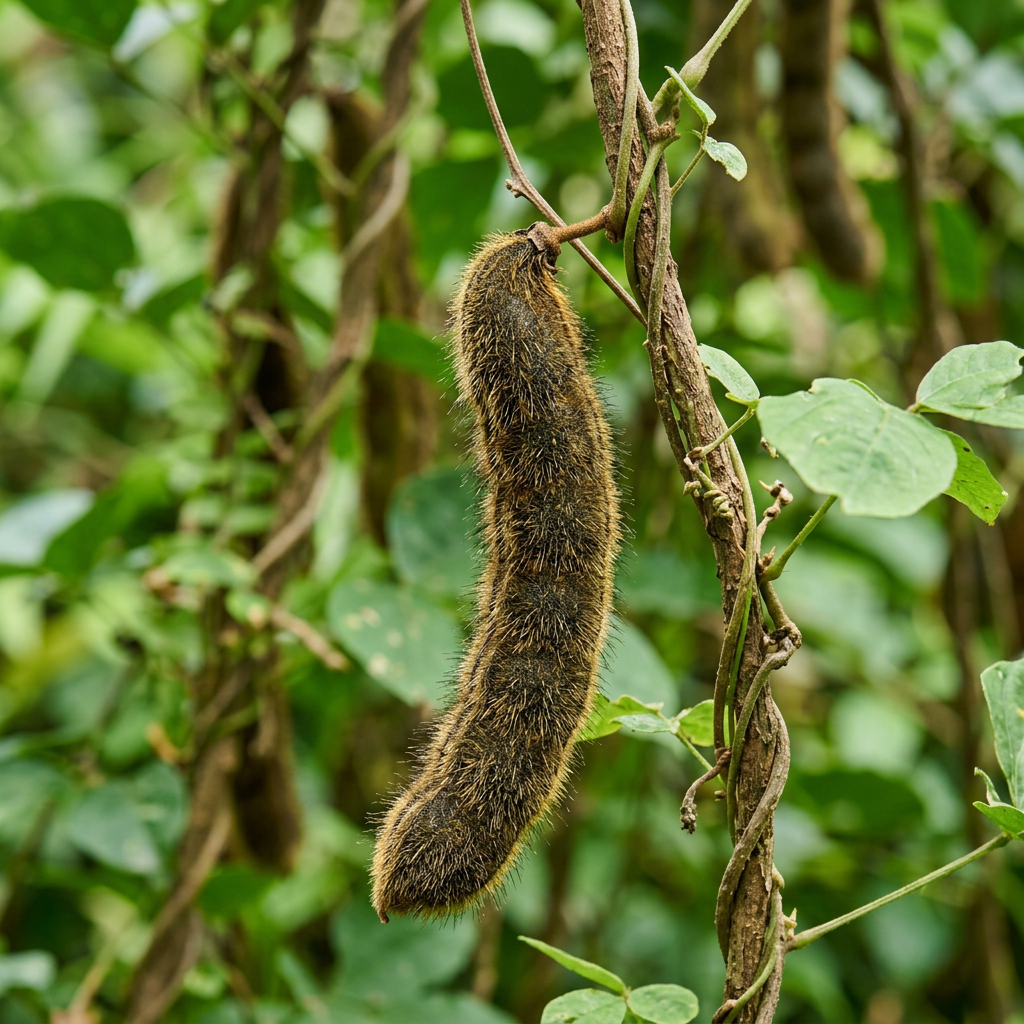
🌿 Velvet Bean Fruit (Mucuna pruriens): The Unusual Tropical Pod With Powerful Wellness Potential
Velvet Bean Fruit — the pod of the Mucuna pruriens plant — is one of the most intriguing “V‑fruits” in the botanical world. While it’s not a culinary fruit like mango or plum, it is a true botanical fruit, and its seeds have been used for centuries in Ayurvedic and African traditional medicine. Known for its naturally occurring L‑DOPA, the precursor to dopamine, Velvet Bean has gained global attention for its potential neurological and mood‑supporting benefits.
The Velvet Bean Fruit is the long, fuzzy pod produced by Mucuna pruriens, a climbing tropical legume native to Africa and South Asia. The pods are covered in fine, irritating hairs (hence “velvet”), and inside are hard, glossy seeds ranging from brown to mottled black.
Botanically speaking, the pod is the fruit, and the seeds are the edible/medicinal part — though they must be processed properly to remove natural toxins.
🌍 Origins & Cultural History
Velvet Bean has been cultivated for thousands of years across:
- India — used in Ayurveda as Kapikacchu
- West Africa — used as a food source during famine seasons
- Caribbean & Central America — grown as a cover crop and soil enhancer
- Southeast Asia — used in traditional herbal preparations
In Ayurveda, it is considered a rejuvenating herb (rasayana) believed to support vitality, mood, and reproductive health.
💊 Nutritional & Phytochemical Profile
Velvet Bean seeds are not eaten raw. Once properly processed (soaked, boiled, roasted), they contain:
- L‑DOPA — dopamine precursor
- Protein — up to 25–30%
- Fiber
- Tannins
- Alkaloids
- Antioxidants
The standout compound is L‑DOPA, which is also used in modern medicine for Parkinson’s disease treatment.
🧠 Health Benefits of Velvet Bean Fruit
1. Supports Dopamine Levels
The natural L‑DOPA content may help support mood, motivation, and cognitive function.
2. Traditionally Used for Neurological Health
Ayurvedic practitioners have used it for centuries to support motor function and nervous system balance.
3. May Support Fertility & Hormonal Health
Some studies suggest Velvet Bean may support testosterone levels and reproductive wellness in men.
4. Rich in Antioxidants
Helps combat oxidative stress and supports overall cellular health.
5. High Protein Legume
In some cultures, processed seeds are used as a plant‑based protein source.
⚠️ Who Should Not Consume Velvet Bean?
Because Velvet Bean contains potent bioactive compounds, certain individuals should avoid it unless supervised by a professional:
- People taking Parkinson’s medications (especially levodopa)
- Individuals with heart conditions
- Those with psychiatric disorders
- Pregnant or breastfeeding individuals
- Anyone with liver disease
- People with legume allergies
Raw or improperly processed seeds can be toxic — they must be cooked thoroughly.
🍽️ How Velvet Bean Is Used
Velvet Bean is not eaten like a typical fruit. Instead, it is used in:
- Ayurvedic powders (Kapikacchu)
- Herbal supplements
- Roasted seed coffee substitutes
- Traditional porridges (after detoxification)
- Animal feed
- Soil‑enriching cover crops
Its role is more medicinal and agricultural than culinary.
🌾 Availability in the U.S.
Fresh Velvet Bean pods are rare in the United States. However, you can commonly find:
- Kapikacchu powder
- Mucuna pruriens capsules
- Dried seeds (for planting or roasting)
These are typically sold through herbal shops, Ayurvedic suppliers, and online wellness retailers.
🧪 Scientific Research Highlights
Modern studies have explored Velvet Bean for:
- Parkinson’s symptom support
- Mood and stress modulation
- Male fertility
- Antioxidant activity
- Neuroprotective potential
While promising, research emphasizes proper dosing and medical supervision.
📝 Safety Disclaimer
This blog post is for educational purposes only. Velvet Bean contains potent compounds and should not be used as a substitute for medical treatment. Always consult a qualified healthcare provider before using herbal supplements, especially those affecting neurological or hormonal systems.
📚 Sources & Further Reading
- Verywell Health – Mucuna pruriens Benefits & Side Effects Comprehensive overview of neurological, fertility, cardiovascular, and stress‑related research on M. pruriens, including L‑DOPA content and safety considerations.
- Wikipedia – Mucuna pruriens Botanical classification, morphology, pod characteristics, itch‑inducing hairs, traditional uses, and global distribution.
- The Botanical Institute – 6 Benefits of Mucuna pruriens Detailed breakdown of dopamine support, antioxidant activity, fertility research, anti‑venom properties, and safety/dosage insights.
- ScienceDirect – Dietetic & Nutraceutical Properties of Mucuna pruriens (2024) Peer‑reviewed analysis of nutritional composition, protein content, antinutritional factors, and potential for food applications.
- MDPI Molecules – Comprehensive Review of the Therapeutic Potential of Mucuna pruriens (2026) High‑level scientific review covering phytochemicals, L‑DOPA concentration, antioxidant and neuroprotective effects, and global research gaps.
- ScienceDirect – Nutritional Significance & Value‑Added Processing of Velvet Bean (2024) Research on protein levels, processing methods, and opportunities for developing functional foods from M. pruriens.
- Springer Nature – Nutritive & Medicinal Properties of Mucuna pruriens Review of medicinal applications, nutritional value, and potential as an underutilized legume.
- International Journal of Pharmaceutical Sciences – Therapeutic Applications & Future Prospects of Mucuna pruriens Covers L‑DOPA pharmacology, antioxidant and anti‑diabetic activity, traditional uses, and phytochemical diversity.
🌟 Final Takeaway
Velvet Bean Fruit is one of the most unique entries in the V‑fruit family — a botanical fruit with powerful traditional and scientific significance. While it’s not a sweet, juicy fruit you’ll slice into, its seeds have shaped herbal medicine, supported communities during famine, and inspired modern neurological research. For your A–Z fruit series, it adds depth, culture, and a fascinating look at how “fruit” can mean far more than what we find in the produce aisle.
 EJADA
EJADA 
Leave a comment